Director of Family Health at the Ghana Health Service (GHS) and Technical Advisor to the Vice President on Health, Dr Kennedy Brightson, has identified poor skill and inadequate expertise in performing caesarean sections, rather than the procedure itself, as a major driver of Ghana’s rising maternal deaths.
Speaking on the country’s maternal mortality crisis, Dr Brightson explained that a review of major causes of maternal deaths across the country’s hospitals points to three recurring conditions: postpartum haemorrhage, hypertensive conditions in pregnancy, and sepsis contracted after delivery. He said these three conditions account for the bulk of deaths recorded among women following childbirth.
Responding directly to concerns raised earlier by a Deputy Minister about caesarean sections becoming increasingly problematic, Dr Brightson pushed back on the framing, insisting that the procedure itself is not inherently dangerous when properly indicated and correctly performed.
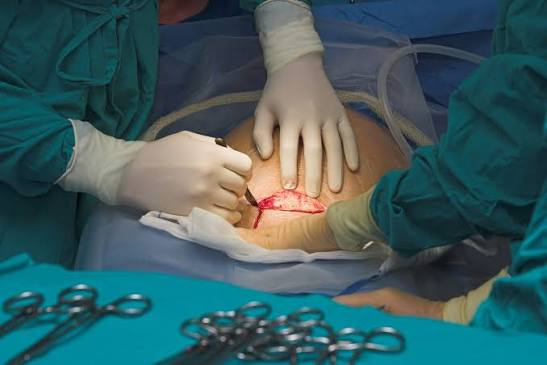
He explained that maternal mortality audits conducted after every recorded death consistently show that most women who died following caesarean sections did not die because the procedure was necessary, but because it was carried out poorly, often with small blood vessels left unattended, leading to internal bleeding that went unnoticed until it was too late.
“It is not the performance of caesarean section that is the challenge. It is the way it is carried out, the skill, that is the problem.”
Dr Kennedy Brightson,
Data from Maternal Mortality Audits
Dr Brightson explained that findings from Maternal and Perinatal Death Surveillance and Response (MPDSR) audits have consistently pointed to poorly executed procedures as a significant contributor to the country’s maternal death numbers.

He said that in many of these cases, internal bleeding from small, unattended vessels went undetected until the patient’s condition had deteriorated to a critical point, by which time efforts to save her often proved unsuccessful.
He linked this pattern directly to under-resourcing within the health system, explaining that even when complications are identified, the resources needed to intervene effectively and save a woman’s life are frequently unavailable, rendering many rescues attempts futile despite the best efforts of attending medical staff.
In response to the skills gap identified through these audits, Dr Brightson disclosed that the Ghana Health Service, with support from UNICEF and other partner organisations, is rolling out an intervention programme centred on mentorship and coaching for practitioners performing caesarean sections.
He described the initiative as fundamentally a training exercise, designed to close the skills gap responsible for a significant share of preventable maternal deaths linked to the procedure.
Young Doctors Facing High-Stakes Emergencies Alone
Explaining how the skills gap arises in practice, Dr Brightson painted a vivid picture of the circumstances many newly qualified doctors find themselves in shortly after completing medical school and housemanship.
He described a scenario in which a young doctor, having received limited hands-on training in performing caesarean sections during housemanship, is posted to a remote facility as the sole doctor on duty, sometimes required to administer anaesthesia themselves in addition to performing the procedure.

He explained that such doctors are frequently confronted with genuine emergencies, cases where a baby’s heartbeat is dropping or a mother is bleeding due to a placental abruption, that demand immediate action despite the doctor’s limited experience.
According to Dr Brightson, medical guidelines require that the time between deciding to perform an emergency caesarean section and actually beginning the procedure should not exceed 20 minutes, given how quickly a baby’s condition or a mother’s blood loss can become life-threatening.
Race Against Time with Limited Support
Dr Brightson explained that in such emergencies, the objective is always to save both mother and child, but where a baby’s life has already been lost, the focus shifts entirely to saving the mother before she loses too much blood, a condition he described as becoming exsanguinated, where blood loss becomes so severe that survival is no longer possible without urgent intervention.
He noted that young doctors in these situations often have little time to deliberate and must act decisively, frequently encountering additional complications once the procedure begins, complications that a more experienced surgeon might anticipate or manage more effectively.
He said this combination of inexperience, isolation, and time pressure creates the exact conditions under which poorly executed caesarean sections are more likely to occur, reinforcing his argument that the solution lies not in questioning the necessity of the procedure, but in strengthening the skills and support systems available to the doctors performing it.
Dr Brightson’s remarks point to a broader systemic challenge within Ghana’s health workforce distribution, where newly qualified doctors are often posted to under-resourced facilities with limited supervision, placing significant pressure on their still-developing surgical skills.
He suggested that addressing Ghana’s maternal mortality crisis will require sustained investment not only in emergency response resources, but in structured mentorship for early-career doctors navigating high-stakes procedures with minimal support.
As the Ghana Health Service moves forward with its mentorship and coaching intervention, attention will likely turn to how quickly the programme can be scaled to reach doctors in the kind of remote, understaffed facilities Dr Brightson described, where the gap between training and real-world emergency practice remains most pronounced.
READ MORE: Lack of Clear Policies by Government a Major Setback to Waste Managment – Mad. Bamfo