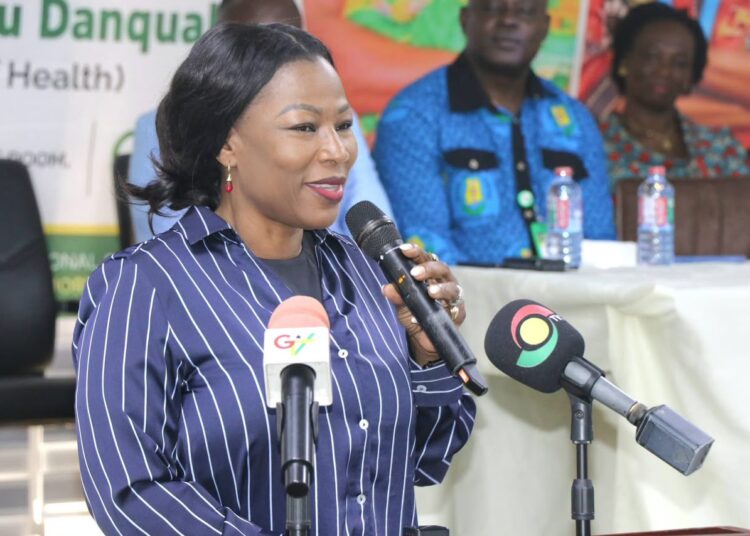
Deputy Minister for Health, Prof. Dr. Grace Ayensu-Danquah, has disclosed that 986 pregnant women died in childbirth, placing the country’s maternal mortality ratio at 235 deaths per 100,000 live births, a figure she described as the nation’s most troubling health indicator.
Dr. Ayensu-Danquah made the disclosure as she began a two-day tour of the Greater Accra Region, opening her engagements with a pointed question about why so many women continue to lose their lives during childbirth despite widespread access to antenatal care.
“Why are our women still dying during childbirth after attending more than eight antenatal care visits?”
Prof. Dr. Grace Ayensu-Danquah,
Her first stop on the regional tour was an internal briefing with the Greater Accra Regional Health Directorate, where she received a detailed overview of the region’s maternal mortality situation and led discussions aimed at identifying the factors driving preventable maternal deaths within the region.
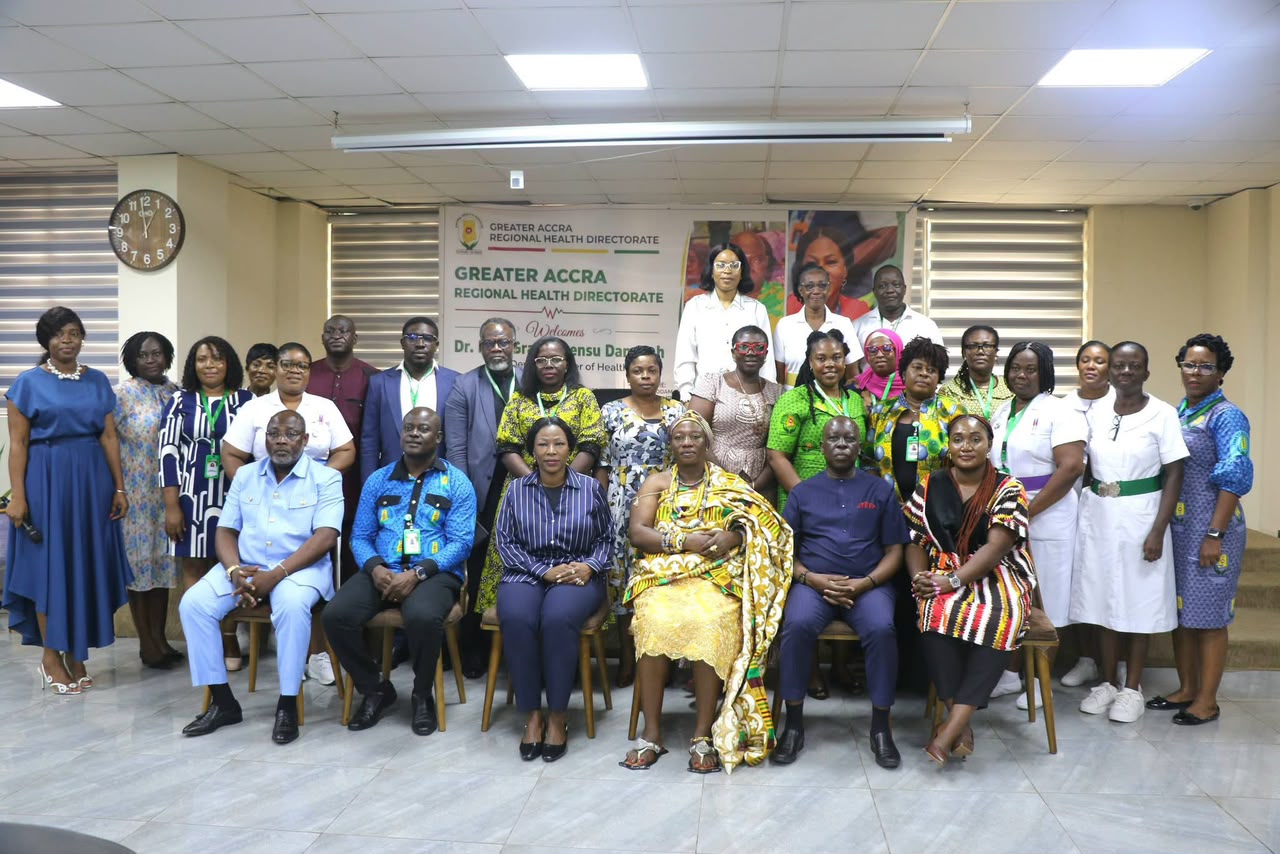
The briefing session brought together the Regional Director of Health Services, representatives of development partners, medical directors, and other senior health officials, all focused on reviewing performance data, identifying critical gaps in maternal healthcare delivery, and aligning strategies to strengthen the quality of care provided to pregnant women across the region.
Dr. Ayensu-Danquah used the session to stress that maternal deaths cannot be viewed in isolation, noting that women who survive childbirth but experience complications during delivery remain vulnerable to further postnatal health problems.
She explained that this broader pattern of maternal ill health, not just mortality figures alone, should guide how the health sector designs its interventions going forward.
“This one index is a window into everything that we do. If you look at this country, our worst health index is maternal mortality.”
Deputy Minister for Health, Prof. Dr. Grace Ayensu-Danquah,
Dr. Ayensu-Danquah revealed that she had previously held a different, higher estimate of the country’s maternal death toll before receiving updated figures during a parliamentary session covering the full 2024 national data.
She explained that this figure translates into a maternal mortality ratio of 235 deaths per 100,000 live births nationally, a statistic she juxtaposed against the World Health Organisation’s recommended benchmark for countries working toward universal health coverage.
Far Above WHO’s Recommended Threshold
According to Dr. Ayensu-Danquah, the World Health Organisation recommends that countries aim for no more than 70 maternal deaths per 100,000 live births as part of efforts to achieve universal health coverage. She noted that Ghana’s current ratio of 235 deaths per 100,000 live births is more than three times higher than this recommended threshold, underscoring the scale of the gap the country still needs to close.
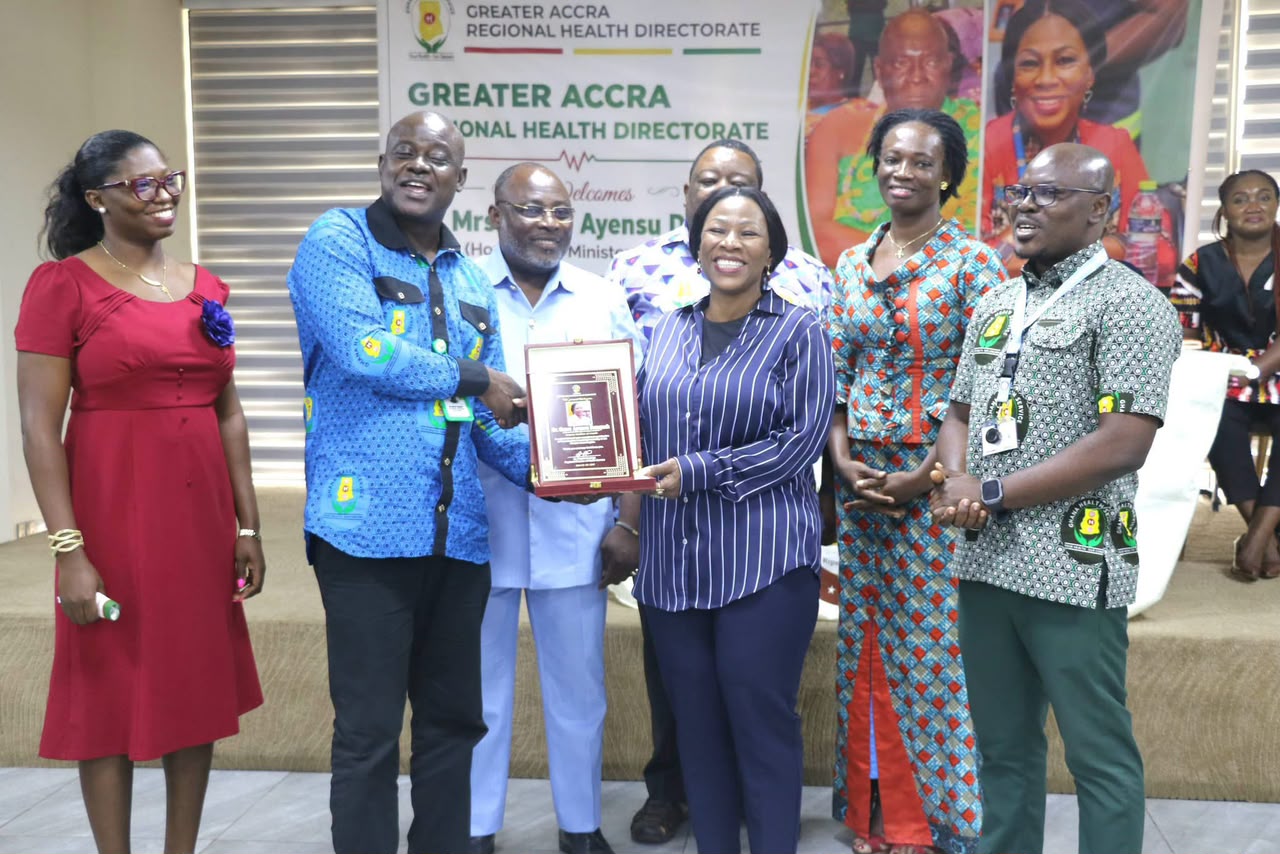
Her comparison of the national figure against the WHO benchmark appeared designed to frame the scale of the challenge starkly for the health officials in attendance, reinforcing the urgency behind her regional tour and the broader push to strengthen maternal healthcare systems.
Antenatal Visits Alone Not Enough, Minister Suggests
Central to Dr. Ayensu-Danquah’s opening remarks was a challenge to the assumption that high antenatal care attendance automatically translates into safer childbirth outcomes. By questioning why women attending more than eight antenatal visits, well above the standard recommended minimum, are still dying during delivery, she signalled that the quality and responsiveness of care provided during these visits may require closer scrutiny, not just the frequency of attendance.
This line of questioning set the tone for the discussions that followed at the Regional Health Directorate, where officials examined performance data with a view to pinpointing where along the maternal care pathway interventions are falling short.

With the Greater Accra Regional tour set to continue over the following day, attention now turns to what concrete strategies emerge from Dr. Ayensu-Danquah’s engagements with regional health officials and development partners.
Her early remarks suggest that closing the gap between Ghana’s current maternal mortality ratio and the WHO’s recommended standard will remain a central priority for the Ministry of Health going forward, as authorities work to translate policy discussions into measurable reductions in preventable maternal deaths across the country’s regions.
READ MORE: Government Must Prioritise Job Creation Over Arrests-Dr. Okoe-Boye