

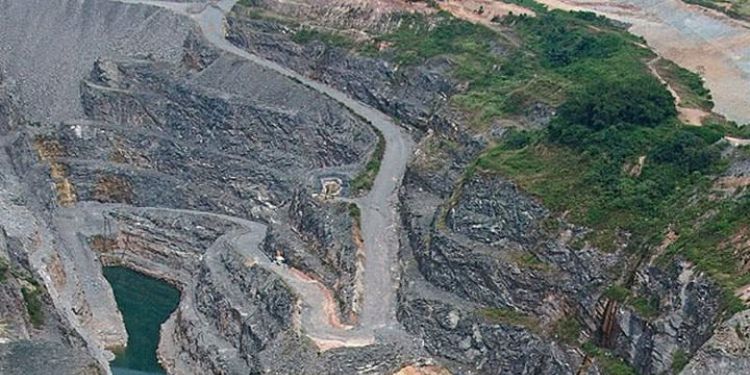
Adamus Resources Limited has launched a fierce defense against the Ministry of Lands and Natural Resources, strongly rejecting the government’s decision to uphold the revocation of its mining leases covering operations at Salman in the Ellembelle District of the Western Region.
Describing the core allegations leveled against its operations as baseless, the mining firm firmly pushed back on claims made by the Minister for Lands and Natural Resources, Emmanuel Armah-Kofi Buah, asserting that the state’s move represents an administrative overreach designed to undermine its commercial standing.
The company maintained that the accusations cited by regulators do not reflect operational reality and were structured solely to force the enterprise out of its concessions.
“The effort by the Minister to strip Adamus Resources Limited of its mineral rights was without regard to any of the statutory procedures laid down in the Minerals and Mining Act, 2006 (Act 703). The company has duly noted the abuse of power wrapped in the absolute disregard of law in the process leading to the contemptible revocation of its leases. The good people of Ghana will be apprised of the cogent steps the company is taking to shred this baseless revocation in the coming days.”
Adamus Resources Limited
Adamus highlighted that the decision to validate the forfeiture of its mineral rights was executed without adhering to statutory safeguards and administrative fairness.
The company noted that the sector ministry disregarded essential protocols, opting instead to enforce an immediate takeover of administrative authority at the Salman mine site.
According to the enterprise, the government’s assertion that the entity engaged in egregious operational failures remains unsupported by verified technical assessments, making the subsequent lease cancellation both legally flawed and commercially punitive to local stakeholders and workers.
Procedural Violations and Alleged Regulatory Overreach
Central to the perspective of Adamus Resources is the conviction that the Minister acted beyond his statutory mandate by ignoring the explicit procedural requirements outlined in Ghana’s governing extractive legislation.
The company insists that under the Minerals and Mining Act, 2006 (Act 703), any formal administrative sanction especially one as severe as lease termination must follow strict notice timelines, objective technical evaluation, and transparent avenues for remedial compliance.

In this instance, management contends that the sector leadership short-circuited established regulatory pathways, substituting statutory due process with a unilateral executive decree that undermines the predictability of Ghana’s extractive regime.
Furthermore, the mining firm framed the government’s findings as deliberate mischaracterizations of its day-to-day operations. Adamus argued that the allegations brought forward by the Ministry were engineered to present a narrative of non-compliance where none existed.
By describing the state’s grounds as “unfounded, contrived and deliberately manufactured,” the company signaled that the regulatory intervention was motivated by underlying pressures to “strongarm” the entity out of its asset base rather than genuine environmental or operational governance considerations.
Ministerial Review and the State Takeover Directives
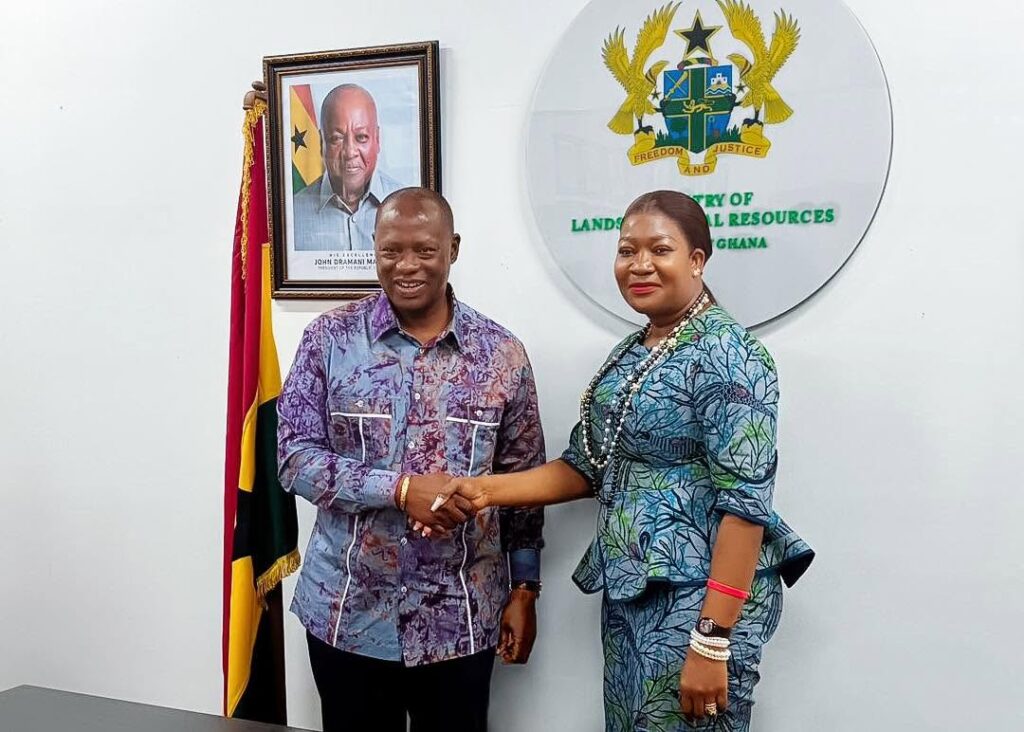
The confrontation escalated following a working visit by Mr. Armah-Kofi Buah to the Salman mining facility, where he formally declared the conclusion of an internal administrative review.
The Ministerial Review Committee, constituted to evaluate appeals submitted by Adamus following an earlier notice of cancellation, submitted findings that endorsed the initial recommendations made by the Chief Inspector of Mines and the Minerals Commission.
According to the Minister, the committee confirmed multiple infractions against safety and operational standards, providing the justification needed to uphold the lease termination and mandate the Minerals Commission to assume immediate administrative control over the concession.
In response to these findings, Adamus expressed deep “shock and disappointment,” arguing that the review panel served as a rubber stamp for an already predetermined outcome.
The company takes the position that setting up an internal committee does not cure the fundamental illegality of violating Act 703.
From Adamus’ viewpoint, allowing state regulators to seize administrative management of an active mine based on contested audit conclusions establishes a dangerous precedent for resource governance in the West African sub-region, threatening investor confidence across the broader mining industry.
Statutory Rights and Imminent Judicial Challenge
To safeguard its investments, Adamus Resources announced that it is preparing a comprehensive legal strategy to overturn the government’s executive order.
The company views judicial intervention as the primary mechanism to restore its mineral titles and hold public officers accountable for procedural non-compliance.

Management reaffirmed its commitment to exploring every legal avenue available under domestic laws and international investment frameworks, assuring the public that detailed court filings will be made public shortly.
Ultimately, Adamus views this confrontation not merely as a localized dispute over the Salman concession, but as a critical test of rule of law within Ghana’s natural resource sector.
By challenging the authority of the Minister to bypass statutory procedures, the mining enterprise aims to establish that executive discretion cannot supersede legislative mandates, setting the stage for a landmark courtroom battle over regulatory power and corporate property rights.
READ ALSO: Burnham Weighs Disposable Barbecue Ban as Wildfire Risk Grows