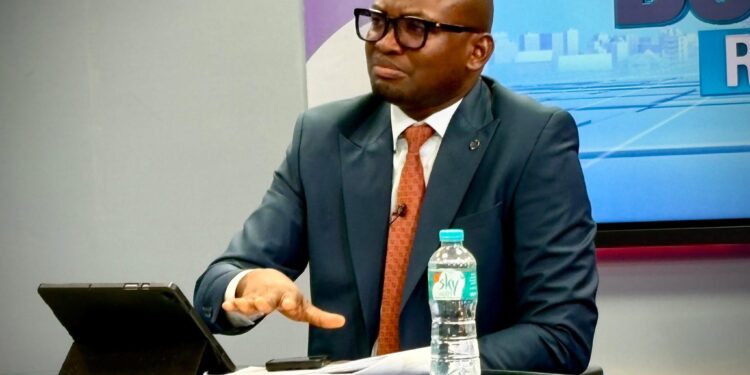
Finance and Tax Analyst, Nelson Cudjoe Kuagbedzi has strongly cautioned policy makers and economic managers against yielding to political pressures to scrap the Domestic Gold Purchase Programme (DGPP), arguing that the optimal strategy for the nation is to refine the policy framework rather than abandoning a vital mechanism that has significantly bolstered Ghana’s economic resilience.
Kuagbedzi emphasizes that public discourse surrounding the Bank of Ghana’s (BoG) gold purchase operations must transcend emotional rhetoric and align strictly with long-term macroeconomic imperatives.
He notes that while public concern over operational figures is legitimate, dismantling the initiative would severely undermine Ghana’s capacity to accumulate foreign currency reserves independently and maintain local currency stability during volatile global market cycles.
Instead of dismantling the structure, key policy stakeholders must focus on optimizing operational efficiency, enhancing price discovery, and plugging administrative loopholes to safeguard public funds while securing the national balance sheet.
“The way forward Ghana should not respond to the GHS21.89 billion figure by abandoning the programme. The answer is to make the programme better. We must continue reducing transaction costs, strengthen transparent benchmark pricing, maintain competition among offtakers, improve disclosure around programme revenues and costs, and intensify the fight against gold smuggling.”
Finance and Tax Analyst, Nelson Cudjoe Kuagbedzi
The Economic Context of the GHS21.89 Billion Controversy
The political debate surrounding the Bank of Ghana’s reported GHS21.89 billion figure underscores the delicate balance between immediate fiscal transparency and strategic national asset accumulation.
Neslon Kuagbedzi asserts that while “the Bank of Ghana should never be above scrutiny,” evaluating its policy interventions purely through an isolated headline number stripped of economic context distorts the broader developmental narrative.

The core rationale driving the Domestic Gold Purchase Programme lies in addressing Ghana’s structural vulnerability to external balance-of-payment shocks by directly leveraging locally mined gold resources to build robust central bank foreign reserves.
He argues that the GHS21.89 billion debate ought to serve as a vital “opportunity for economic education, not merely political confrontation.”
Evaluating the true value of the policy requires analyzing whether the country is becoming more financially resilient, better equipped to generate its own foreign exchange, less vulnerable to external disruptions, and better positioned for long-term growth.
Nelson Kuagbedzi maintains that “the Bank of Ghana deserves a fair hearing and commendation” for its full and honest disclosure regarding the DGPP, as well as praise for executing a program that successfully “raked in well over US$13b” in foreign currency for the nation.
Strategic Reforms Required for Programme Optimization
To maximize the long-term economic returns of the DGPP, Kuagbedzi outlines a targeted roadmap focused on institutional strengthening, transparent governance, and rigorous operational discipline across the extractive value chain.
Chief among these recommendations is the urgent need to drive down transaction costs while instituting transparent benchmark pricing mechanisms for local gold acquisitions.
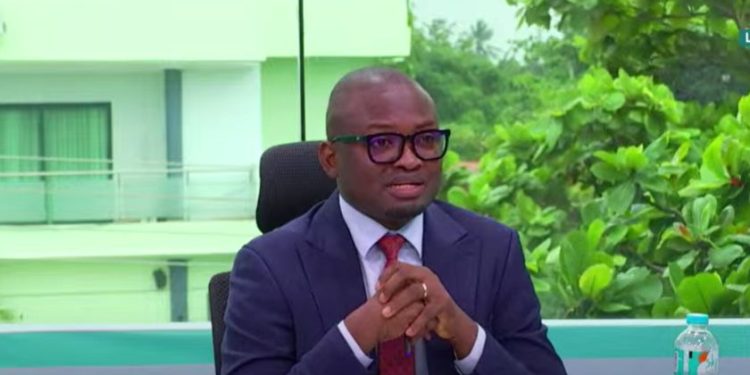
By establishing clear and predictable pricing structures aligned with international spot markets, the central bank can effectively eliminate arbitrage opportunities, protect public financial resources, and ensure equitable treatment for local miners and authorized aggregators alike.
Furthermore, maintaining healthy competition among licensed offtakers and aggregator firms remains crucial to preventing monopolistic inefficiencies and market distortions within the domestic gold supply chain.
Nelson Kuagbedzi highlights the imperative of improving disclosure standards regarding all revenues and operational costs associated with the initiative.
Crucially, these internal institutional reforms must be accompanied by an intensified national campaign against illegal gold smuggling, which continues to bleed the country of critical mineral wealth that should otherwise flow into official central bank reserves and national treasury accounts.
Broader Macroeconomic Impact and the Path Ahead
Beyond administrative and operational adjustments, the ultimate success of the Domestic Gold Purchase Programme depends on how effectively the generated foreign currency reserves translate into broader macroeconomic stability and improved living standards for ordinary Ghanaians.
Foreign exchange reserves derived from domestic gold purchases must actively function as a financial buffer to defend the Cedi, subdue import-driven inflation, and foster lower borrowing costs across the banking sector to spur local enterprise.

Nelson Kuagbedzi reminds stakeholders that “economic recovery is not built by one policy or one institution,” but by systematically fixing vulnerabilities one after another—strengthening reserves, stabilizing the currency, reducing inflation, lowering the cost of credit, restoring confidence, encouraging investment, expanding production, and creating jobs.
By consolidating current gains, addressing identified structural weaknesses, and strengthening reserve accumulation, Ghana can build a resilient economic foundation.
Ultimately, the Bank of Ghana’s gold strategy must remain anchored on building financial sovereignty, ensuring that the country’s rich gold resources serve as a primary engine for sustainable economic expansion and long-term national prosperity.
READ ALSO: GCB Bank Pushes Alternative Financing to Expand Credit Access