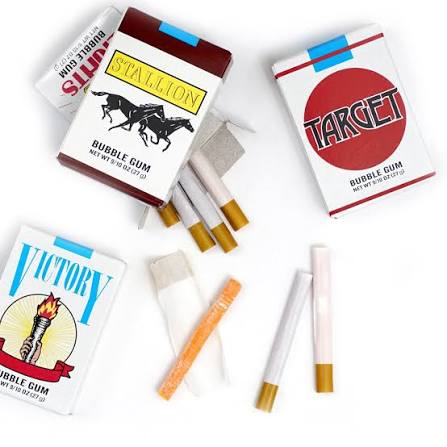
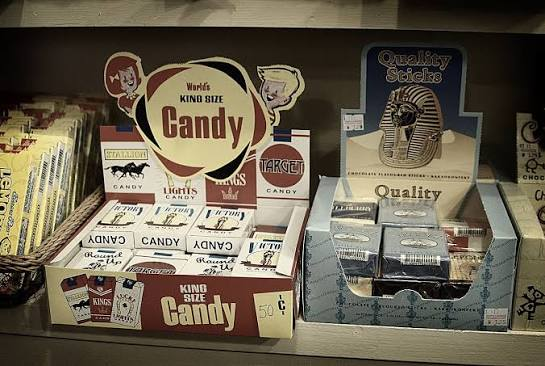
The Food and Drugs Authority (FDA), working in collaboration with National Security, has seized quantities of an unregistered cigar-shaped confectionery branded as “Cigarette Rod Lollipop” that was being openly sold within Accra’s Central Business District, following a targeted crackdown on the product’s sale over the weekend.
According to the FDA, the operation led to the arrest of a key suspect identified at the centre of the product’s distribution network, who has since been placed in police custody pending further investigations into how the item was imported, distributed and sold within the capital.
The Authority stated that the Cigarette Rod Lollipop has not been registered with the FDA, meaning its exact composition remains unverified and unknown to regulators.
The FDA said this absence of registration poses a serious public health risk to anyone who consumes the product, since unregistered items bypass the safety assessments ordinarily required before a food product reaches Ghanaian consumers.
“Because this product has never been submitted for registration, we simply do not know what it contains, and that uncertainty alone makes it a public health concern,”
FDA
Risk Of Normalizing Smoking Among Children
Beyond concerns tied to its unknown ingredients, the FDA raised a separate but related alarm over the product’s cigar-shaped design and branding. The Authority warned that children seen holding or using the sweet could unintentionally be drawn toward behaviours associated with cigarette smoking, given the product’s close visual resemblance to an actual cigarette.
The FDA said this risk runs directly counter to the national anti-smoking campaign it has continued to lead, arguing that allowing such a product to circulate freely undermines years of public health messaging aimed at discouraging smoking, particularly among young people.
“A product shaped and branded to imitate a cigarette has no place on our shelves, especially when it risks introducing children to the visual habit of smoking before they even understand what it means,”
FDA\

Considering these combined risks, the FDA strongly advised members of the public not to purchase or use the Cigarette Rod Lollipop under any circumstances.
The Authority indicated that photographs of the seized product had been made available publicly to help consumers identify and steer clear of it wherever it may still be in circulation.
Legal Grounds for the Seizure
The FDA was explicit about the legal basis for its enforcement action, noting that the sale of the product constitutes a clear breach of Section 97(1) of the Public Health Act, 2012 (Act 851).
This provision makes it an offence to manufacture, import, export, distribute, sell or supply any food product, or to expose such a product for sale, without prior registration by the Authority.
The FDA confirmed that the Cigarette Rod Lollipop falls squarely within the legal definition of food, placing its unregistered sale firmly within the scope of this offence.
The Authority encouraged members of the public to report any individuals found selling the Cigarette Rod Lollipop, as well as any other suspected unregistered products encountered in the market.
It further advised anyone currently holding stock of the item to voluntarily hand it over, either by contacting the FDA directly or delivering it to the nearest FDA office, stating that doing so would be in their own best interest given the legal risks attached to continued possession or sale.
Reward Offered for Information Leading to Arrests
To support ongoing efforts to trace the source of the product, the FDA appealed for credible information that could lead to the arrest of the importers or any other individuals connected to bringing the Cigarette Rod Lollipop into the country and distributing it.
The Authority assured that all information shared would be treated with strict confidentiality and confirmed that individuals whose tips lead to successful arrests would be rewarded for their assistance.
The weekend seizure adds to the FDA’s continuing enforcement drive against unregistered and potentially harmful products circulating within Ghana’s consumer markets, particularly those capable of undermining existing public health campaigns or posing risks to children.
With investigations into the product’s importation network still active, further details are expected to emerge regarding the scale of its distribution across the capital before the crackdown was carried out.
READ MORE: Ghana’s Herbal Medicine System Suffers From Parallel Practice, Not Integration – Dr Donkor