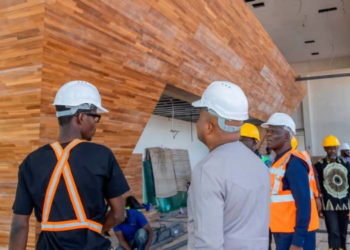
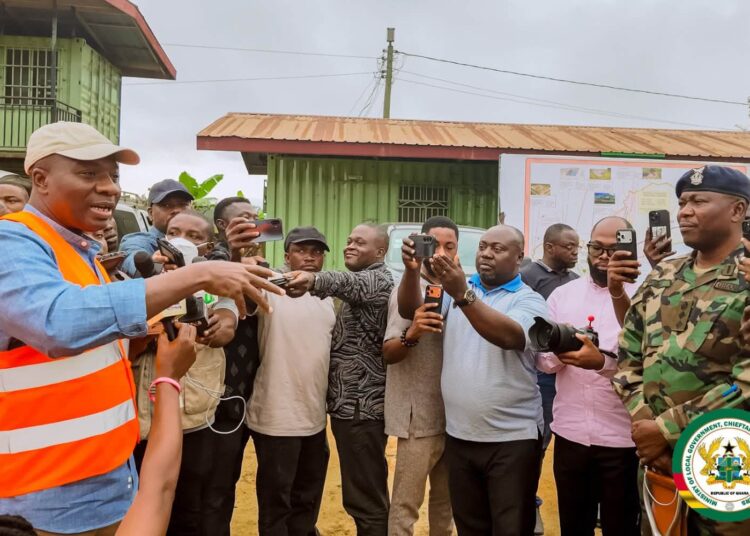
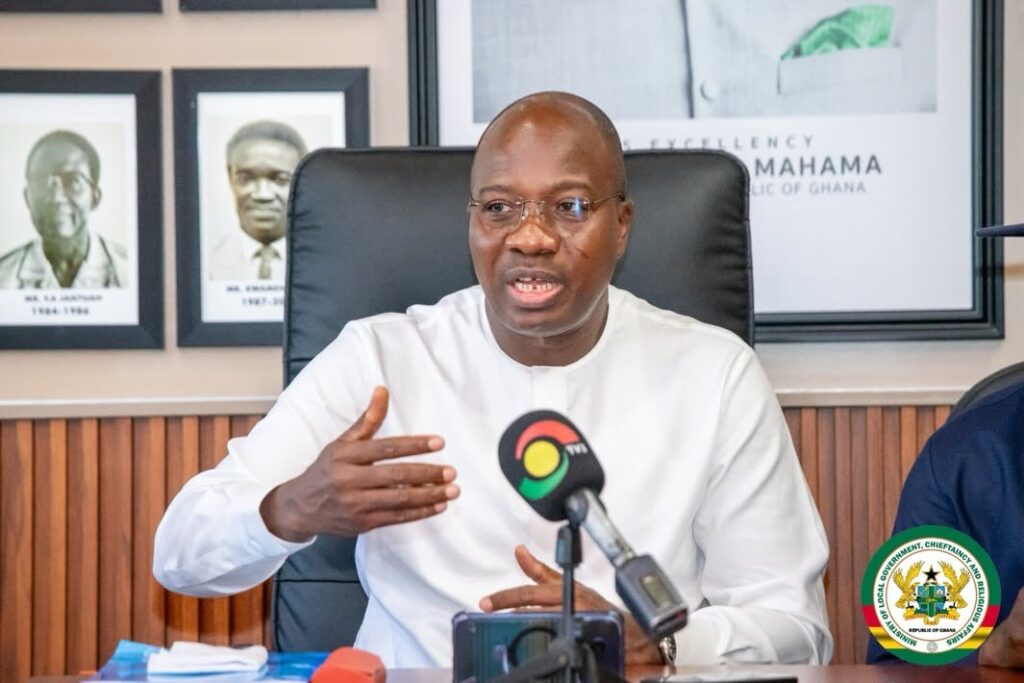
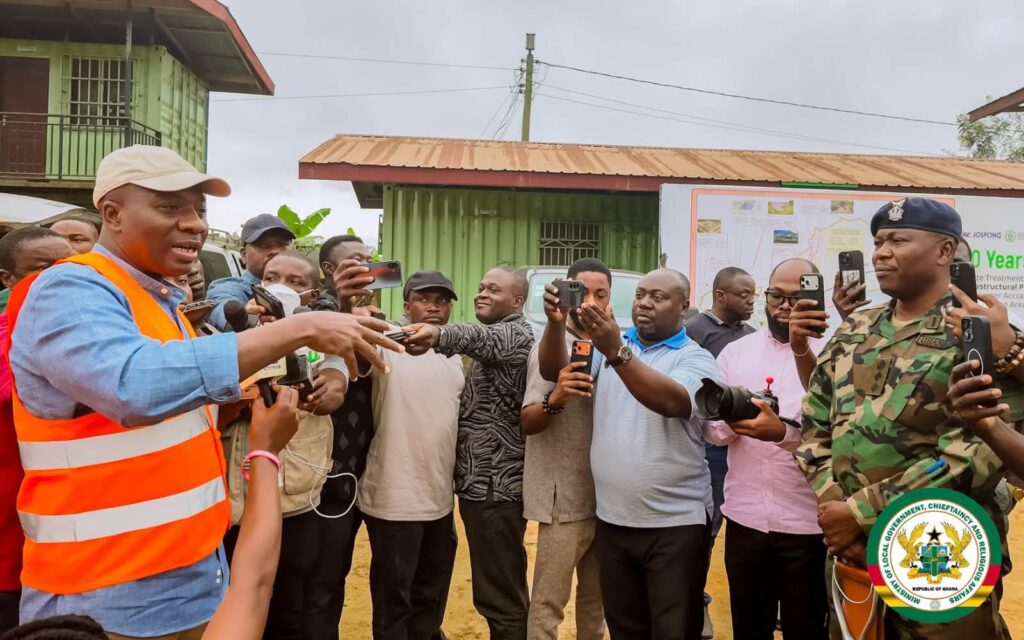
Local Government Minister Mahama Ayariga sharply criticised what he described as chronic financial inefficiency in Ghana’s waste management system during an inspection of a landfill site in Tamale over the weekend, arguing that the country’s core problem is not a shortage of resources but the wasteful way those resources are managed.
Hon Ayariga, MP for Bawku Central, used the site visit to press local officials on a specific, avoidable cost he identified at the landfill: government paying a private waste management company to build access roads to the top of the disposal cell using haulage trucks and gravel, work he argued government-owned equipment already sitting idle could perform at a fraction of the price.
“I have a problem. There’s a lot to do with money that I really feel offended when I see that you are just throwing the money away. Our country’s problem is not lack of resources. It is the way we inefficiently manage almost everything. So we are spending three times on things that we should just spend 30 percent of the money on.”
Mahama Ayariga, Bawku Central MP and Minister for Local Government, Chieftaincy and Religious Affairs
A Specific, Fixable Waste of Money
Hon Ayariga zeroed in on the mechanics of the problem with unusual technical precision for a ministerial site visit.
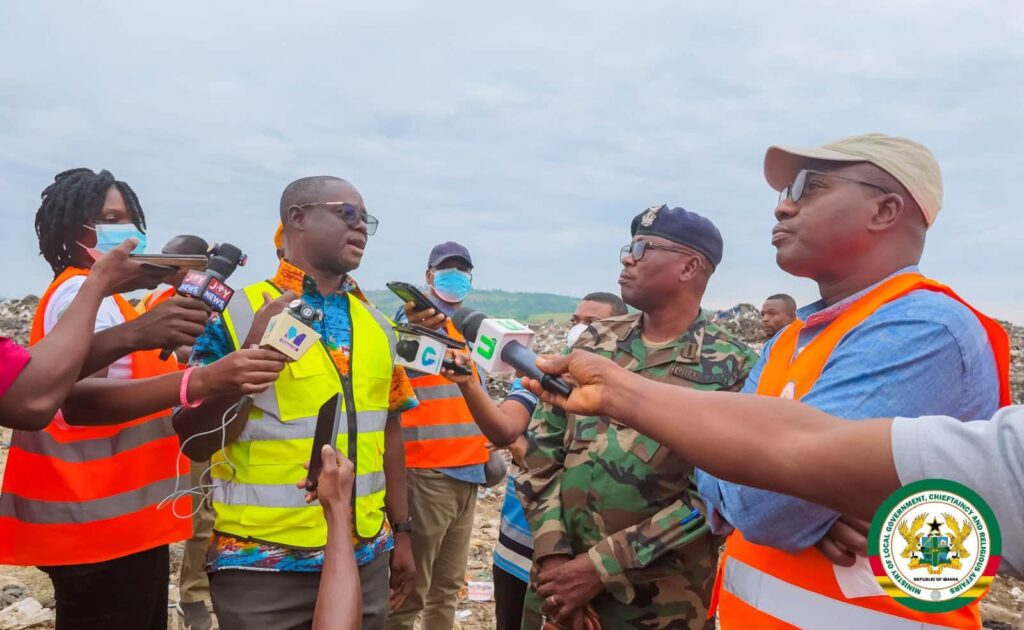
He explained that maintaining road access to the top of a landfill cell requires periodic work, hauling gravel, compacting it, and creating a path for large trucks to reach the discharge point, work that need not happen daily but every couple of months. He said the equipment needed to do exactly that already exists and sits idle.
“We have the equipment. They are packed there. They just need us to pile gravel, compact the gravel, so that when the big trucks come, they will be able to go up to the top of the cell and then discharge.”
Mahama Ayariga, Bawku Central MP and Minister for Local Government, Chieftaincy and Religious Affairs
Instead, he said, government pays the private waste management company operating the landfill to perform that same function, a company he pointedly noted is not doing the work free of charge. “They are charging government,” he said. “So why would we be just throwing money away?”
Idle Equipment, Paid Operators, No Output
Hon Mahama Ayariga extended his criticism to a broader pattern he said characterises the sector. He noted that public money had already been spent purchasing bulldozers, graders and tipper trucks, equipment that now sits unused while government continues paying the operators and drivers assigned to run it.
“They come and fold their arms,” he said, describing a situation in which the state pays twice, once for equipment and staff that remain idle, and again for a private contractor to perform work that idle equipment could have done directly.
He argued that redirecting the money currently spent on the contracted road-building work could fund several other needs directly: litter bins for homes, a transfer station in town to reduce hauling distances, and additional haulage trucks to expand collection capacity.
Inefficiency Beyond Waste Management
Hon Mahama Ayariga widened his critique to argue that the same pattern of inefficient spending recurs across other sectors of government. He said similar waste occurs in education and health, where money is spent without translating efficiently into services actually delivered to citizens.
He tied this directly to the country’s broader fiscal constraints, arguing that inefficient management means heavy tax collection and natural resource royalties end up being poured away rather than invested.
“We need more schools. We can’t build the schools. We need more cleaners. We can’t employ the cleaners. We need to employ more teachers. We can’t build the teachers.”
Mahama Ayariga, Bawku Central MP and Minister for Local Government, Chieftaincy and Religious Affairs
A Call for Officials to Act Within Their Own Authority
The Bawku Central MP closed by framing the fix as something local officials could implement themselves without waiting for central government intervention.
He urged the landfill’s managers to arrange for the idle drip equipment to be deployed every two to four months to maintain the access road, a simple operational adjustment he argued would immediately reduce costs.
“These are things that you can do on your own. Have an arrangement with them and then every two, three or four months, the DRIP equipment comes and then creates the path that they need to the top, and then you know it will help.”
Mahama Ayariga, Bawku Central MP and Minister for Local Government, Chieftaincy and Religious Affairs
His remarks reflect an early theme of his tenure as Local Government Minister, one he has raised in other settings since taking office: that Ghana’s cities and districts have more capacity to solve their own resourcing problems than officials often assume, if existing assets and revenue tools are actually put to use.
READ ALSO: Ghana, AU Deepen Push For Integrated Energy Investment