The Development Bank Ghana (DBG) is set to provide credit support for at least two textile companies before the end of 2026, as part of a broader strategy to revive Ghana’s manufacturing sector.
The two projects are part of five bankable initiatives that emerged from a specialized textile sector deal room established by DBG in collaboration with its development partners to identify and prepare viable businesses for financing.
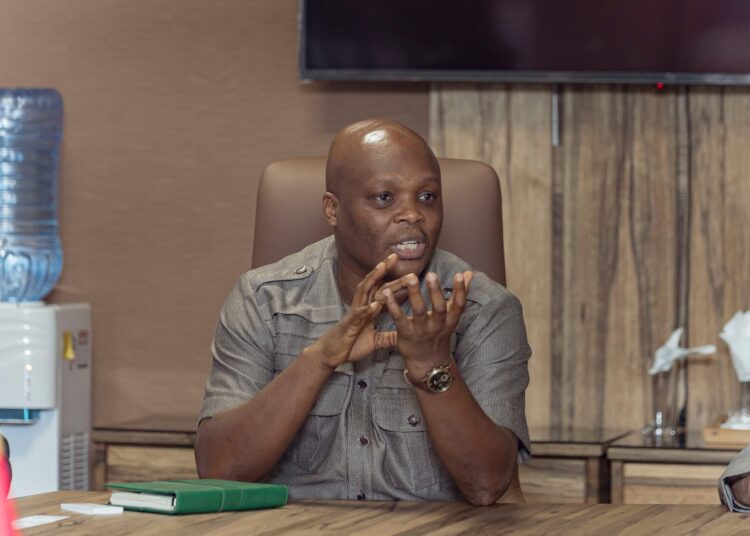
Chief Executive Officer of DBG, Professor Randolph Nsor-Ambala, disclosed that the five projects have already been taken to the market and are currently being reviewed by the bank’s Participating Financial Institutions (PFIs) for credit approval.
He said the bank is optimistic that at least two of the projects will secure final approval and receive disbursements before the close of the year.
“As we speak, we have currently road-showed five of those projects that came out of that deal room across various participating financial institutions, and they’re at the various levels of approval. My sense of it is that before the end of the year, at least about two of them would have received credit approval and then disbursement.”
Prof Nsor-Ambala
Prof. Nsor-Ambala speaking on DBG’s strategic focus on manufacturing, which he described as central to Ghana’s industrial transformation agenda. He said the bank has prioritized three key sub sectors within manufacturing: textiles and garments, pharmaceuticals, and energy transition-related manufacturing.
According to him, textiles remains a critical area where Ghana has significant potential for import substitution, job creation and export growth, but the sector has been held back by years of underinvestment, weak market linkages and policy uncertainty.
He explained that DBG’s approach to supporting the textile industry goes beyond the provision of long term affordable credit. The bank, he said, is deploying a holistic, value-chain approach that tackles the structural bottlenecks constraining growth.
This includes interventions in market development to help Ghanaian textile firms access local and international markets, capacity building and technical assistance to make businesses investor-ready, as well as active policy advocacy to improve the enabling
DBG Partners with AGI to Make Textile Projects Bankable Environment.

In line with this, DBG signed a three-year Memorandum of Understanding with the Association of Ghana Industries (AGI) specifically dedicated to supporting the textile and garment sector. Under the agreement, both institutions are collaborating to provide financing, facilitate market access and deliver technical assistance to help textile businesses develop viable, bankable projects.
Prof. Nsor-Ambala noted that the bank’s advocacy efforts have already yielded tangible policy outcomes for the industry. He recalled that during a high level textile sector roundtable convened by DBG, industry players raised concerns about the long delay in finalizing Ghana’s textiles and garment policy, a key document expected to provide policy clarity and direction for investors.
‘’Based on policy advocacy initiatives that we participated in, that policy has now been signed and approved by Parliament,” he revealed, describing it as a major breakthrough that will boost investor confidence in the sector.
To build a robust pipeline of projects, DBG has also partnered with international development agencies including GIZ, Palladium, and the Jobs, Education and Training (JET) programme.
Through these partnerships, the bank has supported sector specific training programmes involving international experts and subsequently established a dedicated deal room to scout and prepare projects that have the potential to attract financing but require further structuring.
The CEO disclosed that a comprehensive nationwide feasibility study into the textile sector has been completed with funding support from the German development bank, KfW.
Feasibility Study Identifies Gaps Blocking Textile Projects
The study mapped the challenges confronting the industry and identified a number of bankable projects that were being held back by specific constraints such as inadequate business plans, governance gaps and lack of market linkages.
He said DBG and its partners are currently working with those businesses to address the gaps and make them investor-ready.
“As we speak, we are working with those businesses with a timeline of up to the end of November to make them investor-ready and then help them through our participating financial institutions to receive adequate funding.”
Prof Nsor-Ambala
He stressed that DBG was established not to provide direct retail lending, but to act as a wholesale development finance institution that provides long term funding through commercial banks and specialized financial institutions, while also correcting market failures through technical assistance and ecosystem support.
“Our broader strategy is to provide value-chain solutions rather than simply lines of credit. We want to fix the ecosystem, not just disburse money.”
Prof Nsor-Ambala
Prof. Nsor-Ambala added that inclusivity and regional balance remain central to DBG’s investment philosophy. The bank deliberately prioritizes youth led and women owned businesses and is working to ensure that financing reaches beyond the traditional commercial hubs.
This, he noted, aligns with the bank’s mandate to drive equitable economic development across the country. The CEO also highlighted the critical role played by DBG’s development partners in de-risking and scaling its operations.
According to him, the partners have contributed not just funding but also technical expertise and human resources that have been instrumental in addressing deep rooted market failures. He said their continued support has enabled DBG to intervene in sectors that commercial banks have traditionally considered too risky, thereby unlocking growth opportunities and creating jobs.
The DBG model of combining financing, technical assistance and policy advocacy could provide a blueprint for reviving other struggling manufacturing sub sectors and advancing Ghana’s import substitution and industrialization agenda.
READ ALSO:Christian Apologetic Alliance Rejects Calls to Alter Mission School Ethos