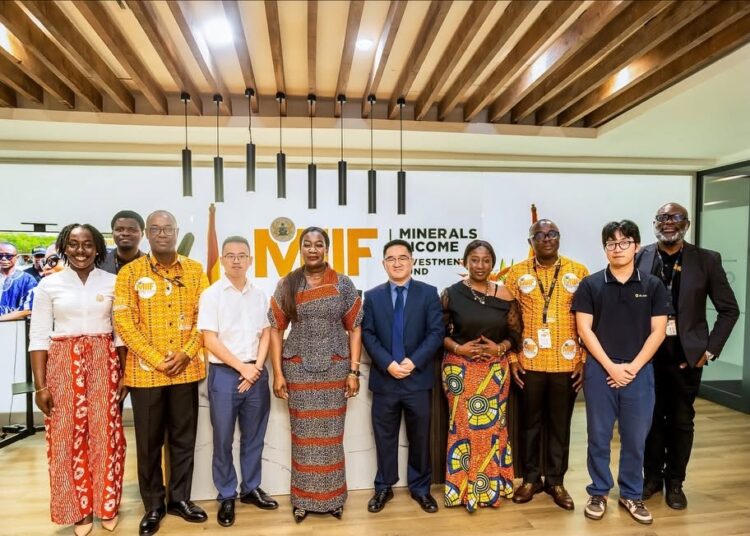
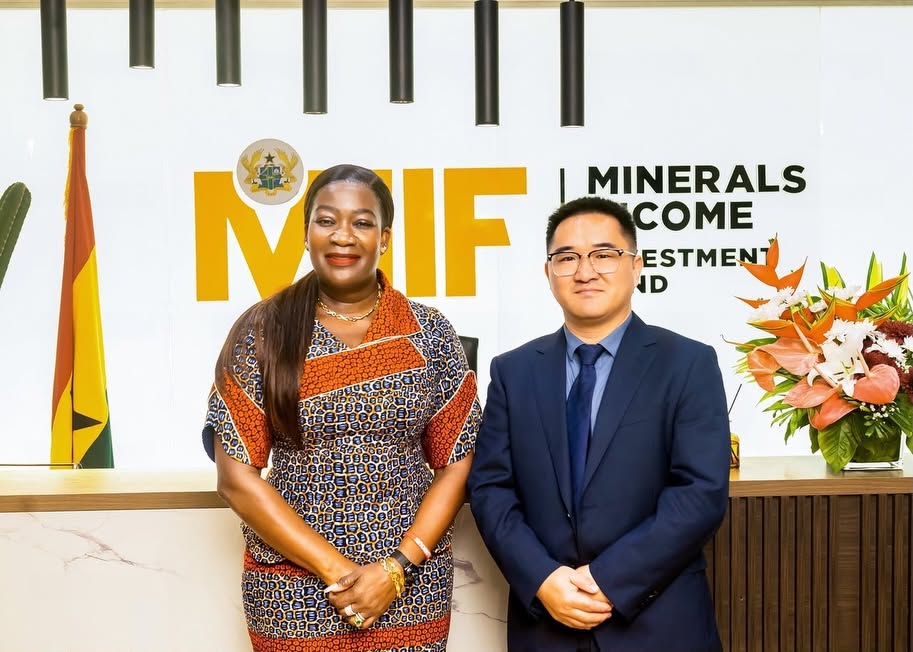
The Minerals Income Investment Fund (MIIF) and Zijin Golden Ridge Limited (ZGRL) have established a strategic partnership to drive sustainable mining practices, environmental restoration, and technological innovation across Ghana’s extractive sector.
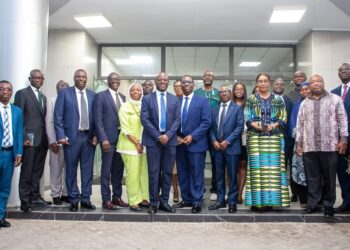
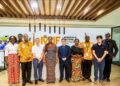
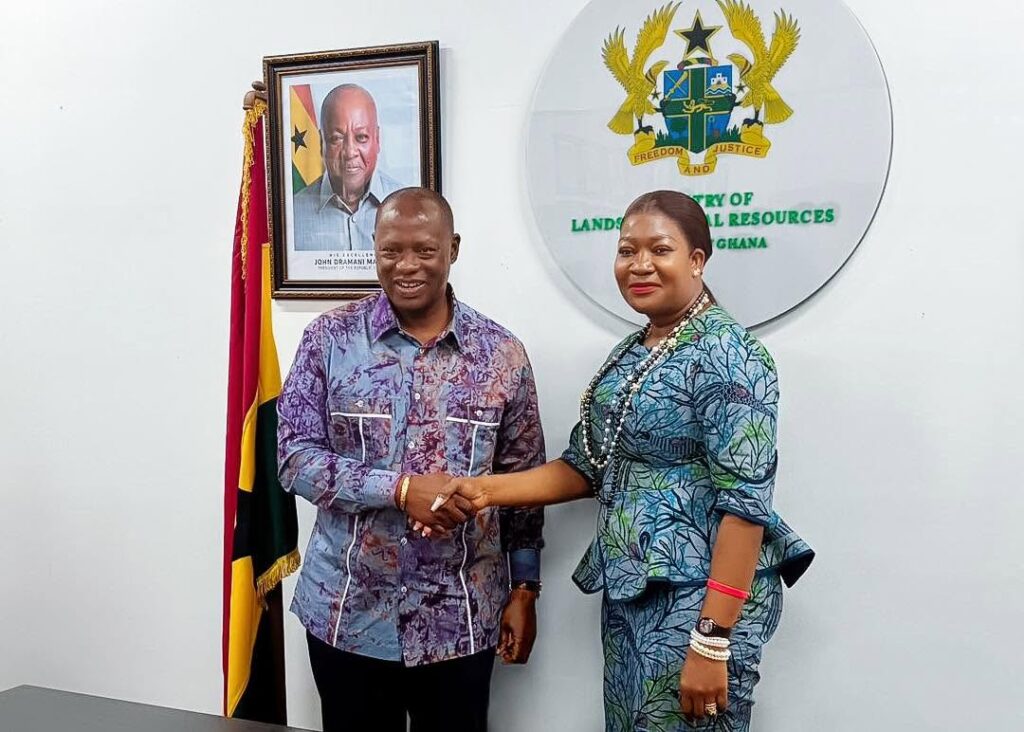
During a high-level meeting in Accra, ZGRL Chief Executive Officer Leon Zhang and MIIF Chief Executive Officer Justina Nelson discussed joint initiatives designed to integrate advanced technology with robust biodiversity conservation.
The collaboration underscores a shared commitment to responsible resource extraction, positioning environmental stewardship alongside industrial productivity as a central pillar of the nation’s mining future.
“Our Atewa Biodiversity Offset Programme – a 10-year, first-of-its-kind commitment targeting no net loss of biodiversity – plus our newer partnership with MIIF to restore Ghana’s Subri Forest Reserve.”
Zijin Golden Ridge Limited (ZGRL)
This initiative comes as the Ghanaian mining sector faces mounting pressure to align resource extraction with global ecological standards and local environmental conservation goals.
To address these demands, the partnership focuses on green logistics and large-scale habitat restoration, notably through joint efforts to restore the degraded Subri Forest Reserve.
By combining state-backed investment strategies with ZGRL’s operational expertise, the alliance establishes a framework aimed at mitigating the ecological impact of mining, protecting vulnerable forest ecosystems, and introducing clean energy technologies to major gold mining operations across the region.
Restoring Forest Ecosystems and Safeguarding Biodiversity
The imperative for robust environmental intervention in Ghana’s mining landscape has grown urgent as industrial activities compete with critical ecological reserves.
For decades, expanding mining footprints and land degradation have threatened local ecosystems, necessitating long-term environmental remediation frameworks rather than short-term fixes.
The strategic focus on biodiversity response targets this ecological balance directly. Through the “Atewa Biodiversity Offset Programme,” ZGRL is executing a long-term strategy designed to neutralize environmental impacts and ensure that mining operations do not result in a overall reduction of natural habitats.
Furthermore, extending these efforts to the Subri Forest Reserve demonstrates how public fund managers and private operators can collaborate on large-scale reforestation.
Forest reserves in tropical mining regions face severe pressures from habitat fragmentation and soil degradation, making structured intervention essential.
By combining corporate funding, ecological planning, and MIIF’s institutional backing, the joint project seeks to rehabilitate native flora, stabilize local watersheds, and re-establish critical wildlife corridors.
This dual focus on offset programs and direct forest restoration provides a replicable operational model for other resource-rich regions striving to balance mineral extraction with environmental integrity.
Decarbonizing Mine Fleets and Driving Technological Innovation
Beyond land restoration, modernizing operational infrastructure remains critical to lowering the carbon footprint of industrial mining.
Heavy machinery and haulage logistics traditionally account for a massive share of fuel consumption and greenhouse gas emissions in open-pit gold operations.
Addressing this operational challenge requires transitioning from conventional diesel-powered fleets to low-emission, energy-efficient machinery.
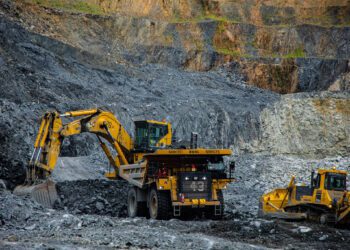
At the Akyem operation, ZGRL has introduced a “new-energy haul truck fleet” aimed directly at reducing fuel consumption and operational carbon outputs. This deployment has positioned ZGRL as a leader in Ghana’s gold sector regarding electric haulage technology.
By replacing standard fleets with electrified equipment, the company significantly curtails diesel reliance, cuts direct site emissions, and improves air quality around operational zones.
Integrating clean-energy logistics into core extraction processes illustrates how modern technology can reduce environmental footprints while maintaining industrial productivity.
Setting New Standards for Responsible Extraction in Ghana
The collaboration between MIIF and ZGRL signals a major shift toward accountable resource management in West Africa’s extractive industry.
Historically, resource extraction was judged primarily by volume and revenue generation; today, regulatory bodies, investors, and local communities demand stringent adherence to environmental, social, and governance (ESG) standards.
By embedding sustainability metrics into the core business model, this partnership addresses long-standing ecological concerns while maintaining economic outputs.
Achieving sustainable development in the mining sector depends on continuous collaboration between institutional stakeholders and mine operators.
By aligning corporate responsibility with national investment strategies, MIIF and ZGRL are demonstrating that ecological conservation and industrial efficiency can coexist. This integrated approach combining long-term forest restoration, aggressive biodiversity management, and clean fleet technologies establishes a comprehensive roadmap for the future of responsible mining in Ghana and across the broader region.
READ ALSO: Ukraine’s Prosecutor General Resigns Amid Corruption Scandal