Ghana and Uganda are using regulatory peer learning to examine how African petroleum-producing countries can strengthen the institutions, systems and practices that govern their upstream oil and gas industries, as Uganda moves closer to commercial production and Ghana seeks to build on more than a decade of experience in its own petroleum sector.
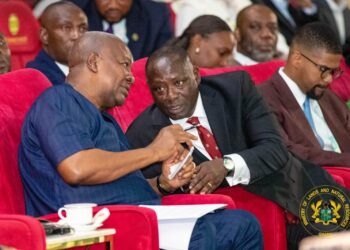
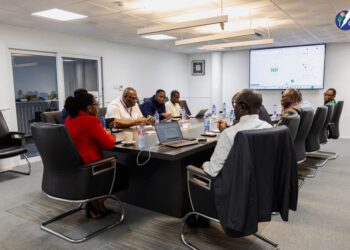
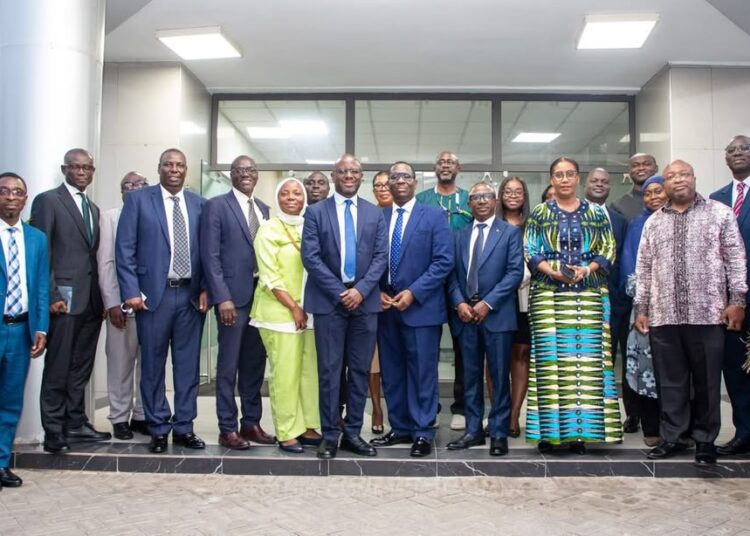
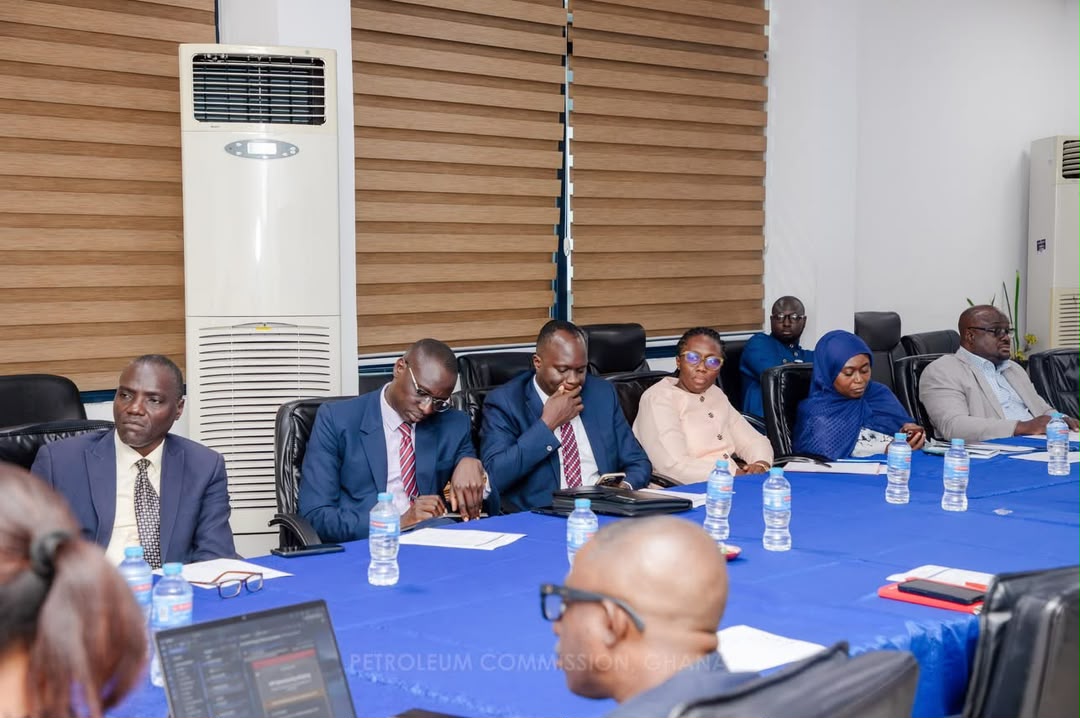
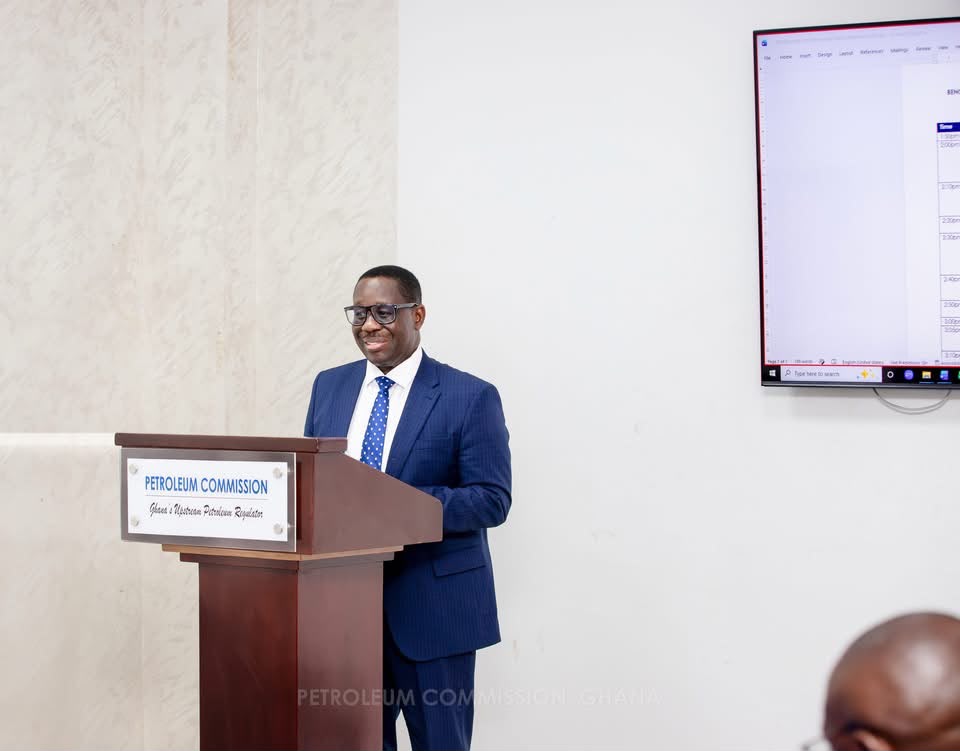
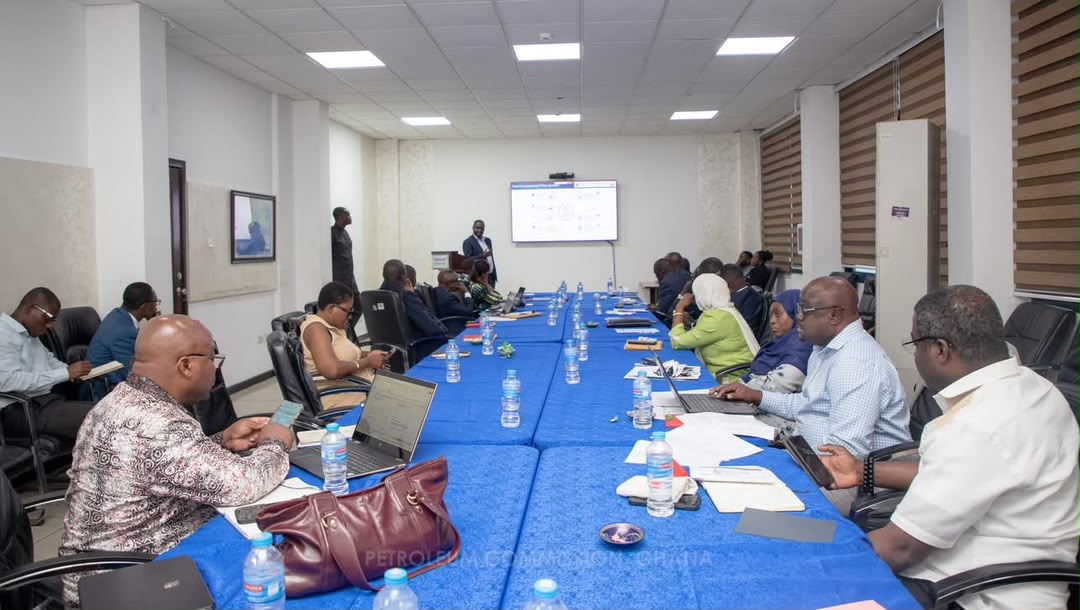
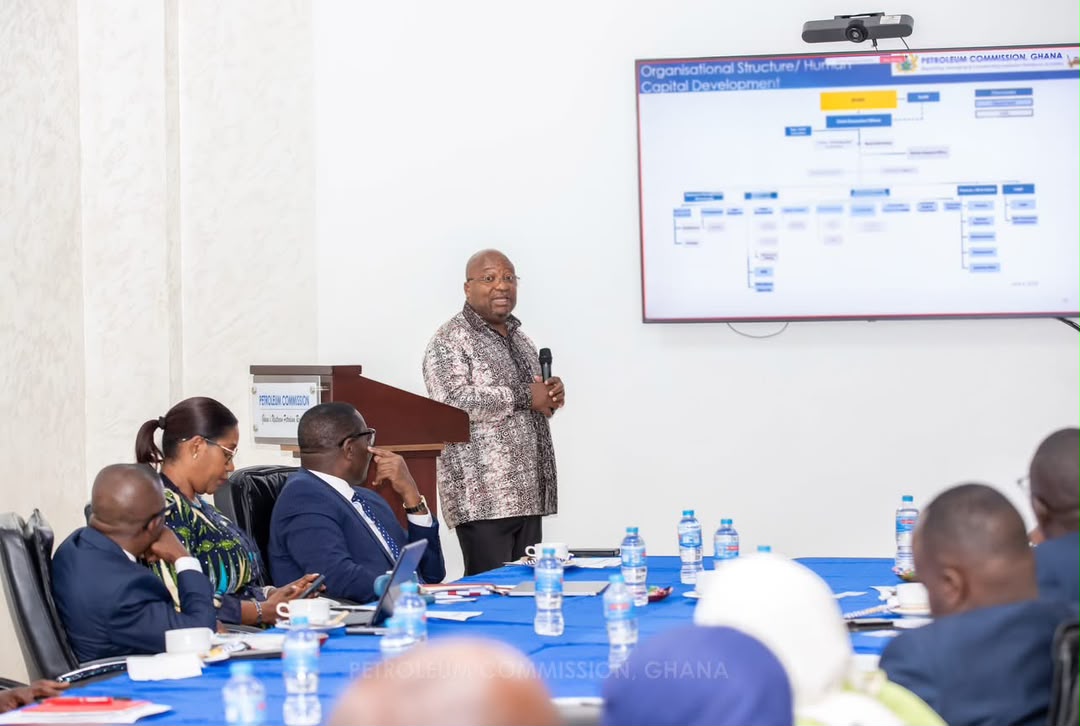
The latest engagement brought the Board of the Petroleum Commission, led by Board Chairman Mr Ernest Thompson, together with the Board of the Petroleum Authority of Uganda (PAU) for a high-level exchange focused on Ghana’s upstream value chain operations.
The Ugandan delegation’s visit forms part of a broader effort to understand how another African petroleum jurisdiction has navigated the transition from resource discovery and appraisal through development and production, while identifying regulatory practices that can be adapted to Uganda’s own circumstances.
Rather than viewing petroleum regulation as a purely national responsibility, the engagement points to a growing recognition among African resource-producing countries that regulatory institutions can benefit significantly from examining one another’s experience.
Petroleum systems may differ in geology, fiscal structures, institutional design and production arrangements, but regulators across the continent increasingly confront common questions around investment, resource management, local participation, environmental protection, operational safety and the long-term economic value of finite petroleum resources.
Regulatory Experience Becomes A Strategic Asset
For Ghana, the exchange provides an opportunity to place its accumulated upstream regulatory experience within a wider African context.
The country has moved through several stages of petroleum-sector development since the discovery of commercial quantities of oil, building regulatory and institutional systems around exploration, field development, production, local content, health and safety, environmental management and investment oversight.
The Petroleum Commission’s role in that architecture gives it practical experience that is potentially valuable to jurisdictions still developing their petroleum industries.
The Commission was established as the upstream petroleum regulator, with responsibilities extending across petroleum exploration, development and production.
Its experience therefore encompasses not simply the regulation of individual companies, but the broader systems through which an upstream industry is supervised.
That distinction matters. A petroleum regulator’s effectiveness is ultimately determined not only by the laws on its books but by how those laws operate in practice: how licences are administered, how operators are monitored, how technical and financial obligations are assessed, how local-content requirements are implemented, how safety standards are enforced and how government balances investment attractiveness with national interests.
Mr Thompson said the exchange reflects the importance of African institutions developing their own channels for learning and strengthening regulatory practice.
“As African regulators, we must learn from one another. By sharing our experiences and lessons, we can strengthen our institutions and ensure that petroleum resources are managed responsibly for the benefit of our people.”
Petroleum Commission Board Chairman Mr Ernest Thompson
The principle is particularly relevant as African countries compete for a smaller pool of capital while simultaneously seeking greater value from their natural resources.
Regulatory uncertainty, lengthy approval processes, weak institutional coordination and inconsistent enforcement can increase the perceived risk of upstream investment.
Conversely, a regulator that provides clarity, technical competence and predictable oversight can become an important component of a country’s investment proposition.
Uganda’s Transition Brings New Regulatory Demands
Uganda’s interest in Ghana’s experience comes against the backdrop of a petroleum industry approaching a critical phase in its development.
Having moved through exploration and appraisal, Uganda is now working towards commercial production, making the transition from regulating a largely prospective resource base to overseeing an operating petroleum industry increasingly important.
That transition changes the regulatory challenge considerably.
During exploration, the regulator’s attention is heavily concentrated on geological activity, licensing obligations, technical work programmes and exploration expenditure.
Once development and production begin, however, the regulatory system must deal with a much wider operational ecosystem involving facilities, pipelines, contractors, workers, communities, environmental impacts, production measurement, revenue considerations and increasingly complex supply-chain relationships.
The Ugandan delegation’s decision to study Ghana’s upstream value chain operations therefore has relevance beyond petroleum production itself.
It is about understanding the institutional infrastructure required to supervise an industry once hydrocarbons move from being an underground resource into a functioning commercial value chain.
A key lesson for emerging producers is that the value of petroleum does not reside exclusively in the volume produced. It depends on the systems established around production and the extent to which those systems translate resource extraction into fiscal revenues, employment, domestic enterprise development, technical capability and wider economic activity.
This is where regulatory capacity becomes an economic asset.
Ghana’s Local Content Experience Offers Practical Lessons
One area where Ghana has developed considerable policy and regulatory experience is local content.
The country’s upstream local-content regime was designed to increase Ghanaian participation in an industry historically dominated by international oil companies and foreign technical service providers.
Over time, the focus has expanded beyond simply increasing the number of Ghanaian workers to developing domestic enterprises and capabilities that can participate in the petroleum supply chain.
For emerging petroleum producers, the distinction is important.
Local participation that is limited to employment may generate immediate benefits but does not necessarily create lasting industrial capacity.
A stronger approach seeks to build companies, technical expertise, professional services and supply-chain capabilities that remain useful beyond individual petroleum projects.
The Petroleum Commission’s experience in implementing and supervising Ghana’s local-content framework can therefore provide Uganda with a practical reference point as it considers how domestic businesses can participate in its emerging petroleum industry.
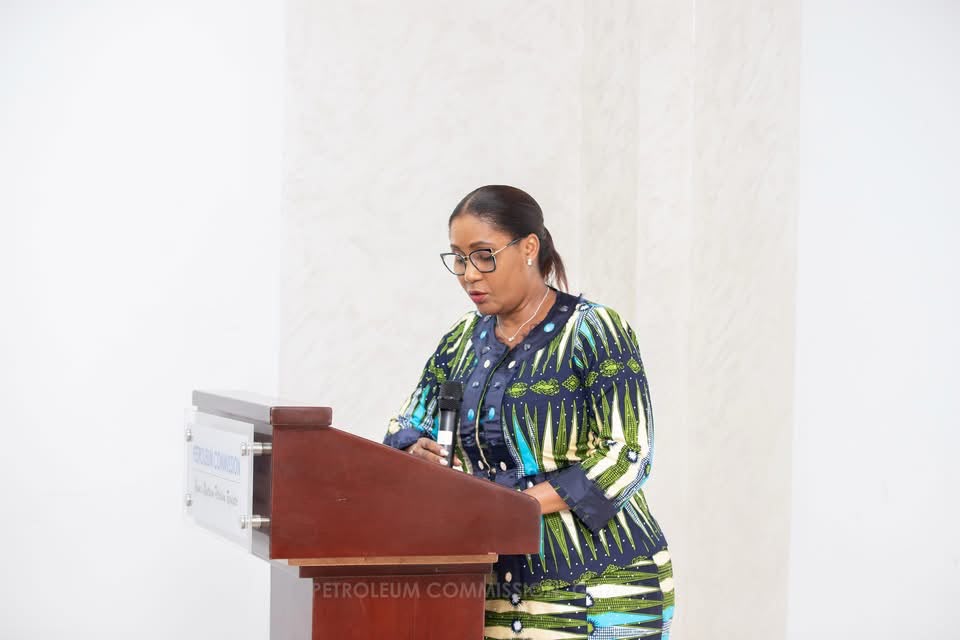
Ms. Emeafa Hardcastle, Chief Executive Officer of the Petroleum Commission, said Ghana’s experience could be shared openly, including the challenges encountered along the way.
“This is not simply a routine bilateral engagement. It is an opportunity for two African petroleum regulators to share what has worked, confront the challenges we have encountered and learn from each other as we seek to ensure that our petroleum resources deliver lasting value to our people.”
Ms. Emeafa Hardcastle, Chief Executive Officer of the Petroleum Commission
The emphasis on confronting challenges is significant. Regulatory peer review is most useful when it moves beyond presentations of institutional achievements and examines where policies have encountered implementation difficulties.
For a country approaching first production, understanding what another producer would do differently can be as valuable as learning what it did successfully.
Onshore Petroleum Raises A Different Set Of Questions
The exchange also has potential relevance for Ghana’s own evolving upstream ambitions.
Ghana’s petroleum story has historically been associated with offshore production, particularly the deepwater developments that established the country as a significant oil and gas producer.
But the country is increasingly looking towards frontier and onshore opportunities, including exploration in the Voltaian Basin.
Uganda’s experience is especially relevant in this respect because its petroleum development is strongly associated with onshore resources.
Onshore petroleum operations introduce a different set of considerations from deepwater developments, particularly regarding proximity to communities, land access, environmental management, infrastructure corridors and stakeholder engagement.
The regulatory lessons are therefore unlikely to flow in only one direction.
While Uganda can examine Ghana’s experience in managing a mature offshore upstream regulatory environment, Ghana can also benefit from understanding how Uganda is approaching the regulatory, environmental and social dimensions of developing petroleum resources closer to populated areas.
This two-way exchange is what gives the engagement greater strategic significance than a conventional study visit.
It creates the possibility of African regulators learning from different petroleum-development models rather than assuming that one regulatory framework can be transferred wholesale from one country to another.
From Petroleum Regulation To Resource Governance
At the heart of the discussions is a broader question about resource governance.
The discovery of oil and gas creates an opportunity, but it also creates institutional responsibilities.
Governments must establish rules that allow investors to recover capital and earn reasonable returns while ensuring that the producing country receives an appropriate share of the value generated.

Regulators must also ensure that operators meet technical, environmental and safety requirements throughout the life of a project.
This balance becomes increasingly important as the global petroleum industry changes.
International oil companies are facing greater scrutiny over capital allocation, emissions, environmental performance and long-term hydrocarbon demand.
African producers, meanwhile, remain under pressure to attract investment into resources that can provide revenues and energy supplies needed for development.
For regulators, the challenge is therefore no longer simply how to increase petroleum production.
It is how to create a framework in which production can take place responsibly and competitively while supporting broader national development objectives.
That requires institutional coordination.
Petroleum projects involve ministries, regulators, national oil companies, environmental authorities, local governments, security agencies, communities, investors and service companies.
Weak coordination between these actors can create delays, regulatory conflicts and uncertainty for investors, while excessive fragmentation can make it difficult to hold any single institution accountable.
Peer exchanges between regulators can help identify where these institutional interfaces work well and where they need strengthening.
The African Dimension Of Petroleum Governance
The Ghana-Uganda engagement also reflects a wider shift in how African countries are approaching their natural resources.
For decades, petroleum expertise, capital and technology in Africa have been heavily concentrated among international companies and external institutions.
African regulators have increasingly developed their own technical capabilities, national oil companies and domestic service industries, creating a growing body of African experience that can be shared across borders.
That knowledge has value.
A regulator in a new petroleum-producing country does not necessarily have to develop every institutional mechanism from scratch.
It can study the experience of another jurisdiction, identify what is transferable and avoid repeating costly mistakes.
At the same time, the country providing the experience can also gain insight into emerging approaches elsewhere.
Mr Thompson’s expectation that the engagement could strengthen regulatory exchanges is therefore important.
The objective should ultimately be to move from one-off meetings towards sustained institutional cooperation involving technical exchanges, regulatory dialogue and continued sharing of lessons as both petroleum sectors evolve.
For Uganda, such cooperation can support preparations for the responsibilities associated with commercial production.
For Ghana, it can provide an opportunity to reassess its own systems as the country seeks to attract new exploration investment and expand the value generated from its petroleum resources.
Building Institutions That Outlast The Oil
The strongest lesson from the engagement is perhaps that petroleum development is ultimately an institutional challenge as much as a geological or financial one.
Oil and gas reserves are finite. Regulatory institutions, technical expertise and domestic capabilities can endure long after individual fields decline.
That makes capacity building and knowledge transfer critical components of resource governance.
Uganda’s move towards first commercial production means decisions taken now could influence the structure of its petroleum industry for decades.
Ghana, having already travelled further along the production cycle, has an opportunity to share not only its successes but the institutional lessons accumulated through implementation.
The same applies to Ghana’s own next phase. As the country seeks fresh exploration, including frontier opportunities, the quality of its regulatory environment will remain a central part of its ability to compete for investment.
The Ghana-Uganda engagement consequently represents more than cooperation between two petroleum regulators.
It is part of a broader effort to strengthen African ownership of the knowledge systems that underpin resource development.
For Ghana and Uganda, the value of the exchange will ultimately be measured not by the meeting itself, but by what the institutions take back to their respective petroleum sectors: better regulation, stronger technical capacity, more effective oversight and a clearer understanding of how natural resources can be converted into durable national value.
And that is precisely where regulatory cooperation becomes important. Africa does not need every country to develop its petroleum industry in isolation; it needs institutions capable of learning from one another and adapting those lessons to their own realities
READ ALSO: IMANI, Youth Ministry Push TVET Reform to Fix Skills Gap