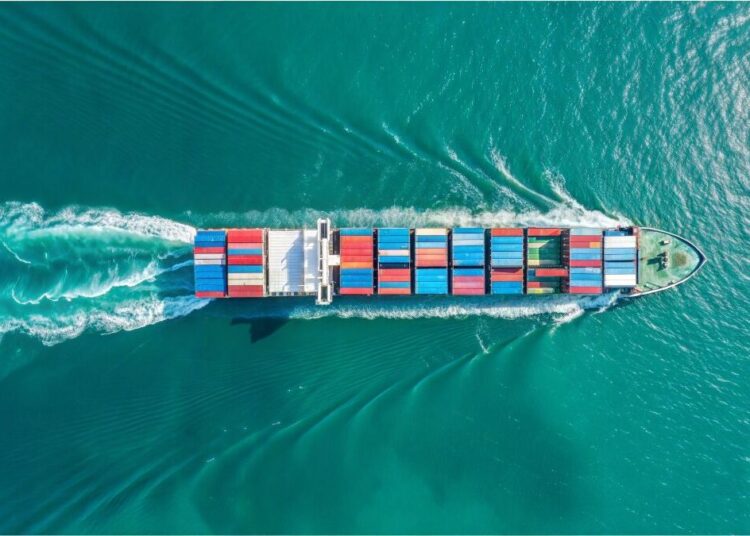
The global shipping industry is confronting a “genuinely unprecedented” convergence of crises, with commercial vessels and seafarers increasingly caught in conflicts far removed from their normal business operations.
From the Strait of Hormuz and the Red Sea to the waters off Somalia and the Black Sea, four important maritime locations are facing increased security challenges, exposing ships, crews, trade routes, and global supply chains to an unusual combination of dangers.
The enormity of the task is especially serious because the vessels at the heart of these crises are primarily commercial ships transporting essential supplies rather than military equipment. However, as geopolitical tensions rise, they are increasingly being viewed as instruments for nations, armed organisations, and other entities to impose pressure on their adversaries.
Damien Chevalier, Director of the Maritime Safety Division at the United Nations International Maritime Organization (IMO), revealed that the current situation represents an extraordinary moment for global shipping, with vessels and seafarers threatened simultaneously across several strategic waterways.
According to Chevalier, the crisis in the Strait of Hormuz has been unprecedented in the sheer number of people and vessels affected, with about 2,000 vessels and 20,000 seafarers impacted at the start of the conflict.
The disruption, however, is not confined to the strategically vital waterway connecting the Persian Gulf with the Gulf of Oman. The industry is simultaneously dealing with attacks by the Houthis in the Red Sea, a resurgence of piracy off Somalia and growing attacks against commercial shipping in the Black Sea.
The convergence is creating a security environment in which the traditional distinction between commercial activity and geopolitical conflict is becoming increasingly difficult to maintain.
In the Red Sea, attacks attributed to the Houthis have already forced vessels to reconsider one of the world’s most important maritime corridors. Ships navigating between Europe and Asia face higher security risks, with threats forcing operators to weigh the commercial cost of longer routes against the danger of passing through contested waters.
Off the coast of Somalia, meanwhile, pirates are exploiting a different consequence of the shifting security environment. With naval assets increasingly concentrated on the Red Sea and Strait of Hormuz, maritime security resources available to deter piracy have been reduced in other areas, creating opportunities for criminal groups to target vulnerable vessels.
Chevalier noted that pirates have particularly focused on smaller and easier-to-attack bulk carriers, taking advantage of the reduced naval presence. The renewed threat has become serious enough to feature prominently in discussions on maritime law enforcement, particularly as Somalia works on new anti-piracy legislation.

The Black Sea presents another dimension of the crisis. Unlike the threats in Hormuz, the Red Sea and Somalia, the attacks there are directly connected to the wider conflict involving Russia and Ukraine.
Commercial vessels, including oil tankers and grain carriers, have increasingly faced attacks involving drones, raising concerns about the safety of crews and the continued movement of essential commodities.
Chevalier stressed that information emerging from the Black Sea remains difficult to verify, with disinformation from the parties involved complicating efforts to establish precise figures. Nevertheless, the reported number of attacks, targeted vessels and crew casualties remains deeply concerning.
The consequences are already visible in Ukraine’s grain-export infrastructure. During what would normally be a busy harvest period, Ukrainian grain ports are receiving only one or two vessels a day compared with an expected 20 to 30 under normal circumstances.
Furthermore, the broader economic ramifications are just as dire. About 20% of the world’s oil supply passes through the Strait of Hormuz alone, thus any protracted disruption might lead to worldwide inflation and greater living expenses. While the Black Sea continues to be crucial for international grain exports, the waterways are also essential for the transportation of fertiliser.
Shipping Becomes a Frontline in Global Geopolitical Conflicts

What makes the present crisis particularly unusual is not simply the number of maritime incidents but the pattern connecting them.
According to Chevalier, “shipping has become a deliberate instrument of geopolitical leverage.”
That development is evident across the different theatres. In the Black Sea, drones are being used against oil tankers and grain carriers. In the Red Sea, commercial vessels have been targeted amid wider regional tensions. Off Somalia, pirates are exploiting the concentration of naval forces elsewhere.
Although the actors and circumstances differ, commercial shipping has emerged as a common pressure point.
The effects are immediate for mariners. It is becoming more and more common for crews to work in settings where their professional training has little bearing on the hazards they encounter.
Chevalier cautioned that mariners lack the training necessary to handle risks resulting from larger geopolitical and security issues. For a sector that depends on a sizable worldwide workforce prepared to spend extended amounts of time away from home, this presents an increasingly challenging obstacle.
READ ALSO: GSE Suffers Trading Rout Despite Composite Index Rebound