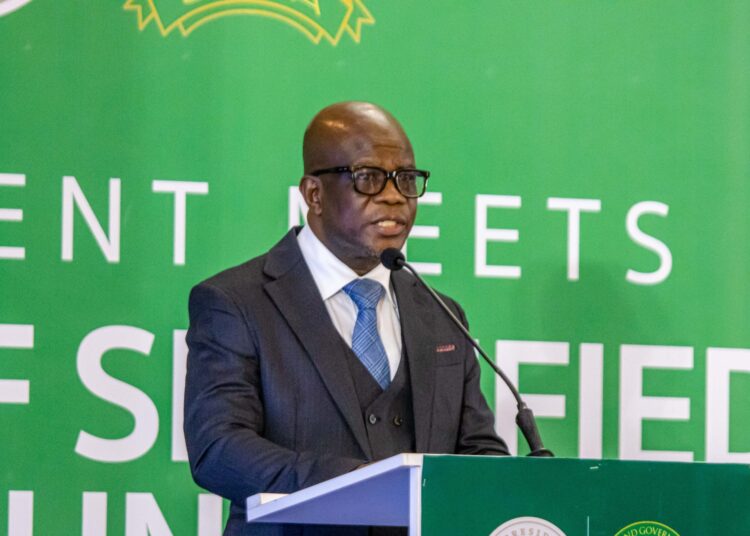
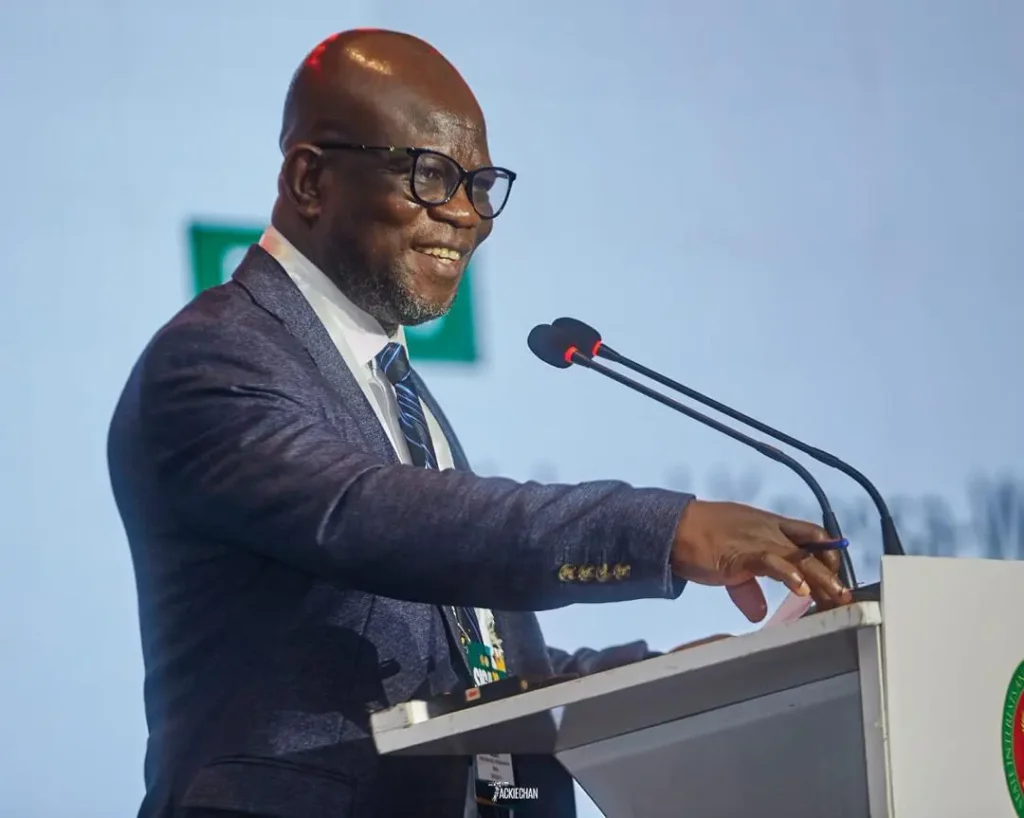
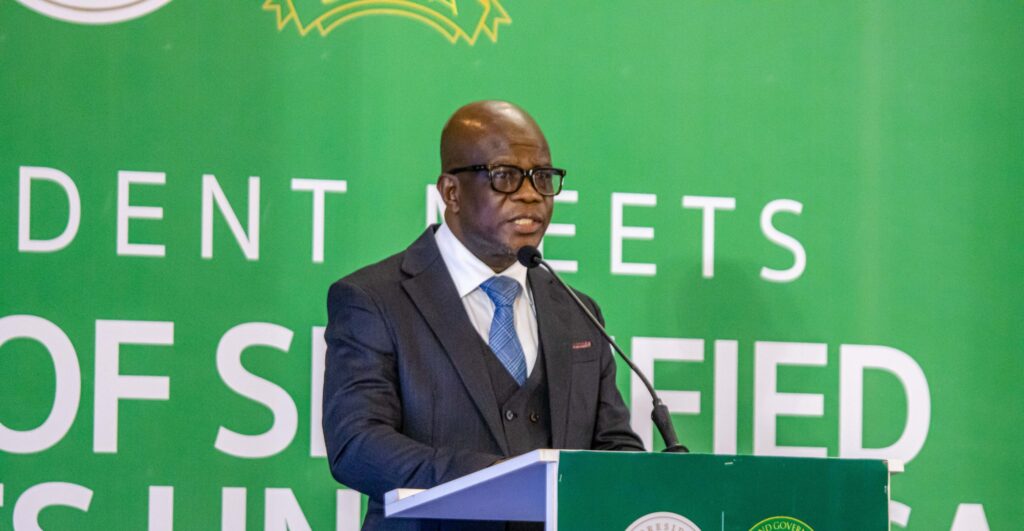
Professor Michael Kpessa-Whyte, Director-General of the State Interests and Governance Authority, has told board chairs and chief executives that fewer than half of the entities targeted for performance contracts in 2025 actually signed one.
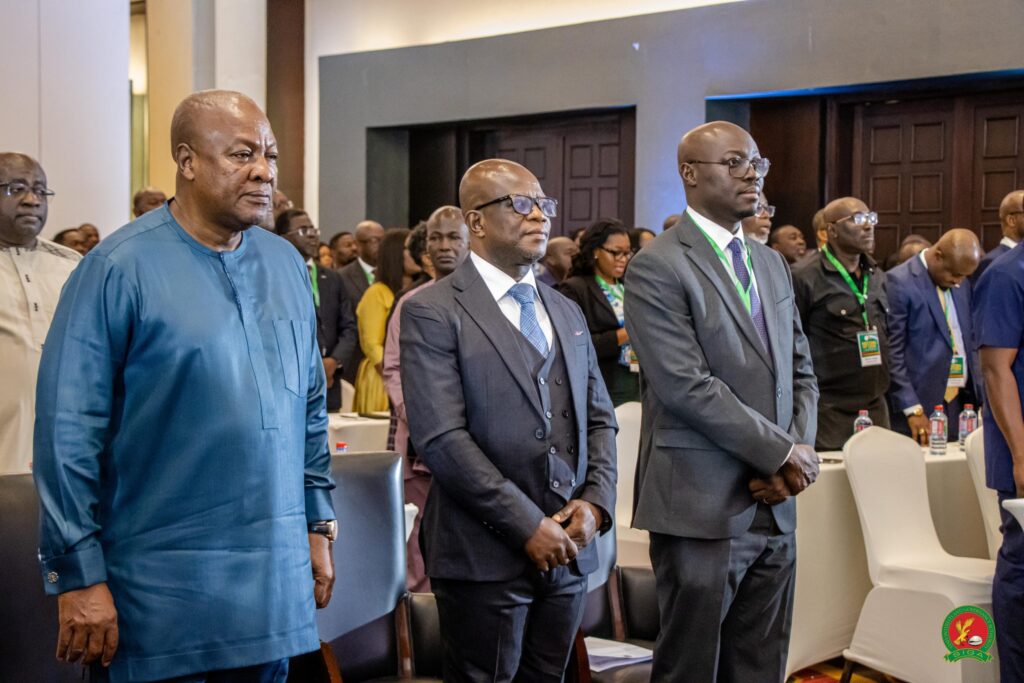
He delivered the assessment at the SIGA Governing Boards and CEOs’ Conference in Accra on Thursday, 10 September 2026, with President John Dramani Mahama in attendance.
The numbers he presented describe an oversight system that reaches only part of the portfolio it governs. Against a target of 148 entities, 72 signed performance contracts and 71 filed quarterly reports on time, while just 37 of a targeted 177 entities convened an annual general meeting or annual stakeholder meeting during the year.
Professor Kpessa-Whyte argued that these gaps do more than embarrass the sector, because an entity the state cannot monitor is an entity whose risks the state discovers only after they have crystallised.
Entities placing themselves outside oversight
The Director-General framed the problem as resistance rather than administrative slippage. “Some specified entities continue to resist or place themselves outside SIGA’s oversight. The figures are troubling,” he said. He drew a distinction that matters for how the sector’s compliance record should be read.
Partial compliance, he argued, does not satisfy the obligation. An entity that files audited accounts but never holds its annual general meeting has left a major accountability duty unmet, and an entity that signs no performance contract and submits no quarterly report denies the state any early view of risk.
That failure carries a price. Professor Kpessa-Whyte warned that such gaps can mature into contingent liabilities falling on the public purse, and can erode public confidence in the state sector as a whole.
Where the record improved
The picture is not uniformly bleak. Submissions of audited accounts for the 2025 State Ownership Report climbed from 53 in 2024 to 108 in 2025, the highest coverage the Authority has ever recorded.
Professor Kpessa-Whyte explained why that single indicator matters more than it might appear. Broader audit coverage produces a more accurate report, which in turn gives government a genuinely comparative view of how the portfolio is performing rather than a partial snapshot dressed up as a full account.
That improvement also underpins his defence of the report’s credibility. Speaking in a media interview, following public criticism of the 2025 findings, he insisted SIGA had not conjured or manufactured its figures, noting that they came from accounts audited by auditors appointed by the Auditor-General.
A dashboard for early warning
Professor Kpessa-Whyte used the conference to signal where SIGA’s oversight is heading.
The Authority is considering a digital compliance dashboard for real-time monitoring of governance, risk and compliance across the entire portfolio, drawing together board composition, statutory filings, performance contract milestones, financial reporting timelines and risk exposures in one place.
He described the purpose as early detection, catching lapses before they become costly crises on the public purse rather than documenting them afterwards. Alongside the dashboard, SIGA is developing its annual governance assessment of specified entities under Section 4(e) of the SIGA Act.
The resulting Annual Governance and Institutional Performance Assessment reports, known as AGIPA, will benchmark entities on governance and risk management and give government evidence of how each institution actually performs.
The Director-General went further, indicating that assessments will eventually follow a route similar to the Auditor-General’s, with assessors dispatched to entities to conduct governance audits. His reasoning was direct. A significant part of the trouble in state entities, he argued, is governance itself.
What boards and chief executives owe each other
Professor Kpessa-Whyte reserved his sharpest appeal for the people in the room. He urged board chairs to challenge management with the necessary questions before those questions surface in an audit report, and to treat the performance contract as a living instrument of accountability rather than another document filed and forgotten.
He asked chief executives to reciprocate by giving their boards a full, accurate and timely account of institutional affairs, noting that a properly informed board can offer sound guidance and support difficult decisions, while incomplete or delayed information diminishes that capacity.
Underpinning the appeal was a claim about ownership. The state’s investments, he said, belong neither to SIGA nor to any board or management team, but to the people of Ghana, who hold them in trust through those institutions.
For its part, SIGA committed to stronger follow-up and earlier engagement with entities rather than waiting for reporting deadlines to lapse.
The measure of whether any of it works arrives next year, when the 2026 State Ownership Report should show compliance, governance and performance moving together across the portfolio rather than a single strong profit line carrying an otherwise uneven record.
READ ALSO: Ghana’s 6.2% Growth Faces a Breadth of Challenges