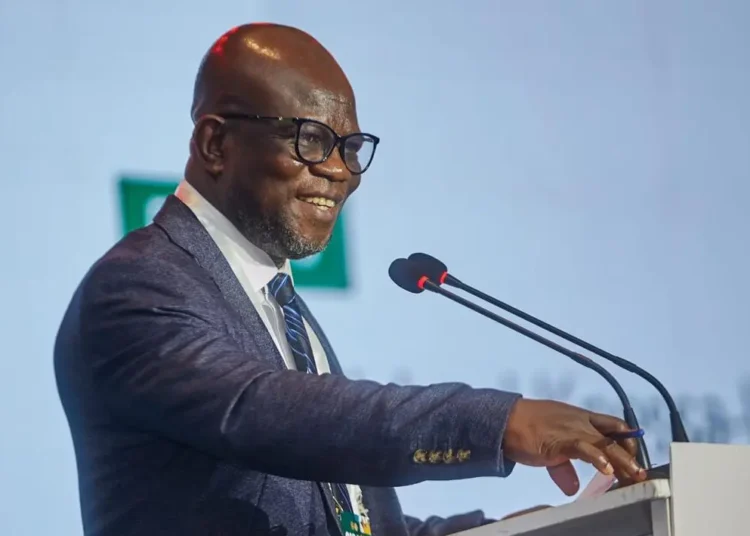
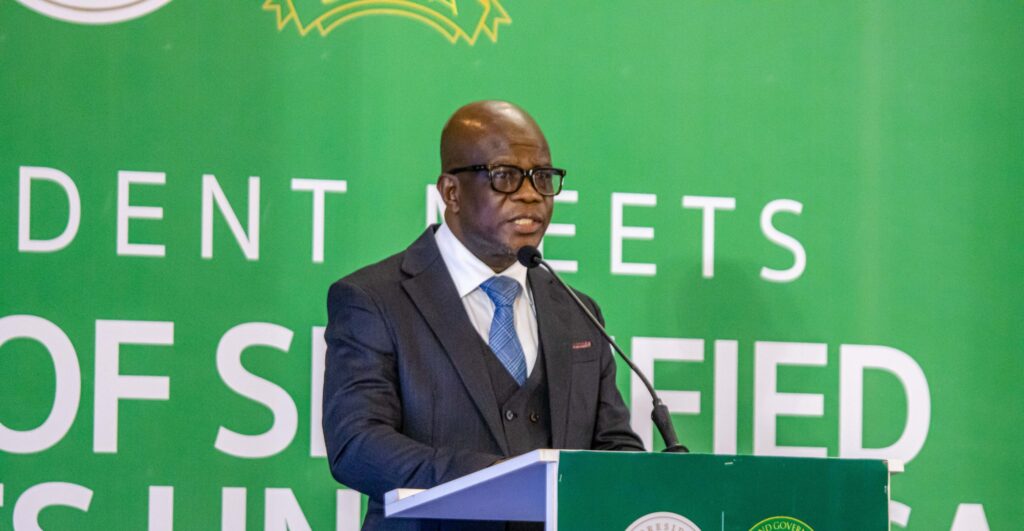
Professor Michael Kpessa-Whyte, Director-General of the State Interests and Governance Authority, told the boards of Ghana’s state entities on Thursday that turning a profit does not by itself discharge their duty to the state.
Speaking at the SIGA Governing Boards and CEOs’ Conference in Accra, he pressed every board to weigh the shareholders’ return with the same seriousness it applies to obligations owed to lenders, employees and suppliers. His appeal followed a dividend record that sits awkwardly beside the sector’s headline result.
Only two of 53 state-owned enterprises, Ghana Reinsurance Company Limited and TDC Development Company Limited, paid government a dividend from their 2024 operations, delivering a combined GH¢16 million, even as specified entities posted a GH¢19.8 billion profit and payments to the state fell by 29.36 percent.
The principle behind the complaint
Professor Kpessa-Whyte compressed his argument into a single proposition. “A profit that never reaches the shareholder has not yet become public value,” he said. He was careful to avoid the obvious overreach. Not every profitable entity should weaken its balance sheet to declare a dividend, he acknowledged.

What he asked instead was that every board weigh the state’s return with the same seriousness it applies to obligations owed to lenders, employees and suppliers, and that dividend decisions remain responsible, transparent and consistent with each entity’s financial position.
The distinction matters. A state enterprise servicing debt, paying wages and settling supplier invoices while treating its owner’s return as optional has quietly ranked the public last among its creditors.
Early movers in the 2025 cycle
The Director-General singled out BOST for commending. The company declared and paid a dividend from its 2025 operations following an annual general meeting held weeks ago, and its managing director forwarded proof of payment to Professor Kpessa-Whyte on the morning of the conference, which he said he would pass to the President.
He turned the example into an invitation, telling entities still awaiting their annual general meetings that SIGA is waiting on their declarations. Six joint venture companies have also declared dividends in 2025 and signalled an intention to pay the state.

Among them are Ghana Rubber Estates Limited, GOIL PLC, SIC PLC, GCB Bank PLC and Perseus Mining. Kpessa-Whyte expressed an expectation that by the close of the cycle many more institutions will have paid, some for the first time.
The joint venture record already outperforms the wholly state-owned portfolio. Companies in which the state holds minority interests lifted net profit to GH¢61.32 billion in 2025 from GH¢21.06 billion the previous year, and the report identifies them as the dominant source of dividend income to government.
A policy sitting on the Minister’s desk
SIGA has drafted a comprehensive dividend policy intended to give state-owned enterprises consistent guidance on declaring and paying dividends. It currently awaits approval from the Minister for Finance.
Professor Kpessa-Whyte said the framework, once approved, would allow government to project annual dividends reliably, strengthen accountability and make payments to the state more predictable.
That last point speaks to a practical budgeting problem, since a Finance Ministry that cannot forecast dividend inflows must treat them as windfalls rather than as revenue. The full value of dividends from 2025 operations, covering the first year of President Mahama’s second administration, will only become clear when the 2026 State Ownership Report is compiled.
Ownership held in trust
Professor Kpessa-Whyte grounded the dividend argument in a broader claim about who these companies actually serve. The state’s investments, he told the room, belong neither to SIGA nor to any board or management team, but to the people of Ghana, held in trust by those charged with running them.
He closed by asking board chairs and chief executives to leave the conference resolved to strengthen their institutions, meet their obligations and convert the state’s investments into lasting value, with SIGA walking that path alongside them.
Whether the appeal produces payments rather than applause is the open question. The 2025 profit rebound owed a great deal to foreign exchange movements, with entities recording net foreign exchange earnings of GH¢11.72 billion against a GH¢12.01 billion loss the year before, a swing that flatters the underlying operating picture.
A dividend record that stays near zero through a year of exceptional gains would suggest the sector’s boards have not yet accepted that the state is a shareholder with claims, and not merely a guarantor with liabilities.
READ ALSO: Global Oil Surge Tests Ghana’s Pump Price Stability