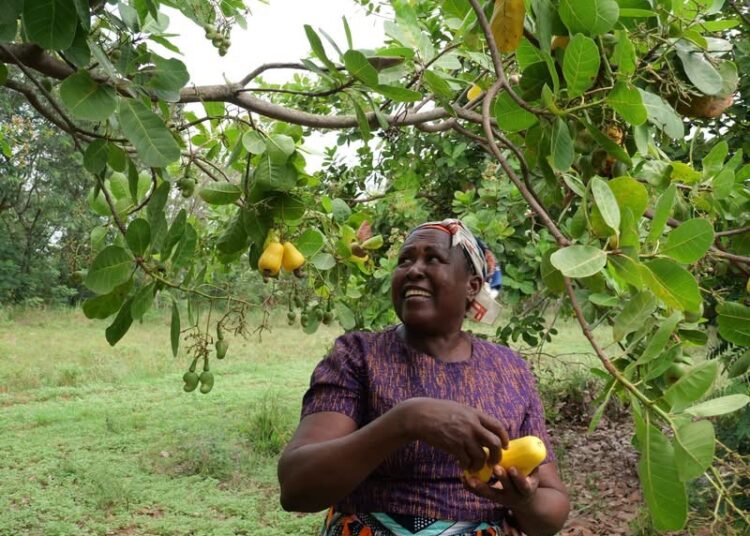
GIZ Ghana says, an estimated 2 million metric tons of cashew apples are discarded and left to rot on farms every year, despite the enormous potential of the fruit to be transformed into high value products and sustainable income.
The cashew apple, the fleshy fruit attached to the cashew nut, is highly perishable and often neglected by farmers who focus solely on the nut for export. While the nut fetches foreign exchange, the apple, which is rich in Vitamin C and antioxidants, goes to waste in most farming communities across the Bono, Bono East, Ahafo and Savannah regions.
This narrative is now changing through a targeted intervention that places women and youth at the centre of the cashew value chain. The Matching Grant Fund (MGF), a public-private funding mechanism, is implementing a project titled ‘Cashew Apple as a Recipe for Women and Youth Empowerment’.
The project is implemented by Olam Food Ingredients (OFI) with financial support from the European Union, the Organisation of African, Caribbean and Pacific States (OACPS) and Germany through the Federal Ministry for Economic Cooperation and Development (BMZ).
The project seeks to unlock the economic value of the cashew apple while creating independent livelihoods for women in cashew-growing communities. Under the initiative, 1,000 women and youth are being trained in various aspects of the cashew apple value chain.
The training covers harvest and post-harvest handling, cashew apple processing, product development, as well as business and marketing skills. According to project managers, the goal is not only to equip beneficiaries with technical knowledge on how to process the fruit but also to empower them with entrepreneurial skills to build viable businesses around it.
The trainees are learning how to turn the highly perishable fruit into products such as juices, jams, dried snacks, concentrates and other beverages that have a ready market locally. One of the beneficiaries already reaping the benefits of the training is Victoria Merbau, a member of a participating cooperative.
“I sell the cashew drinks the most. The price depends on the bottle size. A large one goes for 15 cedis, and others for 5 cedis,” she says. Victoria is among many women who now see the cashew apple not as waste but as raw material for income generation.
The Perishability Challenge: A Race Against Time
However, turning training into consistent income comes with significant practical challenges. One of the biggest obstacles is the highly perishable nature of cashew apples. The fruits begin to ferment within 24 to 48 hours after harvest, requiring swift collection and processing.
For many women, collecting the apples on foot means long walks under the scorching sun, carrying heavy loads on their heads, with a large portion of the fruit getting bruised or spoiled before it even reaches the processing centre.
This logistical challenge reduces both the quantity and quality of juice and other products that can be produced, directly affecting profitability. To overcome this challenge, the project takes a practical step to improve the collection system.
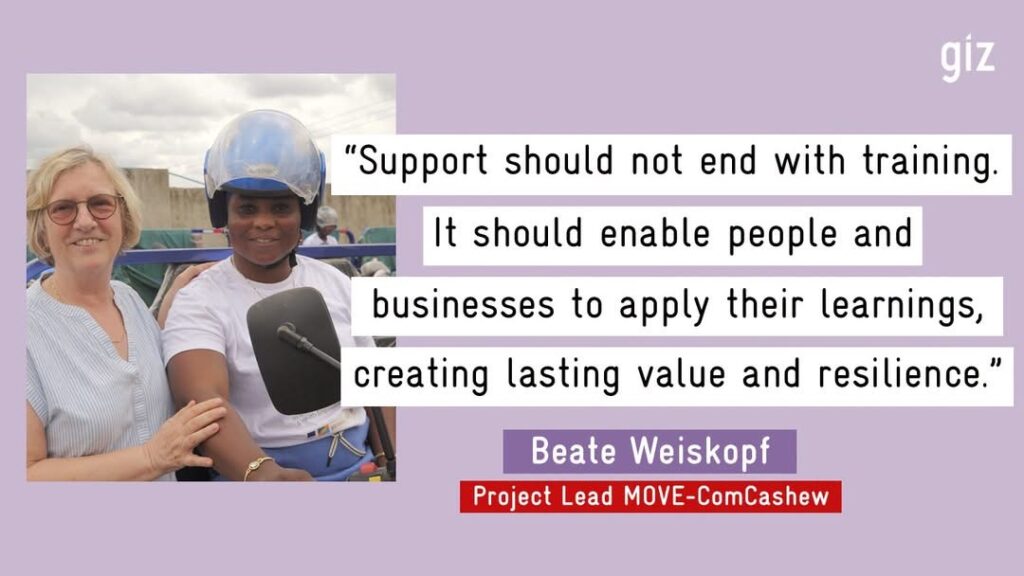
Fifteen tricycles, locally known as ‘Aboboyaa’, are handed over to 15 cooperatives across the project districts. The tricycles are intended to cut collection time, reduce post-harvest losses and ensure that more fruit arrives at the processing units in good condition.
By mechanizing the transport, women who previously spent hours trekking between farms now move larger volumes in a shorter time. Importantly, the cooperatives, whose members are predominantly women, are responsible for managing and maintaining the tricycles themselves.
This model promotes ownership, sustainability and accountability at the community level. Project officials say the tricycles do more than just transport fruit; they represent mobility, economic independence and a reduction in the physical drudgery that women endure in agricultural work.
The Matching Grant Fund (MGF) is implemented under the Joint Action “Business Support Facility for Resilient Agricultural Value Chains” (BSF4RAVC). The Joint Action is co-funded by the EU International Partnerships under the Samoa Agreement with the OACPS Secretariat and by the BMZ, and is implemented by the Deutsche Gesellschaft für Internationale Zusammenarbeit (GIZ) GmbH.
The BSF4RAVC aims to strengthen resilient agricultural value chains, improve private sector engagement and promote inclusive business models that benefit smallholder farmers and micro, small and medium enterprises.
Ghana’s Cashew Paradox, Rich in Nuts and Poor in Value Addition
Stakeholders in the cashew sector say the intervention is timely. Ghana is one of Africa’s largest producers of raw cashew nuts, but value addition remains low. While tons of nuts are exported in their raw form, the potential of the apple remains largely untapped.
By training women and youth to add value to what was previously considered waste, the project contributes to three critical development goals: reducing food waste, promoting gender empowerment and increasing rural incomes.
The model also supports climate resilience, as efficient use of the entire cashew crop means better returns per tree and less organic waste decomposing and emitting methane on farms. For the beneficiary communities, the impact is already visible.
Women who once depended solely on their husbands or on seasonal farm labour during the cashew harvest season now have their own product lines and their own customers. Cooperatives are developing local brands for their juices and establishing linkages with local markets, schools and small shops.
The project implementers hope that the success of the 15 cooperatives will serve as a demonstration for other communities and attract more investment into cashew apple processing in Ghana.
With the right support in packaging, certification and market access, experts believe cashew apple products from Ghana could compete in regional and international health food markets.
As Victoria Meboau continues to sell her bottles of cashew drink for 5 and 15 cedis, she represents a new generation of women agri-preneurs who are turning what was once waste into wealth, and in the process, redefining the value of the cashew tree.
READ ALSO:Most Resolution Centre Visitors Suffered Preference Issues, Not Systemic Failure – Mr. Fenyi