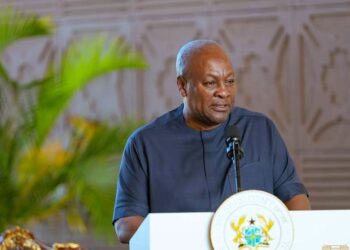
President John Dramani Mahama has announced that the full financing for the Accra-Kumasi Expressway, a project estimated to cost about four billion dollars, will be in place before the end of 2026.
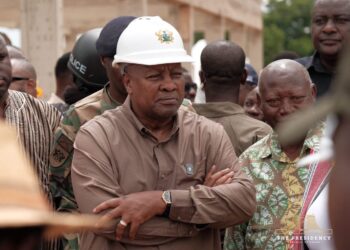
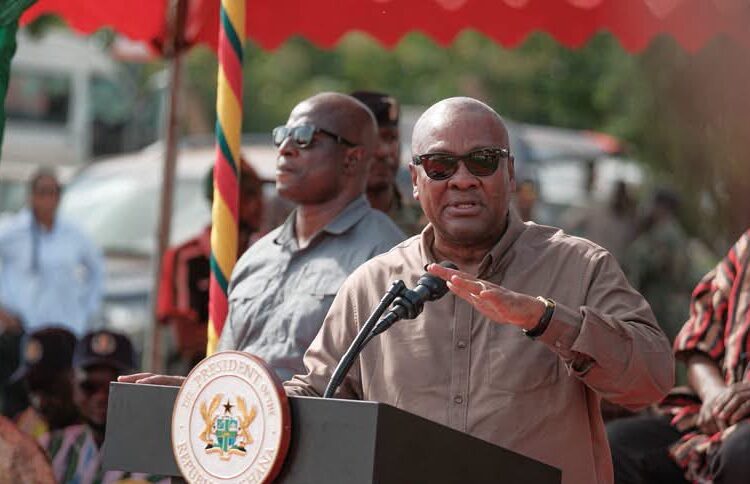
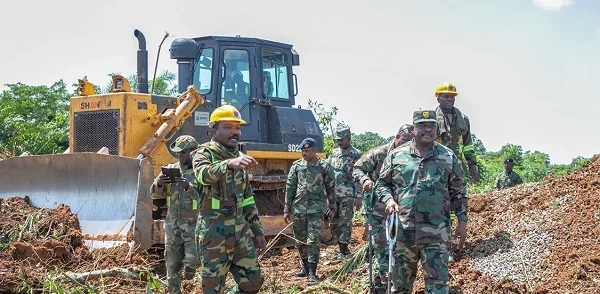
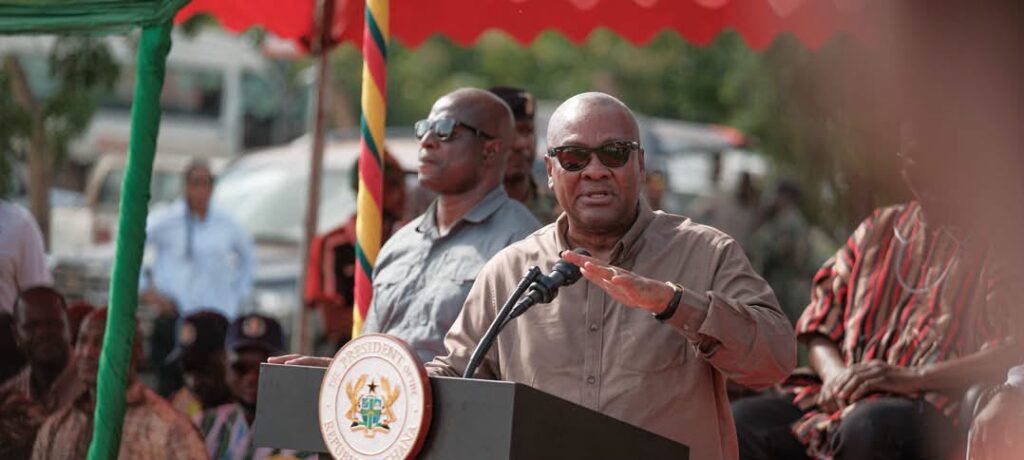
He gave the assurance on Monday, September 14, 2026, at Kwaso near Ejisu, where the Ghana Armed Forces handed over the cleared right-of-way for the road. Two billion dollars is already sitting in a dedicated account at the Bank of Ghana, ring-fenced for the project and waiting on the award of the main construction contract.
The President said the balance will be mobilised from domestic revenue by December, which would make the expressway one of the few Ghanaian projects of its size to reach full funding before a single kilometre of asphalt is laid.
Two Billion Dollars Already in the Bank of Ghana Account
President Mahama used the platform to settle questions about whether money would stall the project once construction begins. “Let me announce that the Minister of Finance has put aside two billion dollars for financing this Accra-Kumasi Expressway. The money is ready. It is sitting in a special account at the Bank of Ghana,” he said.
He went further on what that means for whoever wins the contract. “So when this project starts, money is not going to be the problem. All certificates presented by the contractor will be paid instantly.”
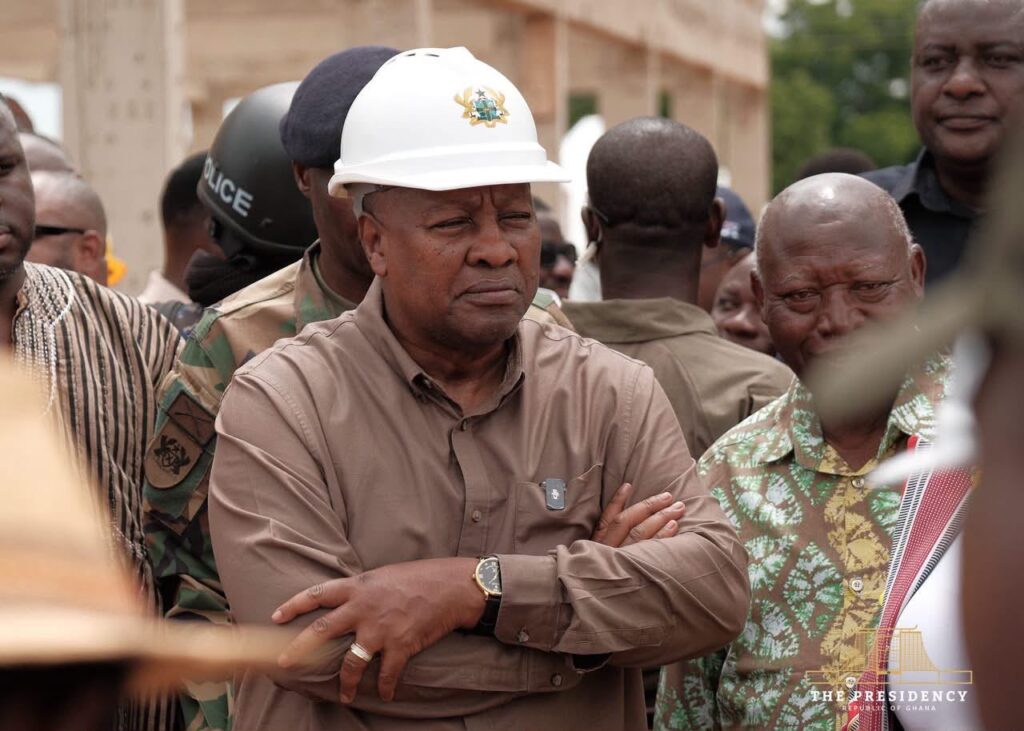
The commitment matters because delayed certificate payments have been the standard failure point on Ghanaian road projects for two decades. Contractors demobilise, interest accrues on unpaid claims, and the eventual cost of the road climbs well past its original estimate. Government is betting that a pre-funded account removes that risk entirely.
No Borrowing for the Accra-Kumasi Expressway
The second plank of the announcement was the source of the money. President Mahama said the state has not approached any external lender for the expressway. “And let me also announce that this is our own money. We have not gone to borrow money from anywhere,” he told the gathering, crediting Ghanaian taxpayers for the deposit.
Finance Minister Dr Cassiel Ato Forson, who spoke at the same ceremony, repeated the position in blunter terms, telling the nation that government “will not borrow a Pesewa for this construction” and that the entire amount required will be ready by December 2026.
Dr Forson had earlier told Parliament during the Mid-Year Fiscal Policy Review that 1.7 billion dollars had been deposited into the dedicated expressway account at the Bank of Ghana as of July 22, 2026, a figure that has since risen to two billion.
The domestic financing route is a departure from the pattern that has governed Ghana’s flagship roads, most of which have relied on export credit facilities, supplier credit or concessional loans carrying long repayment tails.
It also insulates the project from the currency and debt-service exposure that complicated infrastructure delivery through the country’s recent restructuring period.
A Special Purpose Vehicle to Manage the Road
The money flows through a structure already approved by Parliament. Government has registered a special purpose vehicle under the Ghana Infrastructure Investment Fund called Accra Kumasi Expressway Limited, which holds a 50-year concession to build, operate and maintain the road before transferring it to the Ghana Highways Authority.
The company has a chief executive, a management team and a governing board, and it carries responsibility for feasibility work, contractor selection, supervision alongside the Ghana Highways Authority, tolling systems and the ancillary facilities along the route.
President Mahama said the expressway will pay for itself over time. The design carries two toll interchanges, one at the Ashanti end and one in Greater Accra, eight interchanges feeding towns such as Asamankese and Fawase, and four rest stops offering fuel, food and retail.
Tow trucks stationed at the service stops will clear breakdowns within minutes, and CCTV coverage along the corridor will police careless driving. The 198.7-kilometre expressway will run six lanes with a recommended speed of 120 kilometres per hour, cutting roughly 70 kilometres off the 270-kilometre journey on the existing Accra-Kumasi highway.
A driver travelling at 100 kilometres per hour would complete the trip in about two hours instead of the five to six hours the old road demands. Space has been reserved within the corridor for a future rail line between the two cities, part of a broader revitalisation plan the Finance Ministry is expected to present.
With funding secured and the right-of-way cleared, attention now turns to procurement. The Expression of Interest for prequalification went out on September 11; contractor selection is capped at four weeks, and the government intends to break ground at Kwaso before Christmas.
READ ALSO: Liquidity Flood Drives T-Bill Yields to Fresh Lows