Ghana and France are looking to strengthen cooperation in the energy sector as the two countries explore opportunities to deepen their longstanding bilateral relationship and support Ghana’s broader energy and economic transformation agenda.
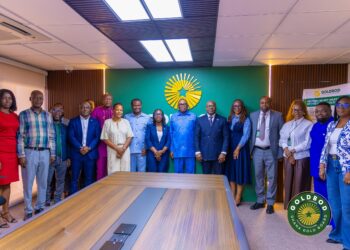
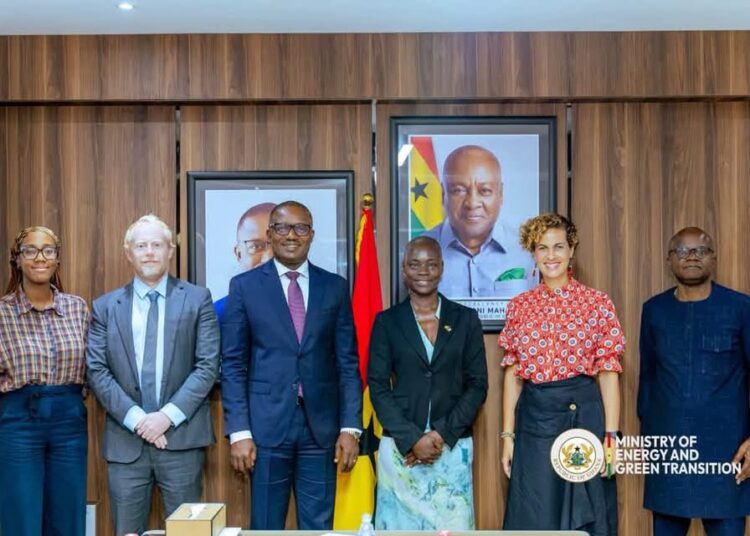
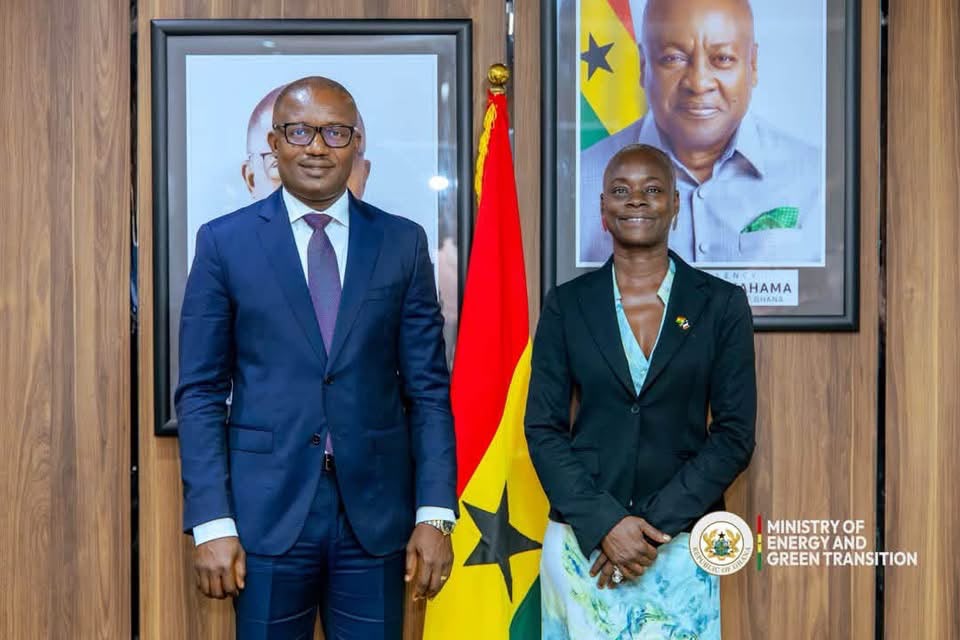
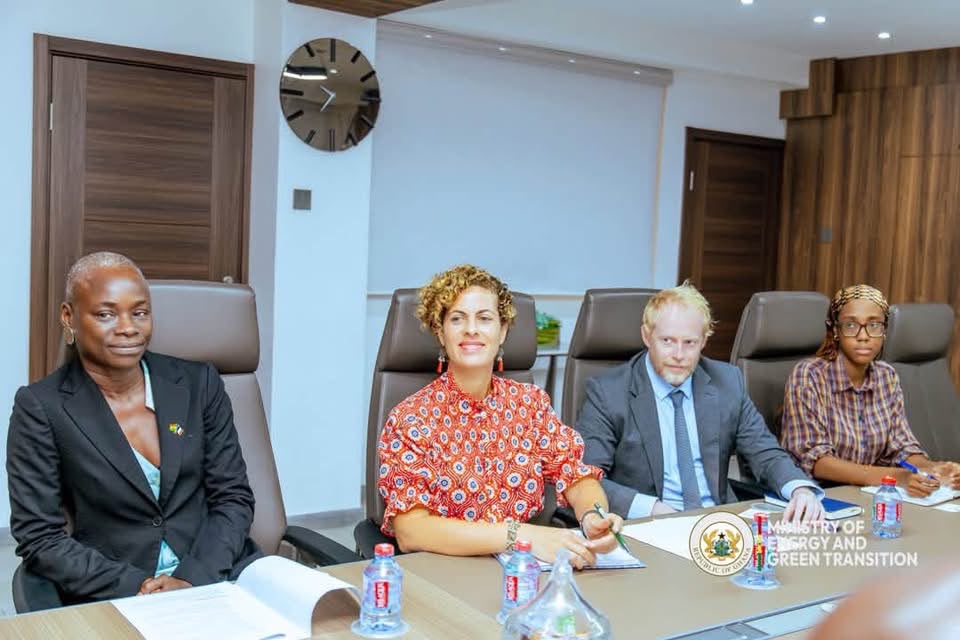
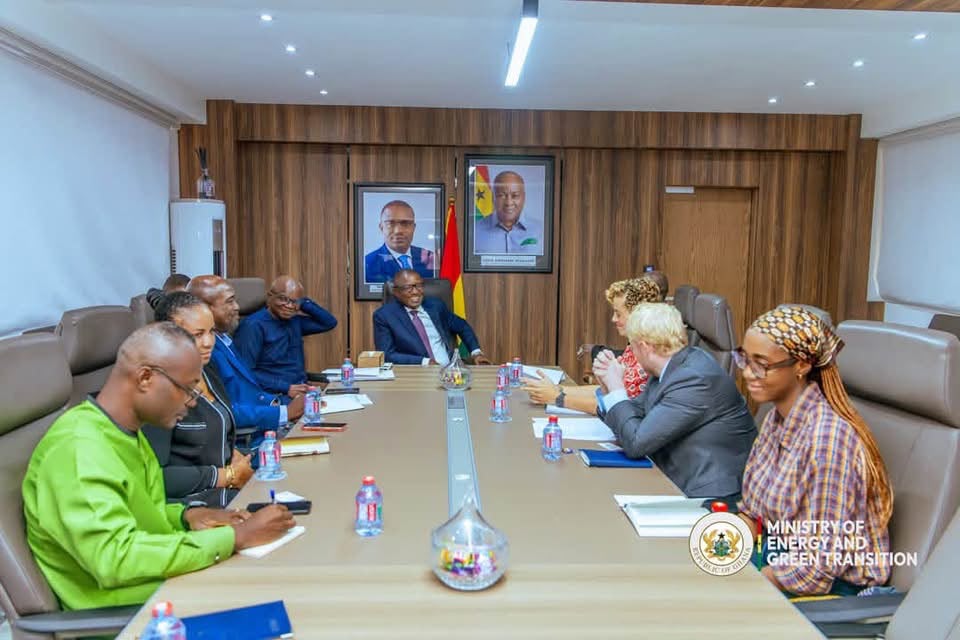
The discussions took place in Accra when Ghana’s Minister for Energy and Green Transition, Dr. John Abdulai Jinapor, received France’s Ambassador to Ghana, H.E. Diarra Dime-Labille, accompanied by the Country Director of the Agence Française de Développement (AFD) in Ghana, Madam Clémentine Dardy.
While the meeting did not disclose specific projects or financing commitments, the participation of AFD gives the engagement a significant energy-development dimension.
For Ghana, partnerships with development-finance institutions remain important as the country seeks to mobilise the capital required for electricity infrastructure, renewable-energy deployment, grid modernisation and other components of its transition towards a more resilient energy system.
The engagement therefore comes at a time when Ghana’s energy sector is facing the dual challenge of addressing longstanding structural constraints while simultaneously creating the infrastructure required to support a changing energy mix.
Financing Ghana’s Energy Transformation
Ghana’s energy transition is not simply a question of introducing more renewable generation.
It requires substantial investment across the electricity value chain, from generation and transmission to distribution, storage and system management.
That makes access to appropriate financing particularly important.
Energy infrastructure typically requires significant upfront capital, while projects such as transmission lines, battery storage systems and renewable-energy facilities generate returns over extended periods.
Development-finance institutions can therefore play a role in helping countries bridge the financing gap between ambitious energy plans and projects that can actually reach construction and operation.
AFD’s involvement in the discussions is particularly relevant in this regard.
The agency has a longstanding development-finance role in Ghana, and its presence alongside the French Ambassador signals that the bilateral relationship is being considered not only through the traditional diplomatic lens but also through practical development and investment cooperation.
For Ghana, the opportunity is to ensure that such partnerships are aligned with the country’s own energy priorities and produce infrastructure that addresses actual system constraints.
Dr. Jinapor said the government was committed to strengthening the relationship with France and ensuring that the partnership produces tangible benefits.
“Our discussions centered on building the longstanding bilateral relations between our two countries, with a focus on accelerating strategic collaborations within the energy sector.”
Dr. John Abdulai Jinapor, Minister for Energy and Green Transition
The emphasis on strategic collaboration is important because Ghana’s immediate energy requirements extend beyond simply adding generation capacity.
The country needs to improve the financial sustainability of the power sector, strengthen the grid, reduce system losses, expand renewable generation and introduce technologies capable of supporting reliability as intermittent sources become a larger part of the generation mix.
Grid And Storage Could Shape Future Cooperation
One of the defining features of Ghana’s emerging energy strategy is the increasing attention being paid to grid resilience and energy storage.
The government has already highlighted Battery Energy Storage Systems (BESS) as part of efforts to manage peak demand and improve the reliability and resilience of the electricity system.
Storage becomes increasingly valuable as solar generation expands because electricity production from solar facilities is concentrated during daylight hours, while significant electricity demand can continue into the evening.
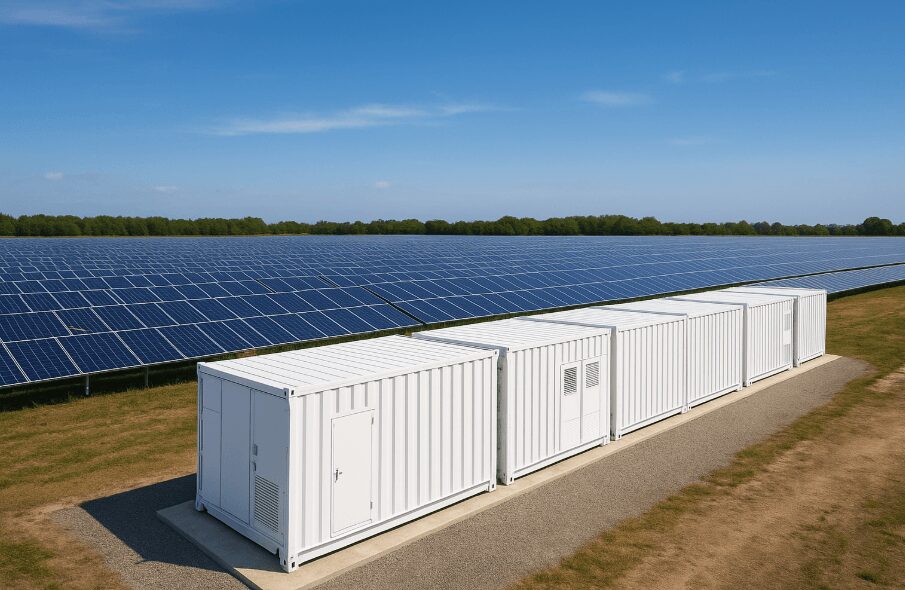
A stronger combination of solar generation and storage could therefore help Ghana extract greater value from renewable resources while reducing pressure on conventional generation during particular periods.
However, storage projects require substantial investment, technical expertise and appropriate regulatory frameworks.
This creates potential areas in which international development partners and private investors could contribute.
The same principle applies to transmission.
New generation capacity has to be connected to the grid and evacuated efficiently. Without adequate transmission infrastructure, additional renewable generation can create congestion and limit the amount of electricity that can be integrated into the system.
Ghana’s recent efforts to strengthen and modernise its transmission infrastructure therefore make energy cooperation increasingly inseparable from infrastructure financing.
Beyond Generation To Energy Security
The discussions also need to be viewed against Ghana’s broader energy-security concerns.
The country has historically depended on a combination of hydropower, thermal generation and imported fuels to meet electricity demand.
Natural gas has become particularly important to thermal power generation, while periods of gas constraints have increased the system’s exposure to more expensive liquid fuels.
The government’s emerging strategy seeks to diversify that structure.
Renewable energy can reduce exposure to fuel-price volatility over time, while storage and stronger transmission can improve the system’s ability to integrate variable generation.
Yet achieving this requires coordination.
A solar project on its own does not solve a transmission constraint. A new transmission line does not solve inadequate distribution infrastructure. And additional generation does not automatically resolve the financial challenges of the power sector.
The energy transition must therefore be treated as a connected infrastructure and financing challenge.
This is where international partnerships can become useful if they are structured around Ghana’s specific needs rather than individual projects considered in isolation.
A Partnership With Wider Economic Implications
The significance of Ghana-France energy cooperation also extends beyond the electricity sector.
Energy is one of the foundations of industrialisation. Reliable and reasonably priced electricity affects manufacturing costs, investment decisions, productivity and the ability of businesses to expand.
For Ghana, improving energy infrastructure therefore has implications for the country’s wider economic transformation.
The government has repeatedly linked energy-sector reforms with the objective of creating a more reliable electricity system capable of supporting economic growth.
Deepening cooperation with development partners could help mobilise some of the technical and financial resources required to sustain that transformation.
France, meanwhile, has established institutions and companies operating across different parts of the global energy and infrastructure landscape.
The presence of AFD creates another channel through which development financing and technical cooperation could potentially be aligned with Ghana’s priorities.
But the effectiveness of the partnership will ultimately depend on what follows the discussions.
Diplomatic engagements are important for opening doors, but the real measure of their value will be whether they translate into bankable projects, financing arrangements, technical cooperation and measurable improvements in Ghana’s energy system.
Turning Bilateral Relations Into Energy Investment
For Ghana, the next stage should therefore be to convert the broad commitment to collaboration into clearly defined areas of cooperation.
That could include identifying infrastructure projects where development finance can help unlock investment, strengthening technical cooperation in renewable energy and storage, supporting grid modernisation and exploring mechanisms that allow private capital to participate alongside public and development financing.
The government has already signalled its intention to create an enabling environment for investment across the energy sector.

The challenge is to ensure that new partnerships reinforce that objective while delivering value for Ghanaian consumers and businesses.
Dr. Jinapor said the government remained committed to deepening the relationship with France for the benefit of both countries.
“The government remains resolute in deepening this alliance to deliver tangible socio-economic benefits for the citizens of both Ghana and France.”
Dr. John Abdulai Jinapor, Minister for Energy and Green Transition
That commitment places the emphasis where it belongs: on outcomes.
For Ghana, stronger cooperation with France and institutions such as AFD could become valuable as the country attempts to finance an energy system that must simultaneously become cleaner, more reliable and financially sustainable.
The meeting itself does not establish a new energy project or financing agreement. But it opens another channel for Ghana to pursue the capital, expertise and partnerships required to modernise its energy infrastructure.
As the country’s energy transition moves from policy commitments towards implementation, the ability to build credible international partnerships will increasingly matter.
The opportunity for Ghana is therefore not simply to attract development support, but to use that support strategically, mobilising finance and expertise around the infrastructure capable of improving energy security, strengthening the power system and supporting the productive economy.
The Ghana-France engagement provides another indication that the country’s energy transformation will depend not only on domestic reforms, but also on how effectively Ghana builds partnerships capable of turning those reforms into investment and infrastructure.
READ ALSO: Christmas Dollar Demand Tests Ghana’s External Buffer