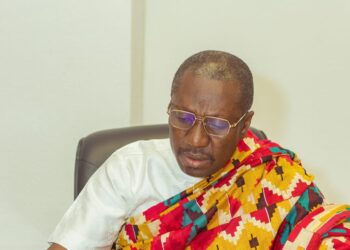
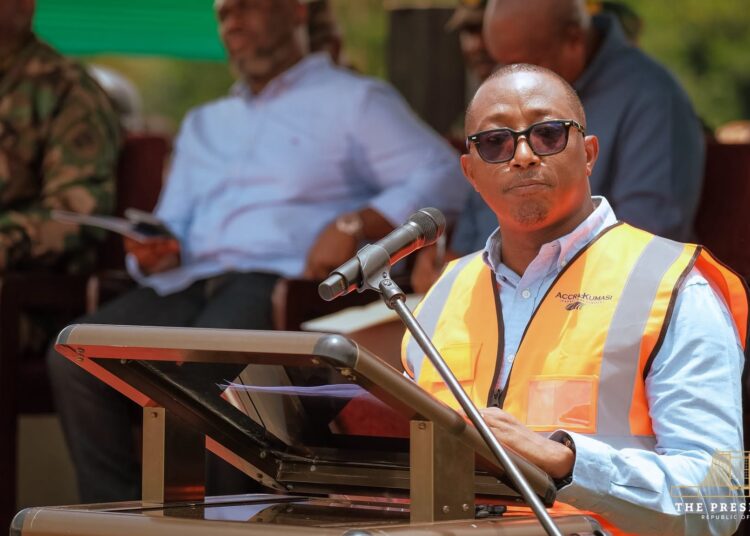
Government of Ghana is working to a 24-month construction window for the Accra-Kumasi Expressway, with contractors expected on site in January 2027. Engineer Francis Ahlidza, Chief Executive Officer and Managing Director of Accra-Kumasi Expressway Limited, set out the timeline in a media interview following Monday’s handover of the cleared right-of-way at Kwaso near Ejisu.
The schedule rests on two things already banked. The Ghana Armed Forces has cleared and defined the alignment, removing the ground surprises that typically stall Ghanaian road projects months into construction, and the Finance Ministry has moved money into a dedicated account at the Bank of Ghana rather than merely allocating it in a budget line.
Ing. Ahlidza described a construction programme that begins at the end of this year and runs for two years, within which the contractors themselves carry a 24-month delivery obligation from January 2027.
“So we are working with a two-year construction period starting at the end of this year,” he said, adding that the company expects procurement to close before December so that work can begin in the new year.
The procurement runs in two stages. Firms first express interest in an international competitive process, after which the company screens them and invites only those meeting the technical criteria to submit tenders. Ing. Ahlidza said the complexity of the project makes that filter necessary, and that the outcome will determine how the corridor is carved up.
The road will not go to a single contractor. It will be divided into lots, but the number depends on the capacity of the firms that survive prequalification and how quickly each can deliver. That assessment happens after screening, which is why the company has not yet published a lot structure.
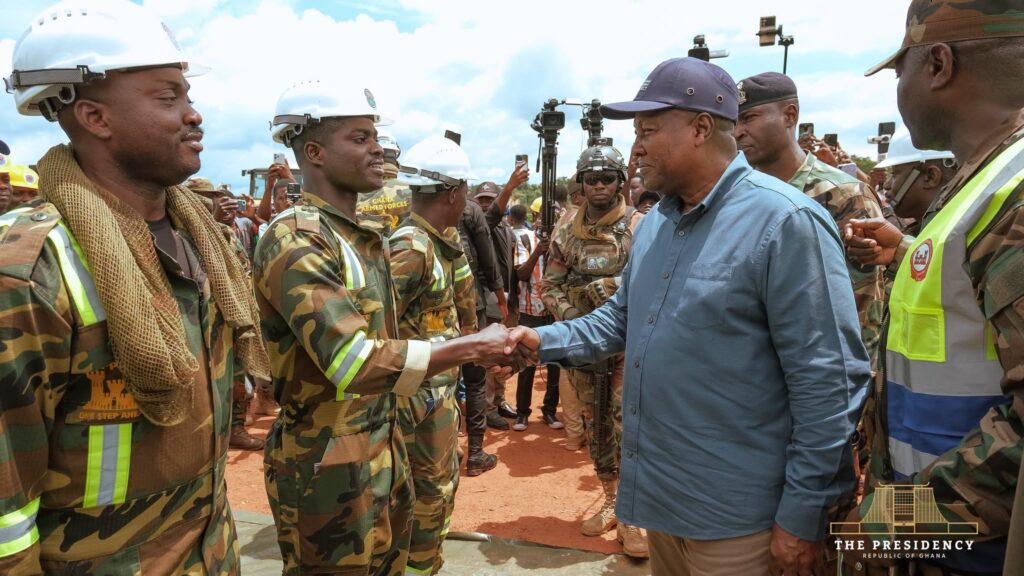
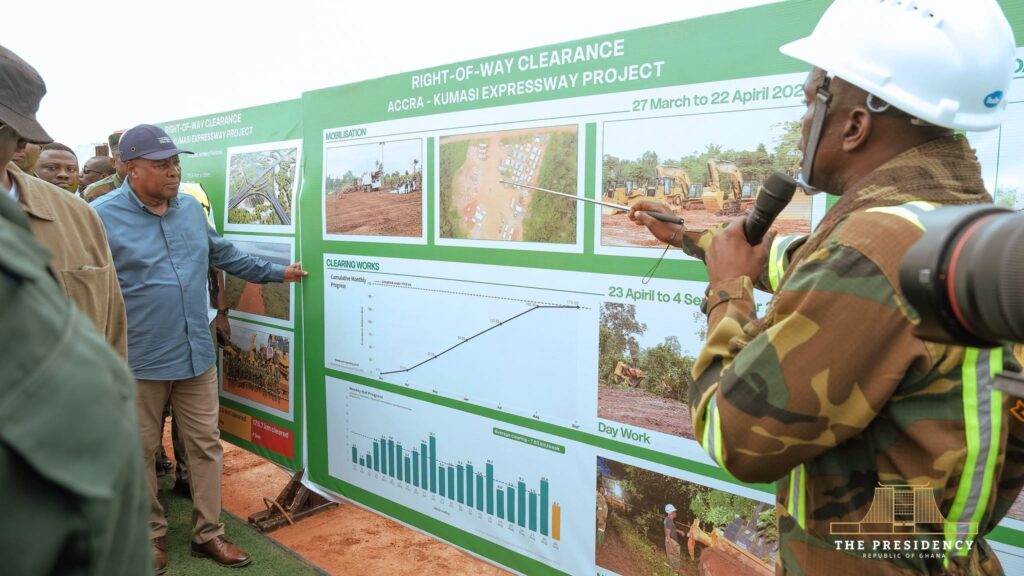
Ing. Ahlidza was direct about what the military handover bought the project. He said the work of the armed forces “has chopped off many months of the project,” because the cleared corridor allows the company to confirm its designs before construction rather than discover conditions on the ground once contractors have mobilised.
Eight Interchanges Will Bypass Every Major Town
The expressway will carry at least eight interchanges, and Ing. Ahlidza named the locations under the current alignment. They run from an Accra Hub Interchange at the Ablekuma terminal through Adeiso, Asamankese, Akyem Oda, Ofoase and Lake Bosomtwe, ending at a Kumasi Interchange near the Sewua and Kwaso terminal section.
He was careful about the first of them. An earlier plan placed the Greater Accra interchange near a landmark in the Ablekuma North area, but a new directive on the route means the position may shift. What holds is that the first interchange sits within the Greater Accra Region.
The design logic is to keep traffic out of settlements entirely. Ing. Ahlidza pointed to Konongo on the existing highway, where a driver heading to Kumasi before the bypasses were built could lose close to an hour passing through the town. The expressway avoids every major town on the corridor and connects to them through ramps instead.
Electronic Tolling at Both Ends and Six Exit Points
Tolling will be electronic from the start. The company envisages two main toll stations, one at the Accra end and one at the Kumasi end, together with six exit tolls along the corridor.
“We plan to have electronic tolling,” Ing. Ahlidza said, noting that the Roads and Highways Minister has already gone to Parliament for approval to introduce e-tolls and that the expressway will adopt a compatible system for consistency across the country. Drivers will be charged against a toll card, and the corridor will carry no physical toll barriers.
Fifty Years to Recover the Investment
The economic case turns on a long horizon. Ing. Ahlidza said the company’s analysis points to recovering the investment within 50 years while generating enough surplus to fund operations, maintenance and possibly an extension of the network.
Accra-Kumasi Expressway Limited was established in 2025 after Parliament approved its concession, and its mandate covers design, construction and maintenance across the concession period rather than construction alone.
On disbursement, the perennial weak point in Ghanaian road delivery, Ahlidza said the assurance is documented. He told the interviewer that the company has evidence of the transfer of funds into its special account at the Bank of Ghana, and that contractors will be paid within the shortest possible time because the money is already sitting there.
Room in the Corridor for Rail
The acquired corridor measures 120 metres wide, which Ahlidza confirmed is sufficient to accommodate a rail line alongside the carriageway. The company has been mandated to open conversations with the railway development authority about how the two would share the space.
He drew a firm boundary around the scope. “But then the development of the rail will not fall under this project,” he said, and he declined to say whether the company would handle the northern extension the President has signalled, noting that the matter rests with the board.
What Could Still Go Wrong
Asked what might derail the 24-month promise, Ing. Ahlidza named right-of-way disputes and the management of project-affected persons as the classic risk, along with contractors failing to mobilise in good time. Both of the biggest exposures, he argued, have already been neutralised, since the corridor is clear and the financing is in place.
That leaves execution. If the timeline holds, sod-cutting comes before Christmas, contractors mobilise in January 2027, and the road opens at the end of 2028, roughly a year after the anniversary year the President has framed it around.