The Citizens’ Platform on Constitutional Reform (CPCR) has called on the Government to commit to four guarantees on how proposed amendments to the 1992 Constitution will be carried into law.
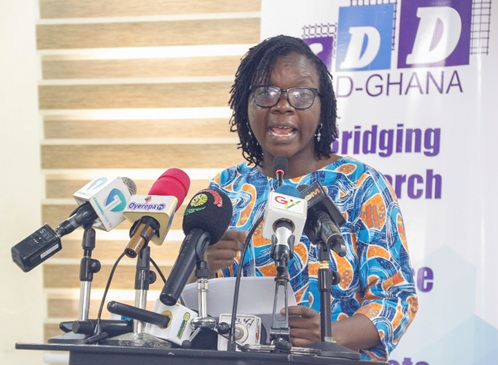
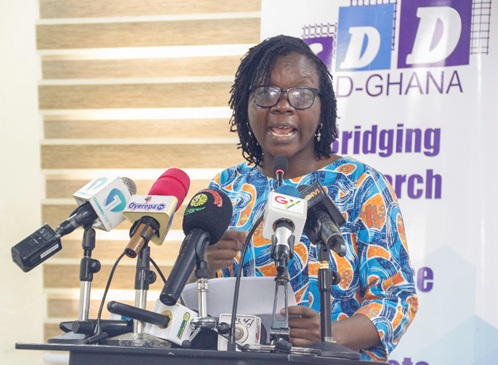
Chairperson of the CPCR Steering Committee, Professor Akosua Keseboa Darkwah, made the call on behalf of civil society organisations at a press conference in Accra on Tuesday, 15 September 2026, as the world marked the International Day of Democracy.
Prof. Darkwah said the coalition wants a roadmap law, a broader mandate for the Constitution Review Implementation Committee, a fair referendum and protected funding for civic education.
She argued that these safeguards go to the legitimacy of the entire exercise, since more than fifty constitutional provisions are affected and over twenty of them touch entrenched clauses that only a referendum can change.
Speaking for a coalition convened by CDD-Ghana, Democracy Hub and the STAR-Ghana Foundation, she credited Government for publishing the Constitution Review Committee’s Final Report together with its own Position Paper on 28 July 2026.

She described the Platform as a partner in the process but offered one caution. “We believe that how we make this Constitution matters as much as what we put inside it,” she stated.
Roadmap Act to Protect Ghana Constitutional Reform
According to Prof. Darkwah, the first guarantee is a Constitutional Reform Implementation and Roadmap Act, which the Platform wants passed as the very first step.
The law would fix the order of the reforms, the institution responsible for each stage, and the deadline for completing it, with milestones running from public consultation and drafting through parliamentary consideration and civic education to a referendum where required.
She grounded the demand in Ghana’s record. In 2012, an Implementation Committee chaired by Professor E. V. O. Dankwa was set up to carry forward the recommendations of the earlier Professor Fiadjoe review, but the amendments it drafted were never pursued.
In 2019, a referendum on local government reform was announced, and preparations began, only for the process to be called off when the two main political parties failed to agree.
Reflecting on those episodes, Prof. Darkwah said: “They teach us that setting up a committee is not enough. Preparing bills is not enough. And announcing a referendum is not enough.”
With over 50 amendments and more than 14 new and amendment bills expected, she noted that the programme cannot be completed within the life of a single Parliament and may continue under a different government.
A legally binding timetable, she argued, would keep the work on track across elections and give citizens a clear standard for holding political actors accountable.
Wider Mandate for the Implementation Committee
The second guarantee seeks a clearly defined mandate for the Implementation Committee. Prof. Darkwah said the Committee should not be confined to copying Government’s Position Paper into amendment bills and should be empowered to build consensus and recommend changes to Government’s own positions where the national interest requires it.
She also asked that any bill running ahead of that work be paused, citing the Conduct of Public Officers Bill as one already in motion. The Steering Committee Chairperson noted that organised labour and other civil society groups have presented serious positions, while some political parties are expected to release their own papers soon.
If Government restricts the Committee to enacting only its preferred choices, she warned, “the reform can begin to feel like it has been hijacked by a political party.”
Fair Referendum Questions for Voters
The third guarantee concerns the referendum on entrenched provisions. Prof. Darkwah asked Government to commit now that it will not place more than twenty amendments before voters as one package with a single Yes or No answer, since the proposals range from the presidential term to local government funding.
She clarified that the Platform is not asking for a separate ballot question on every amendment. What it wants is a manageable number of questions written in plain language so that every voter understands what each vote will change. “Unrelated proposals must not be bundled together for convenience,” she said.
Ringfenced Funding for Civic Education
The fourth guarantee calls on Government to announce and ringfence real funding for civic education. Prof. Darkwah wants the money protected in law, led by the National Commission for Civic Education (NCCE) and released well before the referendum.
She tied the demand to the Constitution’s referendum thresholds, which require at least 40 per cent of registered voters to take part and 75 per cent to approve the proposals. “Those are very high thresholds which cannot be cleared by a campaign squeezed into the final weeks,” she said.
Prof. Darkwah described civic education as the foundation of the reform’s legitimacy and insisted that no citizen should vote on the future of the Constitution without a fair chance to understand the questions on the ballot.