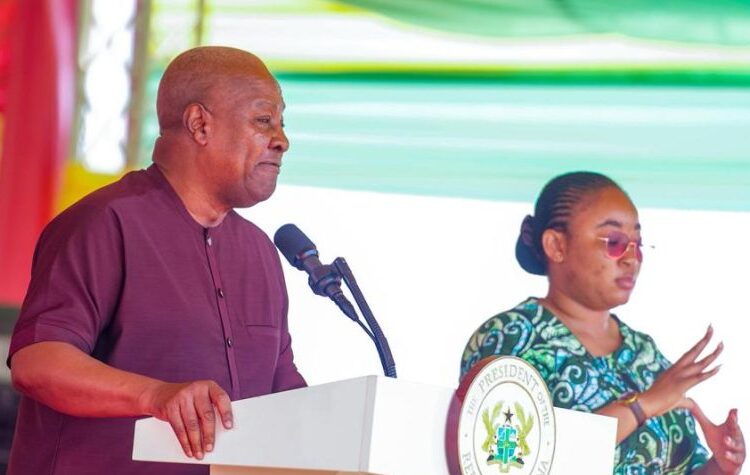
President John Dramani Mahama has announced that vehicle assemblers will have to meet a minimum local-assembly threshold before qualifying for planned VAT relief under a redesigned automotive incentive regime.
The requirement is being finalised by the Ministries of Finance and Trade, Agribusiness and Industry and is intended to ensure that tax concessions support meaningful domestic production rather than minimal finishing of largely imported vehicles.
Ghana’s previous VAT zero-rating for locally assembled vehicles ran from September 2022 to December 31, 2025. The 2026 VAT reforms retained zero-rating for locally manufactured textiles but did not renew the vehicle provision.
The new proposal therefore represents more than a continuation of the old relief; the government is signalling that any renewed VAT benefit will come with a measurable production condition.
The question is whether that condition can move Ghana’s automotive industry from assembly towards deeper manufacturing. Ghana Statistical Service data show that vehicles and automotive parts were worth GH¢24.7 billion in 2024, accounting for 9.9% of merchandise imports.
Reducing that dependence will require more than putting imported kits together locally. It will depend on how much value, employment and supplier activity are actually created inside Ghana.
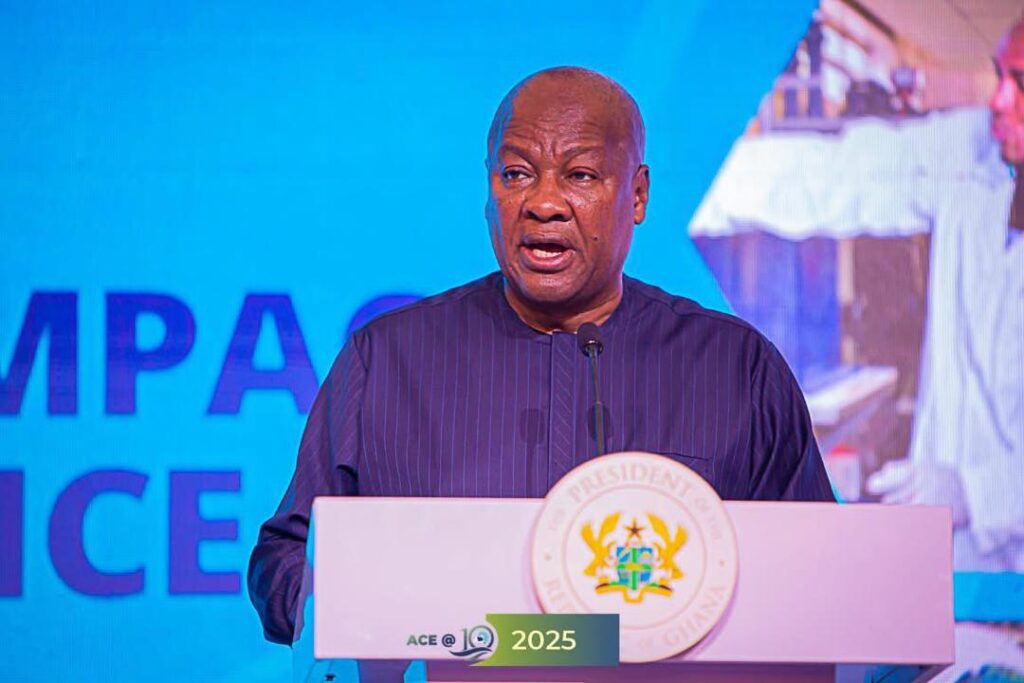
Incentive Redesign Follows Gaps in the Existing Policy
Ghana’s Automotive Development Policy has succeeded in attracting assemblers, but its own mid-term review shows why government is now focusing more closely on the quality of local production.
The review identified nine registered assemblers, including seven assembly plants and two contract assemblers, and reported 617 direct new jobs plus at least 978 jobs through outsourced activities.
The policy has also provided duty-free importation of assembly machinery and knocked-down kits, rebate arrangements and tax holidays for qualifying investors. Yet the review found that only one assembler had actually used the tax-holiday incentive and recommended phasing out the most basic semi-knocked-down level of assembly as the industry matures.
Local Components Will Determine the Real Economic Gain
President Mahama has urged assemblers to deepen localisation through components such as batteries, tyres, wiring harnesses, seats, glass, plastics and metal parts. Those backward linkages matter because component manufacturing can spread the benefits of an assembly plant to Ghanaian suppliers, technicians and smaller industrial firms.
“The goal is to develop an integrated automotive industry in which locally produced materials and components feed directly into vehicle manufacturing.”
President Mahama
The industrial logic is stronger than simple import substitution. Domestic component production can create technical jobs, build engineering capability and retain a larger share of each vehicle’s value in Ghana. It can also make locally assembled vehicles more likely to satisfy African Continental Free Trade Area rules of origin, improving their prospects in regional markets.
Government has recently adopted a similar principle in its performance-based approach to industrial incentives, where tax benefits are increasingly expected to be justified by jobs, local content, skills transfer or export earnings. Applying the same discipline to automotive incentives would make the fiscal cost easier to evaluate.
Tax Relief Must Buy More Than Imported Kits
A VAT concession is ultimately revenue that government chooses not to collect. The policy case is strongest when the forgone revenue generates measurable gains in production, employment, technology transfer and foreign-exchange savings.
That outcome is not automatic. If engines, transmissions, electronics, body panels and most other high-value parts continue to arrive as imported kits, the country may replace imports of fully built vehicles with imports of components without substantially reducing its foreign-exchange requirement. The composition of imports would change, but the domestic value added could remain modest.
Ghana’s recent customs reforms have also strengthened the policy environment around local automotive production, but protection and tax relief cannot substitute indefinitely for competitiveness. Local assemblers will still need sufficient scale, reliable power, efficient ports, skilled labour, quality standards and access to finance if locally produced vehicles are to compete with imports.
There is also a sequencing problem. Ghana cannot realistically localise every automotive component at once. Some parts require large production volumes, specialised technology and strict international certification. A credible framework should therefore specify which components can be localised first and how the required domestic value share rises over time.
Zonda Expansion Shows the Opportunity and the Limit
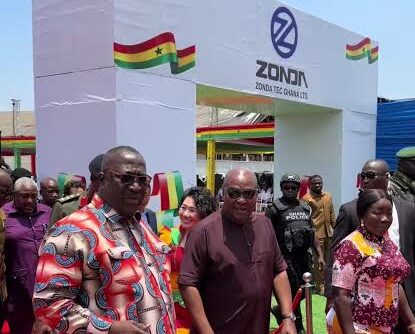
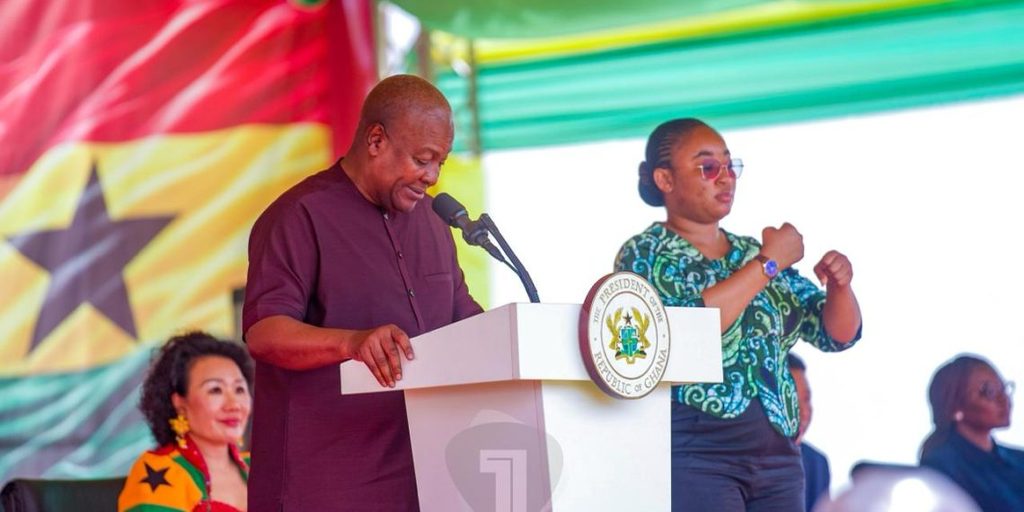
The policy announcement came at the commissioning of Phase Three of Zonda Tec Ghana’s assembly operations at Tema Golf City. The company says the new plant has a minimum annual production capacity of 12,000 vehicles and directly employs more than 800 skilled Ghanaian workers.
Those figures demonstrate the scale that private investment can bring, but they remain company-level outcomes rather than proof that the wider automotive strategy has already delivered economy-wide transformation.
The larger payoff will come if assemblers create durable supplier networks, train Ghanaian engineers and technicians, and source progressively more inputs from domestic firms.
What businesses should watch next is the actual local-assembly percentage government sets, how compliance will be measured, which vehicles and assembly categories qualify, and the precise VAT treatment to be presented in the national budget. Those details will determine whether the new incentive becomes a genuine industrial-policy tool or simply another tax concession around imported vehicle kits.
The policy signal is clear: public incentives are being tied more closely to domestic production. Ghana’s automotive programme should now be judged less by assembly counts and more by the value each vehicle creates locally.
READ ALSO: Mahama Commissions Northshore Apparel Factory, Creates 2,000 Jobs for 24-Hour Economy Policy