The Member of Parliament for Damongo and Ranking Member of Parliament’s Foreign Affairs Committee, Honourable Samuel Abu Jinapor, has called for an end to the politics of insults while defending the need to protect citizens’ fundamental rights.
He argued that Ghana’s democratic system must safeguard freedom of expression regardless of which political party controls government.
The Damongo MP explained that political disagreements should not become a justification for abusing opponents or using offensive language against public officials. He nevertheless stressed that objectionable speech must be distinguished from conduct that legally constitutes a criminal offence.

“We should have a political space which is decorous, which is devoid of insults and abuse,” Honourable Jinapor stated. He indicated that the political justification of retaliation, where one side claims to be responding to insults from another, should not become an accepted standard of political engagement.
The Ranking Member also addressed the recent arrests involving citizens accused of making offensive or controversial statements. He argued that the mere fact that an individual has insulted, maligned or damaged the reputation of another person does not automatically make that conduct a criminal offence.
Honourable Jinapor recalled that Ghana repealed its criminal libel laws in 2001, removing criminal sanctions for defamation and related forms of expression. The repeal was enacted through the Criminal Code (Repeal of Criminal Libel and Seditious Laws) (Amendment) Act, 2001, Act 602.
According to the Damongo MP, disputes involving defamation should ordinarily be addressed through the civil courts. He explained that individuals who believe their reputations have been damaged can pursue remedies for libel or slander instead of relying on criminal prosecution.
“It’s not a criminal offense,” he stressed, while distinguishing defamation from conduct that may fall under separate criminal provisions. Honourable Jinapor maintained that this distinction is important in determining when state authorities should intervene through arrest and prosecution.
The MP further argued that the protection of rights should not depend on political affiliation. He warned that a government which tolerates arbitrary treatment of citizens while in power could create precedents that may eventually affect members of the same political establishment when they leave office.

The Ranking Member therefore called for a democratic environment where the rule of law applies consistently. He noted that protecting citizens’ rights is not an NPP or NDC issue but a constitutional responsibility that should benefit Ghanaians irrespective of their political or ethnic affiliations.
Honourable Jinapor also acknowledged that freedom of expression has limits where conduct crosses into a genuine criminal offence. His position was that authorities must identify that legal threshold clearly instead of treating political insults alone as sufficient grounds for arrest.
Damongo MP Demands Full Disclosure On South Africa Evacuation Spending
The Member of Parliament for Damongo and Ranking Member of the Foreign Affairs Committee, Honourable Samuel Abu Jinapor, also defended the Minority’s demand for detailed records on government’s evacuation of Ghanaians from South Africa. He explained that the request forms part of Parliament’s responsibility to scrutinise public expenditure and ensure accountability.
Honourable Jinapor noted that the Foreign Affairs Ministry disclosed expenditure of about GH¢49.72 million on the evacuation of 1,964 Ghanaians amid reported xenophobic attacks in South Africa. The operation ran from May 27 to September 4, 2026, with the government contributing GH¢33.72 million while Engineers and Planners provided GH¢16 million.
The Damongo MP said the Minority was not questioning the decision to assist Ghanaians facing danger. Instead, the caucus wanted an itemised account showing how the funds were used across flights, transportation, accommodation, food, medical care and reintegration assistance.
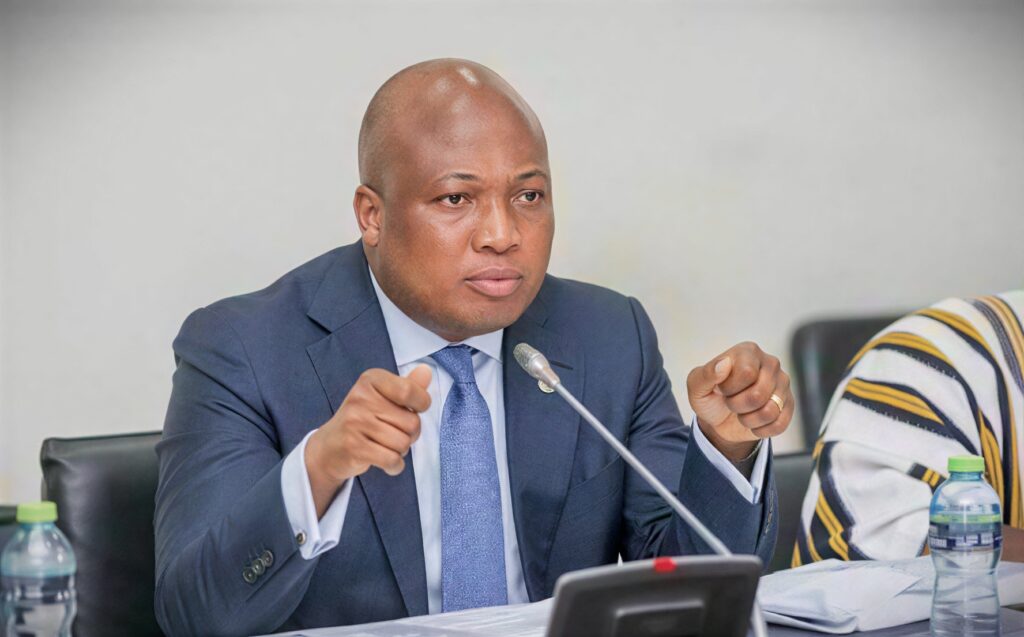
“We just said, look, Honourable Minister, just provide us with the details,” he explained. Honourable Jinapor indicated that Parliament’s scrutiny should be based on documentary evidence rather than assumptions about the expenditure.
He disclosed that the Foreign Affairs Ministry has subsequently submitted a report running to more than 200 pages in response to an information request. The latest report contains records relating to more than 1,900 evacuees and details concerning the operation, while the Minority is expected to study the material before determining whether further questions remain.
“It’s our responsibility and our duty,” Honourable Jinapor stated, emphasising the constitutional role of Parliament in scrutinising government activities. He added that accountability should apply regardless of the political party responsible for a particular expenditure.
The MP also pointed to the significance of the Foreign Affairs Minister’s position as chairman of Operation Recover All Loot in the context of public accountability. He described the situation as curious while stopping short of drawing a conclusion before examining the report submitted by the Ministry.
Honourable Jinapor indicated that the Minority would first obtain and interrogate the documents before reaching a position on the expenditure. The Foreign Affairs Ministry has also requested a special audit of government evacuation exercises from 2017 to date, including operations linked to COVID-19, Ukraine, Sudan and South Africa.
READ ALSO: President Tinubu Celebrates First Lady Oluremi at 66