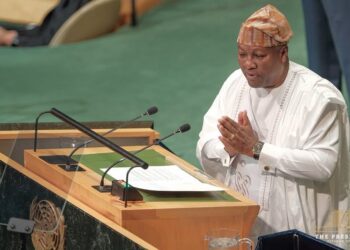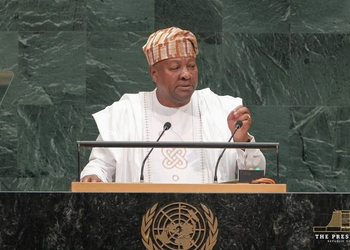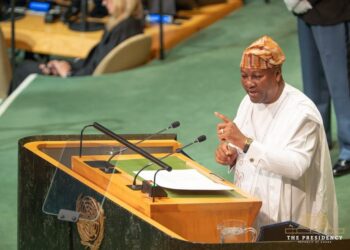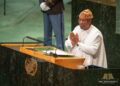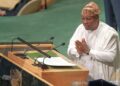
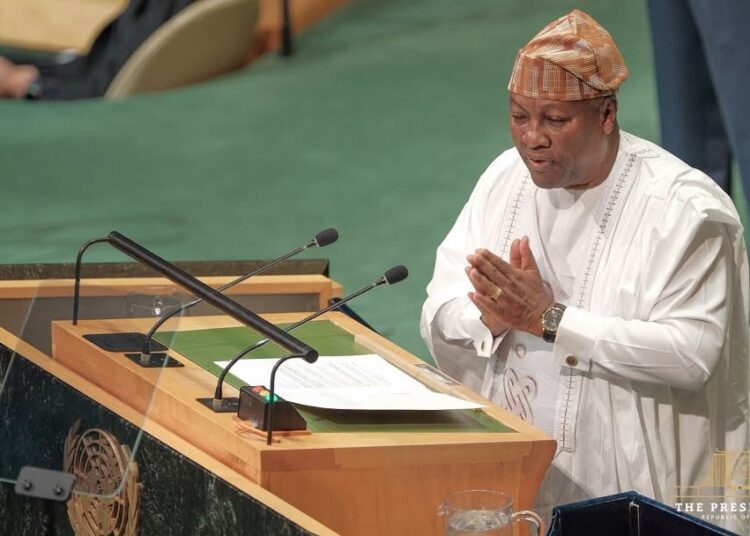
President John Dramani Mahama built Ghana’s address to the United Nations General Assembly around the idea of belonging, telling world leaders that every human being belongs to the human family and no child’s life is worthless because of language, faith, skin colour or birthplace.
He delivered the statement on Thursday, 24 September 2026, during the General Debate of the 81st Session in New York. The President opened by setting aside his title to introduce himself through his parents, his birthplace and the languages he speaks, and closed by listing those the international system most often leaves out.
Between the two, he warned that belonging turns dangerous the moment politicians weaponise it.
Reintroducing Himself
President Mahama began with an observation about how leaders present themselves at the podium. “We too often ascend these heights draped only in the robes of our titles, forgetting that alongside each of us stands a history, a people and a legacy,” he said.
He then supplied his own. He was born in Damongo, then a modest community in northern Ghana and now the capital of the Savannah Region, to Emmanuel Adama Mahama of Bole and Hajia Abiba Nnaba of Busunu in the West Gonja District, both of blessed memory. He told the Assembly he belongs to them and to the forebears who named and nurtured them.
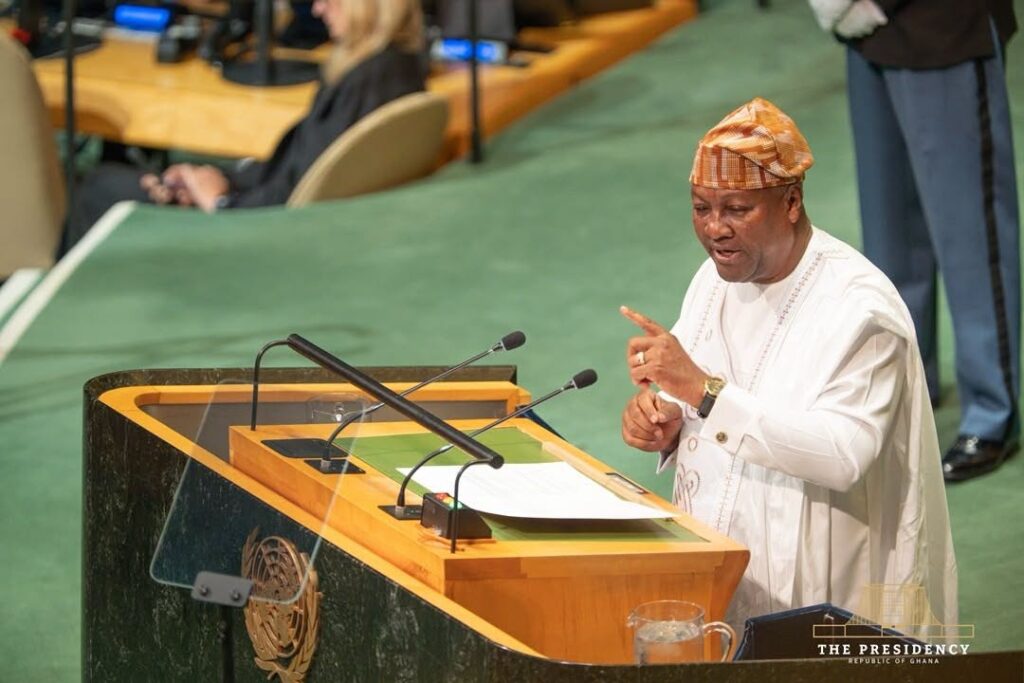
He listed the languages he grew up among, including Gonja, a Guan language, Ga, Hausa, which carries across the West African savannah and the Sahel, some Ewe, and English. Because those tongues became his, he said, he belongs to all those peoples, and language creates kinship regardless of the historical complexities through which it was forged.
The Anthem As Text
President Mahama drew his framing from Ghana’s national anthem, citing its petition that God make Ghanaians bold to defend forever the cause of freedom and of rights, and its request that hearts be filled with true humility and taught to cherish fearless honesty.
That second line, he said, inspired him to follow Kwame Nkrumah, Haile Selassie and Nelson Mandela, who had stood at the same podium and spoken without hedging.
He was candid about the limits of the exercise. The world may not transform overnight because of speeches delivered in the Assembly, he said, but “history would faithfully record the truths we choose to speak and the silences that we choose to keep.”
He also congratulated the Assembly’s new President on his election and commended António Guterres for ten years of service, as the Secretary-General enters the final months of a term that has drawn eight candidates into the contest to replace him.
The Dark Side Of Belonging
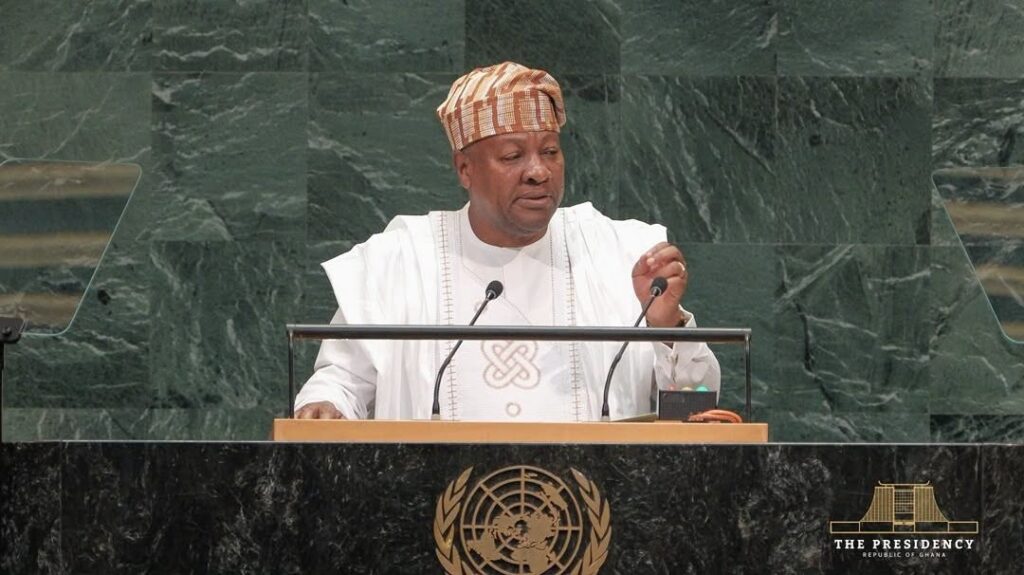
Having established belonging as a source of dignity and pride, Mahama turned it over to show the other face. When belonging is weaponised by political expediency, he said, it becomes nativism, chauvinism, xenophobia and prejudice directed at anyone deemed different, serving as the pretext for discrimination, displacement, persecution and war.
Against that he set the organisation’s founding premise. “Every human being belongs to the human family. No race is superior. No nation is inferior,” he said, adding that “no child’s life is worthless because of the language they speak or the faith they profess or the colour of their skin or the land of their birth.”
The passage lands in a period when migration politics has hardened across Europe and North America, and when several governments in the hall have built electoral strategies on the exclusions he named.
Who Belongs
The closing section turned the concept into a list of people. President Mahama argued that the world’s crises are not insurmountable and that the missing ingredient is neither money nor expertise. “What we lack is not resources or intellect. What we lack is the political courage to see one another as a part of a single human family,” he said.
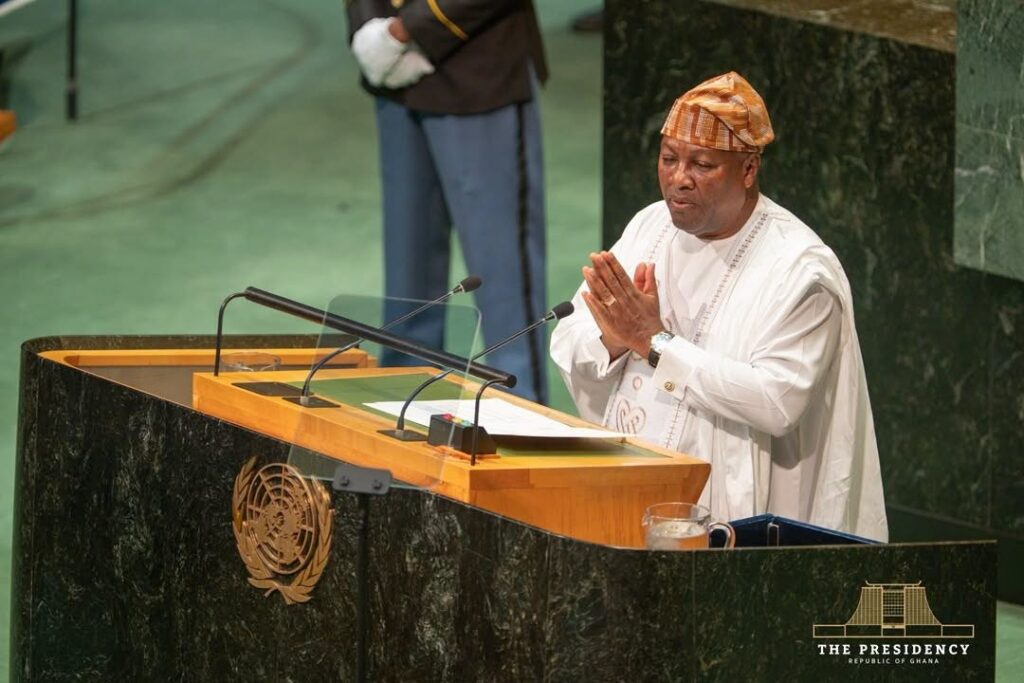
He then named those he meant. “That refugee fleeing violence belongs. That migrant seeking opportunity belongs. That child in Gaza, Sudan or Ukraine belongs,” he said, extending the list to descendants of enslaved Africans seeking justice, indigenous communities defending ancestral lands, small island states facing rising seas, and the poor, vulnerable and marginalised.
Because they belong, he argued, their dignity must be safeguarded, their rights enforced and their voices heard.
Nkrumah’s Line, Expanded
President Mahama closed by reaching back to 1957, recalling Nkrumah’s declaration on the eve of independence that the independence of Ghana is meaningless unless it is linked up with the total liberation of the African continent.
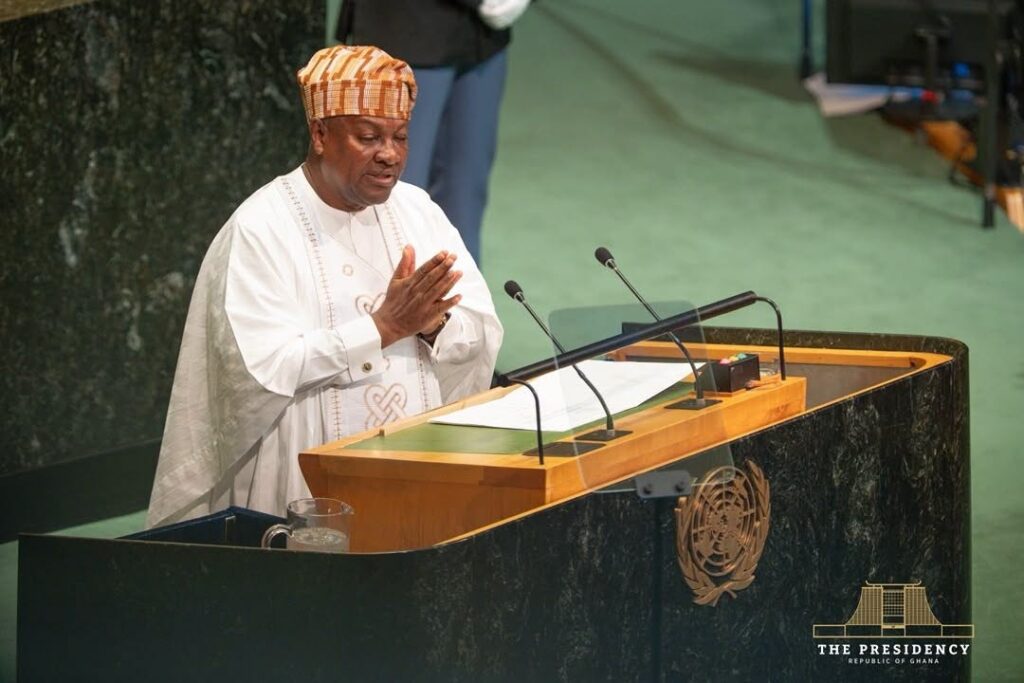
He then stretched the formula outward. “The freedom of any nation is insecure unless it is linked to the freedom of all humanity,” he said, adding that national prosperity is fragile unless shared and global peace is unviable unless anchored in justice.
His final appeal was for a General Assembly that uses belonging to build bridges rather than erect walls. “Let us speak truth with humility. Let us act with courage,” he said.
The framing gives the rest of the address its logic, since the demands he made on the Security Council, on debt and on Gaza all rest on the same premise. Whether that premise holds is decided elsewhere, in the votes cast by the same governments that applauded it.
READ ALSO: BoG Holds Policy Rate at 14% as Inflation Rises, Credit Expands