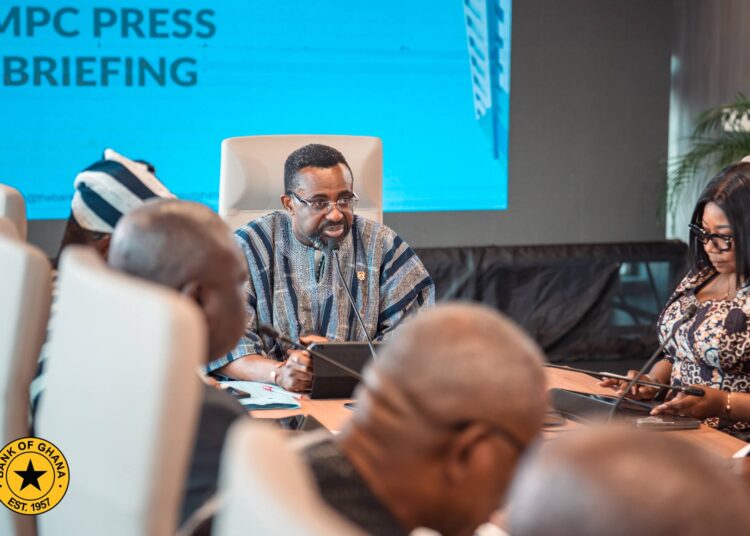
The Bank of Ghana has kept its Monetary Policy Rate at 14 percent for a third consecutive meeting, choosing to hold borrowing conditions steady as headline inflation rises but underlying price pressures ease and credit to the private sector expands. The Monetary Policy Committee reached the decision unanimously at its 132nd meeting on Thursday, September 24.
The decision closes a two-day policy review that began with the Bank warning about renewed inflation risks, pressure on foreign-exchange buffers and the interaction between fiscal operations and liquidity.
In the Bank of Ghana’s official opening remarks for the 132nd MPC meeting, Governor Dr Johnson Pandit Asiama had framed the central question as whether the current 14 percent rate remained the appropriate anchor for inflation expectations given the balance of domestic and external forces.
The Committee ultimately judged those pressures to be manageable without another rate move. Asiama said the MPC viewed “the balance of risks to inflation and growth as broadly balanced”.
That assessment matters because Ghana is now dealing with two signals at once: headline inflation has moved higher, but monetary transmission is already visible through lower lending rates and stronger private-sector credit.

Headline Inflation Rises, Core Pressure Eases
Headline inflation rose to 5.0 percent in August from 4.6 percent in July, while non-food inflation increased to 6.8 percent from 6.1 percent. The Bank linked the increase partly to earlier utility tariff adjustments and higher crude-oil prices. Yet its core inflation measure, which strips out energy and utility components, eased slightly to 4.2 percent from 4.3 percent.
That divergence helps explain the hold. Headline inflation has turned up, but core inflation and surveyed expectations are not signalling a comparable broadening in underlying price pressure. The risk remains that petroleum costs, transport fares or a stronger dollar could still change that picture.
That external-price channel has already been visible in Ghana. Vaultz News recently examined how higher global oil prices can feed into inflation, foreign-exchange demand and reserve pressure. The MPC’s decision therefore preserves room to respond later if those pressures become more persistent.
Credit Expansion Reduces Pressure for Another Cut
The growth and credit side of the decision is equally important. Real GDP expanded by 6.0 percent in the second quarter, while nominal private-sector credit growth reached 35.5 percent in August.
Average lending rates also fell to 15.9 percent from 24.2 percent a year earlier, showing that the earlier easing cycle is already passing through to financing conditions. The broader easing cycle is therefore still working through the banking system, giving policymakers a reason to assess its lagged effects before changing the benchmark again.
Those conditions reduce the immediate case for additional easing. With credit expanding and lending rates substantially lower, the Bank can wait for more evidence on inflation before changing the benchmark again.
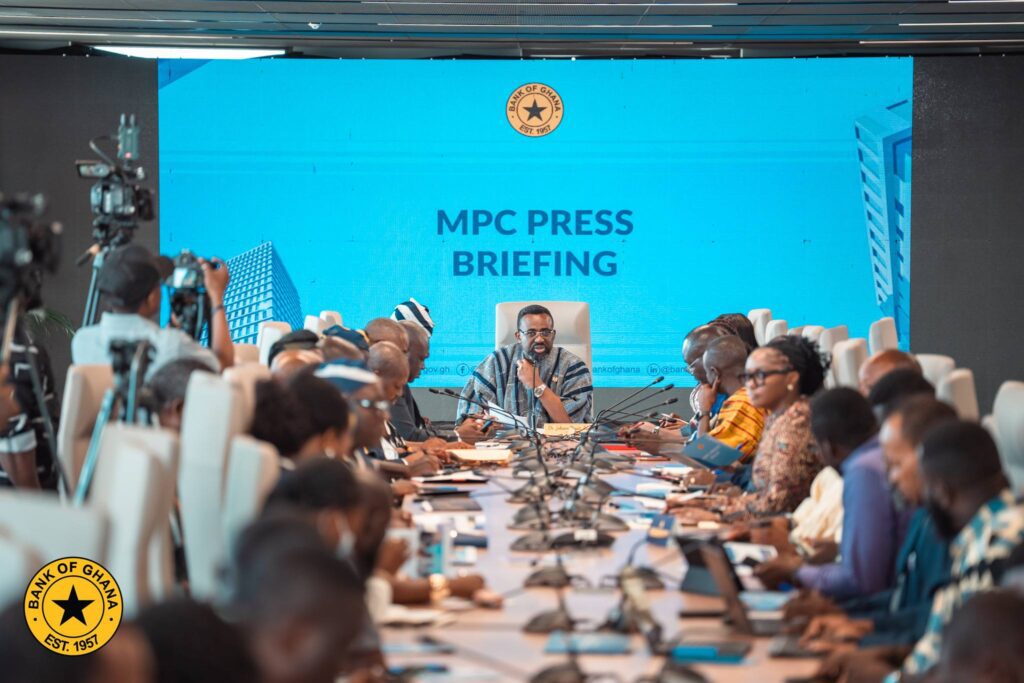
At 14 percent, the policy rate is 9 percentage points above the latest headline inflation print, leaving a wide nominal cushion as the Bank watches whether price pressures persist.
GoldBod Resumption Changes the Reserve Story
The most important new information from the press briefing concerned gold. At the opening of the MPC, Dr Asiama had said GoldBod had paused exports since mid-August, adding to concern about reserve accumulation. Vaultz News reported that pause as a new pressure on Ghana’s foreign-exchange buffers.
By Thursday, however, the Governor said shipments had resumed and that GoldBod had exported a significant amount of gold during the previous week, supporting reserve build-up. That changes the immediate external-risk assessment: shipment continuity is less threatening than it appeared a day earlier, while international gold prices remain outside Ghana’s control.
Strong Trade Still Does Not Guarantee Reserve Comfort
Ghana’s merchandise position nevertheless remains strong. The trade surplus reached US$8.85 billion in the first eight months of 2026, up from US$6.69 billion a year earlier. Exports rose to US$22.4 billion, while imports increased to US$13.58 billion, partly because of higher oil and gas import values.
But a large merchandise trade surplus does not mechanically translate into central-bank reserve accumulation. Services payments, debt-service obligations, capital flows and the Bank’s own foreign-exchange operations can all affect the stock of reserves. That distinction between export strength and reserve accumulation has already become a defining feature of Ghana’s 2026 external position.
The September hold therefore looks less like policy inertia than a decision to preserve optionality. Inflation is rising, but underlying pressure remains contained; growth and credit are strong enough to reduce the urgency for another cut; and resumed gold shipments have eased one immediate reserve concern. The next policy move will depend on whether those favourable offsets survive the fourth-quarter test.
READ ALSO: GCB MSME Caravan Clinic Hits Kumasi as Support for Ghanaian Small Businesses