
Ghana’s foreign-exchange buffers have moved to the centre of the Bank of Ghana’s September policy debate after Governor Dr Johnson Pandit Asiama disclosed that gold shipments have slowed and the Ghana Gold Board has paused exports since mid-August.
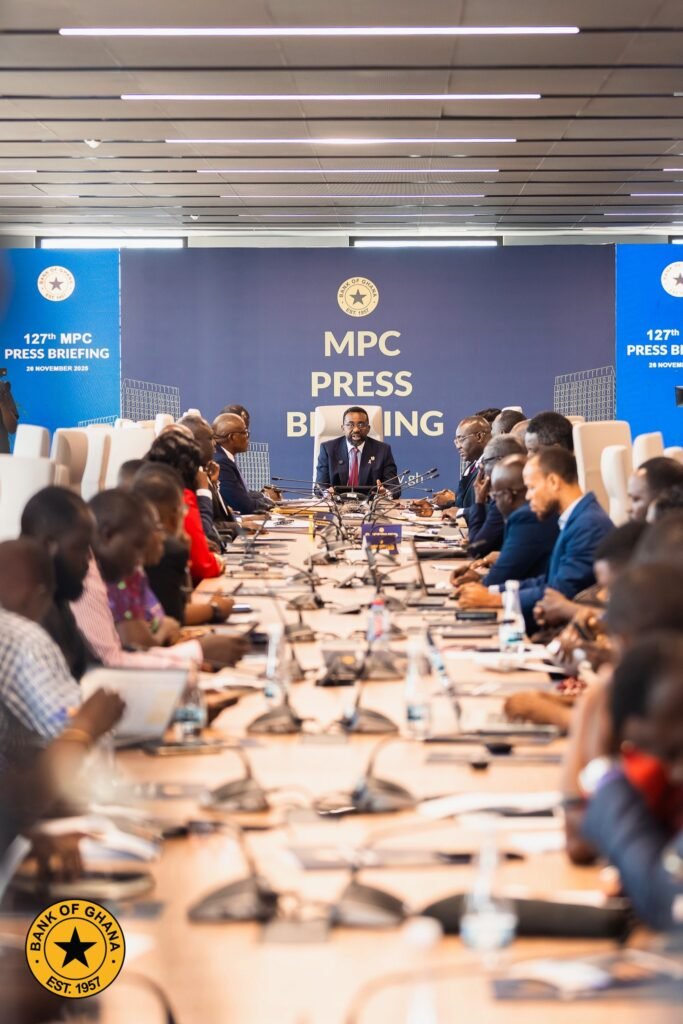
Opening the 132nd Monetary Policy Committee meeting on Wednesday, Dr Asiama said weaker external inflows, declining reserves and seasonal foreign-exchange demand require close attention as the Committee considers whether the 14 percent policy rate remains appropriate.
Gold matters because it has become one of Ghana’s strongest foreign-exchange sources. GoldBod reported US$1.315 billion in foreign exchange in August: US$668.21 million was sold to commercial banks and US$646.59 million was made available to the Bank of Ghana for reserve accumulation. A pause can therefore reduce dollar supply to the market while slowing reserve rebuilding.
Dr Asiama said gross international reserves now provide about 4.2 months of import cover, while the current account is expected to move into deficit in the third quarter as gold shipments weaken and service payments rise.
“Rebuilding reserves will be a key priority for the Bank in the coming months,” he said. The figures do not imply an external crisis, but they narrow policy room as the MPC weighs below-target inflation against a weaker external position.

Gold Pause Exposes the Reserve Channel
The immediate policy question is how quickly the interruption in gold exports is reversed. GoldBod has become an important part of Ghana’s foreign-exchange architecture, supplying commercial banks while also supporting reserve accumulation. That arrangement helped convert strong gold receipts into both market liquidity and a larger official buffer.
The Governor’s warning therefore changes the emphasis of the September MPC discussion. Earlier debate centred heavily on whether inflation at 5.0 percent justified another reduction in the policy rate.
The external sector now imposes an additional constraint. Lower interest rates can support domestic credit and activity, but they can also reduce the return advantage on cedi assets at a time when foreign-exchange demand typically rises toward the final quarter.
That trade-off is sharper because global energy costs have risen. Dr Asiama said Brent crude had increased from above US$85 per barrel at the July MPC round to about US$107 per barrel as of last week.
For Ghana, the oil-market pressure can weaken the external position and lift transport and production costs. If higher oil payments coincide with weaker gold inflows, pressure can reach reserves and the cedi before fully feeding into inflation.
Inflation Still Gives the MPC Policy Space
Headline inflation rose from 3.2 percent in March to 5.0 percent in August. Although that remains below the Bank’s 6 to 10 percent medium-term target band, the direction of travel has changed. The MPC must determine whether the increase reflects temporary adjustments or the beginning of more persistent price pressure that could affect expectations.
Monetary policy works with a lag, so the MPC must look beyond the latest inflation print to exchange-rate conditions, fuel costs, administered prices and domestic demand. The recent 8 percent transport-fare adjustment adds another cost channel, although it will not translate mechanically into an equivalent rise in headline inflation.
At the same time, inflation below the target band gives the Committee some domestic policy room. Dr Asiama’s formulation was that domestic conditions create policy space, while the external position determines how much of that space can be used safely. That makes reserve adequacy, foreign-exchange demand and the cedi central to the rate decision even when current inflation remains relatively subdued.
Fiscal Financing Adds a Third Constraint
The Governor also drew attention to the interaction between government spending, domestic borrowing and liquidity. If expenditure rises in the remaining months of the year, greater reliance on short-term domestic debt could inject additional liquidity into the financial system.
Completion of external debt restructuring could also increase debt-service payments, with implications for both liquidity and foreign-exchange demand. This makes the September decision more complex than a simple inflation-versus-growth choice.

The MPC is simultaneously managing three linked risks: whether inflation is beginning to turn, whether external buffers are strong enough to absorb seasonal and global pressures, and whether fiscal financing could complicate liquidity management.
The Bank’s decision on Thursday will therefore be read not only as a signal about the policy rate, but also as an indication of how heavily it now weighs reserve rebuilding in its reaction function. Ghana’s recent disinflation has created policy space. The pause in gold exports is testing how much of that space the external sector will allow the Bank to use.
READ ALSO: Education Expert Says BECE Placement Policy Puts Private Schools Under Pressure