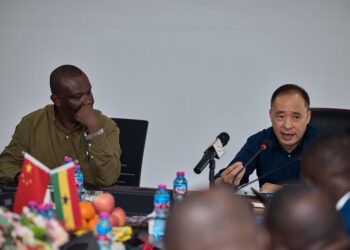
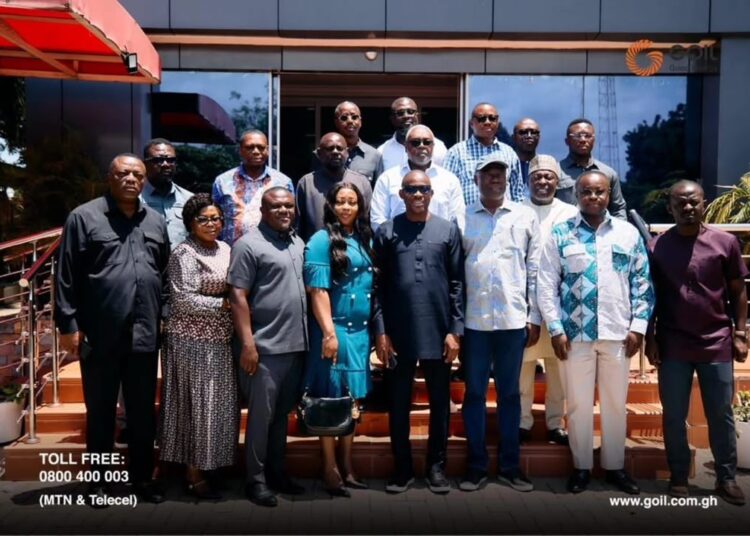
Parliament’s Select Committee on Energy has turned its attention to Ghana Oil Company Limited (GOIL) as it examines the country’s downstream petroleum system, fuel security and the capacity of local energy companies to support a changing transport and energy market.
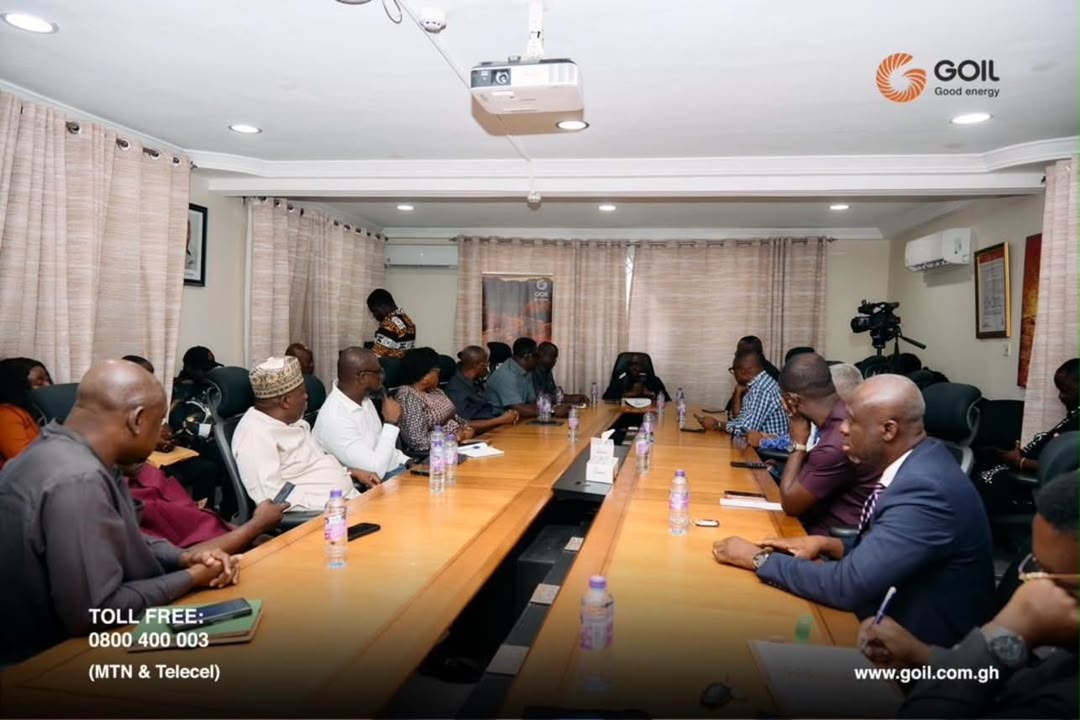
The Committee’s working engagement with GOIL management, led by Group Chief Executive Officer and Managing Director Edward Abambire Bawa, covered the company’s downstream operations, strategic investments, expansion plans and emerging energy businesses.
The engagement formed part of the Committee’s broader oversight work amid renewed attention on Ghana’s petroleum supply chain and rising fuel prices.
Parliament’s Energy Committee has also been examining refinery operations and domestic petroleum production capacity as part of a wider review of the downstream sector.
Fuel Security Moves Beyond Retail Stations
GOIL’s role in Ghana’s petroleum market extends beyond operating filling stations.
The company has a nationwide retail network and operates across fuel distribution, LPG, bunkering and aviation fuel, while its wider group includes GOEnergy, GOIL Upstream and GOBitumen.
That breadth makes the company relevant to discussions about how Ghana can strengthen the resilience of its domestic fuel supply chain.
Albert Tetteh Nyakotey, Member of Parliament for Yilo Krobo, who represented the Committee, described GOIL as “Ghana’s pride”, while stressing the importance of understanding the company’s contribution to national fuel security.
“GOIL is Ghana’s pride, and understanding its operations is important to strengthening our approach to fuel security across the country.”
Albert Tetteh Nyakotey, Member of Parliament for Yilo Krobo
The significance of the engagement extends beyond GOIL’s market position. With Ghana still exposed to international petroleum prices and exchange-rate movements, the resilience of domestic storage, distribution and supply infrastructure remains an important component of energy security.
LPG And Alternative Fuels Expand GOIL’s Role
The discussions also covered GOIL’s participation in the Cylinder Recirculation Model (CRM), which is changing how LPG is distributed to consumers.
The company operates cylinder bottling facilities in Tema and Kumasi, while the broader CRM is intended to separate cylinder filling from consumer-facing exchange points and strengthen safety and traceability.
Ghana’s 2026 energy-sector plan includes further implementation of the CRM and expansion of safe LPG retail points.
GOIL’s involvement therefore places the company within Ghana’s wider clean-cooking and LPG-access agenda rather than limiting its role to conventional petroleum retailing.
The Committee was also briefed on GOIL’s GOBitumen operations. Its Tema facility has capacity of approximately 7,500 tonnes and produces polymer-modified bitumen and bitumen emulsions for infrastructure applications.
EV Charging Signals Changing Energy Demand
Electric mobility was another area discussed during the engagement, with GOIL presenting plans around electric-vehicle charging infrastructure.
This is strategically relevant because the transition to electric mobility could gradually change the relationship between fuel retailers and consumers.

Service stations with established locations and grid connections could potentially become energy-service points offering conventional fuels, LPG and EV charging.
GOIL has separately indicated that its nationwide service-station footprint could support the deployment of accessible EV charging infrastructure.
The company’s expansion into these areas suggests that the downstream petroleum business is increasingly becoming an energy-distribution business rather than simply a fuel-retailing business.
Local Supply And Infrastructure Under Review
The Committee also examined GOIL’s local product sourcing, upstream activities and expansion strategy.
That focus is particularly relevant as Ghana seeks to increase domestic value retention across the petroleum chain.

Strengthening local sourcing, storage, distribution and processing capacity can reduce some vulnerabilities associated with relying heavily on imported petroleum products, although domestic infrastructure cannot completely insulate Ghana from international crude and refined-product prices.
GOIL’s recent investments also point toward a broader diversification strategy, including LPG infrastructure, autogas and bitumen production. The company currently operates more than 438 service stations, according to its latest corporate disclosures.
The parliamentary engagement therefore provides a useful snapshot of the direction of Ghana’s downstream energy sector: fuel security is increasingly being considered alongside LPG access, alternative fuels, infrastructure, local supply and emerging electric-mobility demand.
For policymakers, the central issue is no longer simply whether petroleum products are available at filling stations.
It is whether Ghana has a sufficiently resilient and diversified energy-distribution system capable of responding to price shocks, changing consumer demand and the gradual transition towards cleaner forms of transport.
READ ALSO: Analyst Deems Canada-EU Associate Membership Significant For Multilateralism