
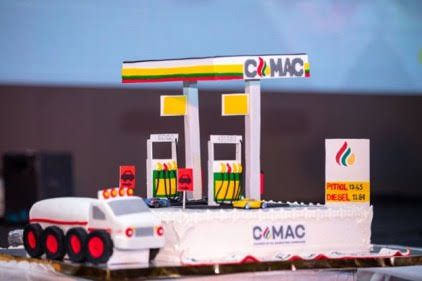
The Chamber of Oil Marketing Companies (COMAC) has raised concerns that a new petroleum tax arrangement under Ghana’s Customs Act, 2026 could shift substantial financing pressure onto bulk fuel suppliers and, in turn, increase risks across the downstream petroleum market.
At the centre of the dispute is Section 136 of the new Customs Act, which requires Bulk Import, Distribution and Export Companies (BIDECs) to account for petroleum taxes at the point of sale.
COMAC is asking the authorities to suspend the provision indefinitely, arguing that its implementation could increase the working-capital requirements of bulk suppliers, raise the cost of trade finance and eventually place upward pressure on fuel prices.
The Chamber’s objection is not directed at efforts to improve tax collection. Rather, it is questioning whether moving the tax obligation from Oil Marketing Companies (OMCs) and Liquefied Petroleum Gas Marketing Companies (LPGMCs) to BIDECs addresses the underlying compliance problems without introducing new financial and supply risks.
In a letter to the Commissioner-General of the Ghana Revenue Authority (GRA), Anthony Kwasi Sarpong, COMAC described the change as a significant alteration to the downstream petroleum tax framework.
“This far-reaching change was introduced without due consultation and presents dire consequences for operators, the industry and the national economy”
COMAC
Tax Liability Moves Up The Supply Chain
Under the arrangement outlined by COMAC, petroleum products currently move through a tax and commercial structure in which BIDECs settle import duties and port-related charges when products enter Ghana, while OMCs and LPGMCs account for relevant downstream taxes and levies at later stages of the supply chain.
Section 136 changes that position by placing the tax obligation on the bulk-supply tier when products are sold.
The provision allows the Commissioner-General to defer payment for up to 21 days, but only where the taxpayer provides a bank guarantee.

For COMAC, the issue is therefore not simply when government receives its money. It is who must finance that obligation while waiting for payment from the next participant in the supply chain.
A BIDEC operating under the proposed arrangement could have to fund the tax component before recovering the corresponding value from an OMC or LPGMC.
That could increase the amount of working capital required to maintain the same level of fuel imports and distribution.
The Chamber argues that the change effectively transfers an obligation that was previously supported through guarantees, bonds and self-recognisance arrangements at the OMC and LPGMC level to companies operating higher up the supply chain.
“It migrates liability currently secured by OMC/LPGMC guarantees, bonds and self-recognisance to the bulk-supply tier”
COMAC
The distinction matters because petroleum distribution is heavily dependent on short-term financing. Importers need access to foreign exchange, banks and trade-finance facilities before fuel can reach depots and filling stations.
Any additional obligation placed on those companies can therefore have consequences beyond their own balance sheets.
Financing Costs Could Feed Into Fuel Prices
The potential impact of Section 136 is closely tied to how BIDECs finance their operations.
If companies are required to provide larger bank guarantees or finance tax obligations for longer periods, banks could face greater exposure to individual petroleum suppliers.
That may translate into higher financing charges, additional collateral requirements or tighter credit limits.
For companies with strong balance sheets, the effect may be manageable. Smaller or more financially constrained operators could face greater difficulty securing the facilities required to sustain their import and distribution activities.
The additional financing cost could then be reflected in commercial arrangements between BIDECs and their downstream customers.
Suppliers could seek stronger payment guarantees from OMCs, shorten credit periods or incorporate additional costs into their margins.
The consequences could ultimately reach the pump if those costs are passed through the petroleum pricing chain.
This creates a potential tension between revenue mobilisation and consumer protection.
Government may gain greater visibility over petroleum tax liabilities by dealing with fewer entities, but the financial cost of achieving that may be distributed across the companies responsible for bringing products into the market.
In a sector where international petroleum prices and exchange-rate movements already influence domestic fuel prices, an additional financing cost could create another source of pressure.
Smaller Marketers Face Greater Exposure
COMAC has also raised concerns about the effect of the proposed arrangement on smaller petroleum marketers.
Many OMCs rely on supplier credit to secure products and maintain adequate stock. If BIDECs face higher financing costs or greater exposure to downstream customers, they may become less willing to provide extended credit.
That could make access to petroleum products more difficult for smaller marketers that lack sufficient liquidity to finance purchases independently.
The resulting market effect could be increased concentration among better-capitalised companies.
That would have implications for competition in the downstream petroleum sector, particularly if smaller operators are forced to reduce their volumes or exit certain segments of the market.
The concern also has an energy-security dimension.
Ghana’s fuel market depends not only on the physical availability of petroleum products but also on the financial capacity of the companies importing, financing, storing and distributing those products.
A disruption in the financing capacity of a major bulk supplier could therefore extend beyond one company and affect multiple downstream operators.
COMAC Challenges Rationale Behind Reform
The GRA’s reported rationale for the measure is to simplify tax administration by collecting petroleum taxes from fewer entities and address defaults associated with petroleum marketers.
COMAC, however, argues that government has not sufficiently demonstrated that changing the taxpayer will resolve the underlying compliance problem.

The Chamber has pointed instead to weaknesses in the Integrated Customs Management System (ICUMS), particularly alleged instances where system overrides allowed some operators to continue lifting petroleum products after exceeding approved credit limits or payment periods.
If those weaknesses contributed to the accumulation of tax arrears, COMAC argues, the priority should be to strengthen the controls that govern petroleum lifting rather than simply shifting the tax obligation to another category of companies.
The Chamber has therefore called for a written explanation of the alleged control failures and an independent review of material system overrides.
Such a review, according to COMAC, should establish who authorised the overrides, what criteria were applied, the justification for the decisions and whether an appropriate audit trail exists.
Where breaches are established, it is also calling for the relevant administrative or disciplinary measures.
The argument puts the focus on enforcement rather than merely redesigning the tax structure.
Conflicting Tax Triggers Raise Questions
COMAC has also identified what it considers an inconsistency between provisions of the Customs Act concerning when petroleum tax becomes payable.
According to the Chamber, Section 126(6) establishes a tax point 21 days after the close of a lifting window, while Section 136 introduces tax liability at the point of sale, with the possibility of a separate 21-day deferral.
The concern is that two different triggers could create uncertainty over the timing of tax obligations for the same petroleum consignment.
For companies, that uncertainty could complicate cash-flow planning and financing arrangements.
For the GRA, it could create challenges in determining when a liability becomes due and what security should accompany it.
COMAC said no accompanying impact assessment, transition framework or financing arrangement had been provided to explain how the provisions would operate together.
That makes clarity particularly important before implementation, given the scale of financial transactions involved in Ghana’s downstream petroleum market.
Revenue Protection Must Not Create Supply Risk
The dispute ultimately raises a broader policy question about how Ghana can improve petroleum-tax compliance without weakening the financial foundations of fuel supply.
The government has a legitimate interest in ensuring that petroleum taxes are collected promptly and that arrears do not accumulate.
But the mechanism used to achieve that objective also matters.

If the new system substantially increases the amount of capital that bulk suppliers must commit to each transaction, the resulting financing costs could affect commercial credit, fuel availability and pricing.
There is also a concentration risk.
Moving tax collection towards a smaller group of bulk suppliers may simplify monitoring for the GRA, but it could also mean that financial difficulties at one major supplier have a wider impact on the downstream market.
As COMAC put it:
“GRA would face an impossible choice: enforce and trigger a national supply shock, or forbear and allow arrears to balloon. Risk becomes concentrated, not reduced.”
The Chamber’s position is that Ghana should strengthen existing compliance mechanisms before introducing a fundamental change to the point at which petroleum taxes are collected.
Industry Seeks Review Before Implementation
Despite its objections to Section 136, COMAC has indicated support for other provisions of the Customs Act dealing with petroleum-sector controls.
The Chamber has specifically welcomed provisions that maintain customs oversight over the registration of petroleum operators and the bonded storage, lifting and movement of petroleum products.
Its argument is therefore not against stronger regulation or improved revenue mobilisation.
Rather, it is calling for the proposed tax shift to be subjected to a fuller assessment involving the GRA, Ministry of Finance, Ministry of Energy and Green Transition, National Petroleum Authority, financial institutions and industry stakeholders.
Such an assessment would need to establish the likely additional working-capital requirements for BIDECs, the scale of bank guarantees that may be required, the impact on trade-finance facilities and the possible effect on petroleum prices.
Those considerations are particularly important because petroleum taxation operates within a supply chain where financial liquidity and physical fuel availability are closely connected.
BIDECs require financing to import products. OMCs require supplier credit and working capital to distribute those products. Consumers ultimately depend on the entire chain functioning without major disruption.
COMAC has consequently framed the issue as one that extends beyond the interests of individual petroleum companies.

“COMAC remains a willing partner in strengthening compliance and revenue mobilisation, best achieved by enforcing the existing mechanism rather than replacing it.”
COMAC
For policymakers, the challenge is to determine whether Section 136 can improve tax compliance without increasing the cost of financing fuel imports or concentrating excessive financial risk among a smaller number of bulk suppliers.
The effectiveness of the provision will therefore depend not simply on how much revenue it brings into government coffers, but on whether it can achieve that objective while preserving competition, keeping financing costs manageable and maintaining the resilience of Ghana’s petroleum supply chain.
READ MORE: WMO Backs UN Declaration on Sea-Level Rise