The National Union of Ghana Students (NUGS) has expressed concern over the ongoing strike by Ghana’s major pre-tertiary teacher unions, calling on government and all relevant stakeholders to urgently engage the unions to resolve outstanding issues concerning teachers’ pay, conditions of service and allowances.
In a statement, NUGS acknowledged the legitimate concerns that have contributed to the current impasse, while stressing the significant impact the prolonged disruption is having on teaching and learning across the country’s basic and senior high schools.
NUGS recognised industrial action as a lawful means available to workers for drawing attention to unresolved labour matters.
However, the student body cautioned that the continuation of the strike has a direct effect on teaching and learning, and ultimately on the students who depend on the education system for their development and future prospects.
This acknowledgement reflects an attempt by NUGS to validate the teacher unions’ right to protest while simultaneously highlighting the cost of prolonged disruption to the very students the education system is meant to serve.
The Critical Importance of Pre-Tertiary Education
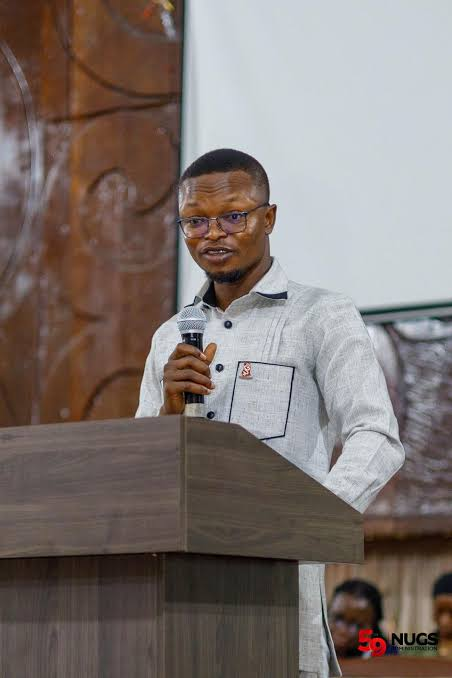
NUGS placed particular emphasis on the significance of the pre-tertiary level within a child’s broader educational journey, describing it as the stage at which learners build the foundational knowledge, skills, discipline and values upon which their future education and personal development depend.
“Any prolonged disruption at this level therefore requires urgent attention.”
NUGS
By framing the pre-tertiary level in these terms, NUGS sought to underscore why the current strike carries particularly high stakes, given that disruptions at this foundational stage could have lasting consequences for affected students as they progress through the education system.
Call for Meaningful Dialogue
NUGS called on government to prioritise meaningful and constructive dialogue with the teacher unions, urging all parties to work toward a fair and sustainable resolution of the outstanding issues driving the strike.
The student body further urged that negotiations be approached in good faith, with the welfare and educational progress of Ghanaian children placed at the centre of the process.
This appeal reflects a broader concern that, amid the back-and-forth between teacher unions and various government agencies over documentation, allowances and collective bargaining processes, the interests of students themselves could be overlooked if negotiations are not handled with appropriate urgency and sincerity.
Balancing Teachers’ Rights and Students’ Needs
NUGS was careful to frame its appeal as one that recognises the legitimate interests of both teachers and students, rather than positioning one group’s concerns above the other.
“Teachers deserve fair and dignified conditions of service, while students deserve uninterrupted access to quality education.”
NUGS
This balanced framing positions NUGS as an advocate for a swift and equitable resolution that addresses teachers’ grievances without further compromising students’ access to consistent schooling, reflecting the dual stake students have in both outcomes.
NUGS appealed directly to government and the teacher unions to reach an agreement as soon as possible, in order to enable teachers to return to the classroom and resume what the statement described as the important task of educating and shaping the next generation of Ghana.
This appeal comes against the backdrop of ongoing engagements between government agencies, including the Ministry of Education, the Controller and Accountant-General’s Department, the Fair Wages and Salaries Commission, and the teacher unions, aimed at resolving disputes over the Collective Agreement, promotion placements and the Deprived Area Allowance.
Framing The Stakes for Ghana’s Future
NUGS closed its statement by linking the current dispute to the broader future of Ghana’s education system, emphasising that the attention given to resolving the foundational issues at stake today will shape the strength of the country’s educational outcomes going forward.

This framing positions the student body’s intervention not merely as a reaction to the immediate disruption caused by the strike, but as a broader call for sustained national attention to the structural issues affecting the welfare of teachers and, by extension, the quality of education available to Ghanaian students.
As government continues its engagement with the teacher unions, NUGS’s intervention adds another stakeholder voice urging a swift resolution, with particular emphasis on safeguarding the educational progress of pre-tertiary students who continue to bear the direct impact of the ongoing disruption.
READ MORE: Ghana Must Prepare As Older Population Set To Hit 5.7 Million By 2050