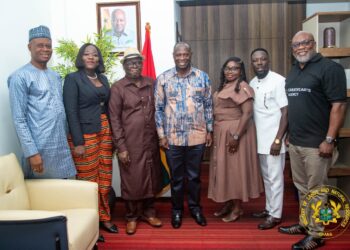
Ahmed Dasana Nantogmah, Chief Operating Officer of the Ghana Chamber of Mines, has called on Ghana’s mining sector to look past its statutory tax revenues, local procurement figures, and corporate social investments by demonstrating how these contributions directly elevate standard of living and provide long-term social value.
Speaking at the opening of the 2026 PR, Environment, and Sustainability Seminar in Kumasi, Mr. Nantogmah indicated that relying strictly on massive balance sheets no longer satisfies a modern public that demands visible, verifiable social development.
“Ghana’s mining sector must go beyond citing billions of cedis in taxes, local purchases and community spending by demonstrating how these contributions improve lives and deliver enduring benefits.”
Chamber of Mines
Expanding on this mandate, the Chief Operating Officer emphasized that corporate communications across the resource extraction sector must undergo a structural shift toward evidence-based reporting.

In an age characterized by rapid digital information flows alongside widespread misinformation and disinformation, corporate stakeholders can no longer expect citizens to take published financial declarations at face value.
Instead of relying on traditional corporate publicity, mining companies must actively prove how operational revenues and local expenditures reshape social infrastructure, secure community health, and build sustainable livelihoods beyond the lifespan of the mine.
Bridging the Gap Between Revenue and Reality
To contextualize the vast scope of domestic value creation, the Chamber pointed to the industry’s massive macro-economic fiscal footings established over the past year.
In 2025 alone, member companies generated over GH¢24.2 billion in fiscal revenue for the state, alongside channeling approximately US$7 billion into the domestic market which encompassed US$4.2 billion disbursed directly to local Ghanaian suppliers.
Furthermore, Chamber member companies invested US$88.6 million directly into social infrastructure, educational initiatives, and localized community developmental projects.
Yet, despite these impressive fiscal milestones, Mr. Nantogmah pressed whether such impressive top-line expenditures truly yield visible, transformative benefits within the host communities that bear the immediate impacts of resource extraction.
“If we go into the mining communities, are we going to see that impact?” he asked, highlighting the persistent divide between macro-level national tax contributions and micro-level human development.
He explained that a sector’s genuine social license relies on tangible evidence: resilient local commercial enterprises, diversified supply chains, high-quality public infrastructure, and direct economic opportunities that community members can observe and experience firsthand.
Research, Transparency, and the Demand for Impact Verification
This initiative stems from a growing demand for research-backed corporate accountability within West Africa’s primary mining hubs.
Historical reliance on corporate press releases and unverified spending figures has frequently fueled skepticism, resource nationalism, and localized disputes between communities and mining firms.

In an environment where digital media rapidly magnifies host-community grievances, public relations strategies must evolve into empirical impact assessments.
Mining companies must adopt rigorous, measurable metrics that continuously monitor socio-economic indicators such as household income growth, vocational skills retention, and water quality restoration to prove their claims to civil society and local leadership.
Without empirical evidence validating local employment outcomes and localized economic development, high fiscal contributions risk being perceived as mere statutory compliance rather than genuine social investment.
Transparent reporting bridges this gap, protecting companies against reputation risks while guaranteeing host towns benefit directly from mineral extraction.
Strategic Capital Retention and Long-Term Value Creation
To build lasting wealth, the Chief Operating Officer linked sustainable community impact directly to predictable policy frameworks, expanded exploration investments, and robust domestic value retention.

Rather than focusing solely on increasing state revenues through short-term fiscal adjustments on active concessions, Mr. Nantogmah argued that current record-high global gold prices should serve as a strategic catalyst to attract global exploration capital into Ghana’s mining space.
By deploying capital toward brownfield and greenfield exploration, the country can expand its mineral reserve base, boost overall production volumes, and significantly extend the operating lives of existing mines.
This forward-looking approach ensures continuous revenue streams, stabilizes direct employment, and gives host communities the long-term stability needed to build sustainable economic activities independent of resource extraction.
READ ALSO: Tuchel Will Consider Man City Players Even If Club Is Relegated