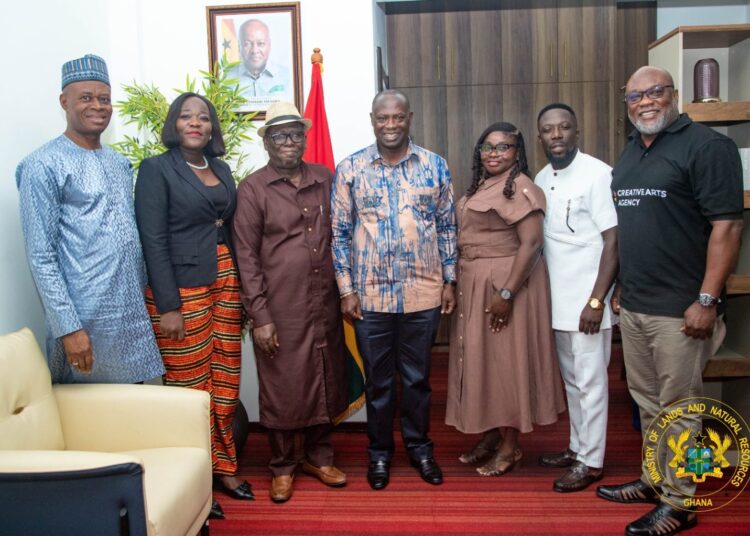
Minister for Lands and Natural Resources, Hon. Emmanuel Armah-Kofi Buah, has committed to providing institutional assistance to the Creative Arts Agency to support initiatives meant to improve the welfare and living conditions of aged and needy practitioners across Ghana’s creative industry.
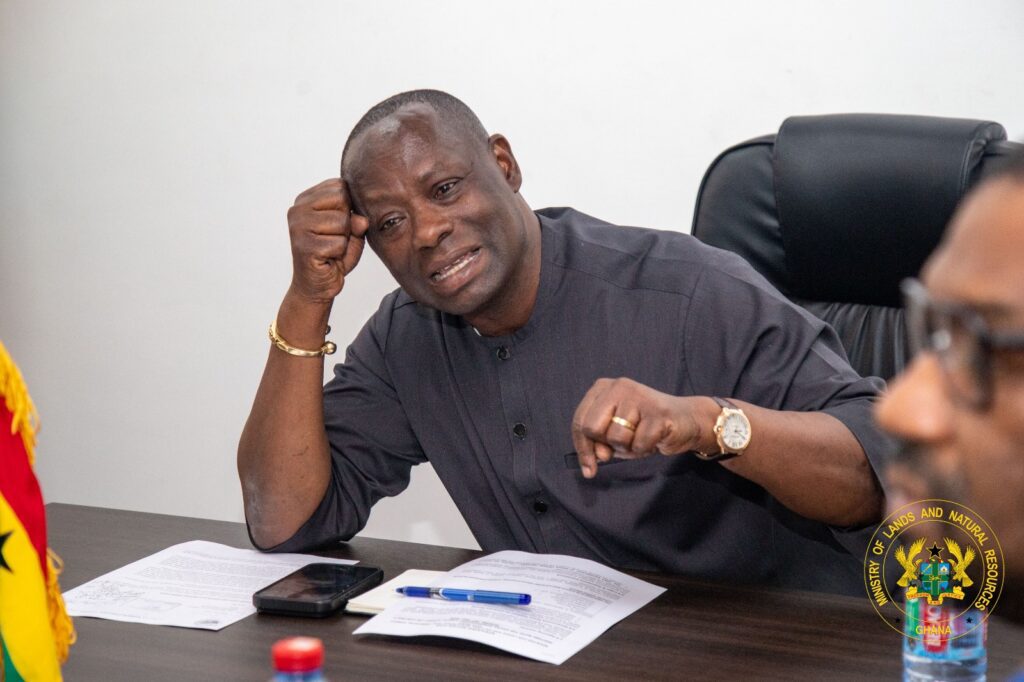
Hon. Emmanuel Armah-Kofi Buah pledged the state’s backing after receiving a delegation from the Agency’s Governing Board, highlighting the crucial need to address the socio-economic vulnerabilities of veteran cultural workers.
“The discussions centred on the President’s legacy project to provide care and shelter for aged, vulnerable and needy members of the creative arts community who, after years of contributing to the growth of Ghana’s creative industry, require support in their later years. As part of efforts to give the initiative a firm foundation, the Agency has established a Welfare Committee with responsibility for advancing measures to improve the wellbeing of practitioners within the industry. A key component of the Committee’s mandate is to secure suitable land for the construction of shelters that will provide accommodation and care for deserving members of the creative arts community.”
Ministry for Lands and Natural Resources
The Minister’s assurance centers on facilitating state land allocation in Accra to construct specialized care facilities and residential shelters for vulnerable creatives who have devoted decades to the country’s cultural growth.
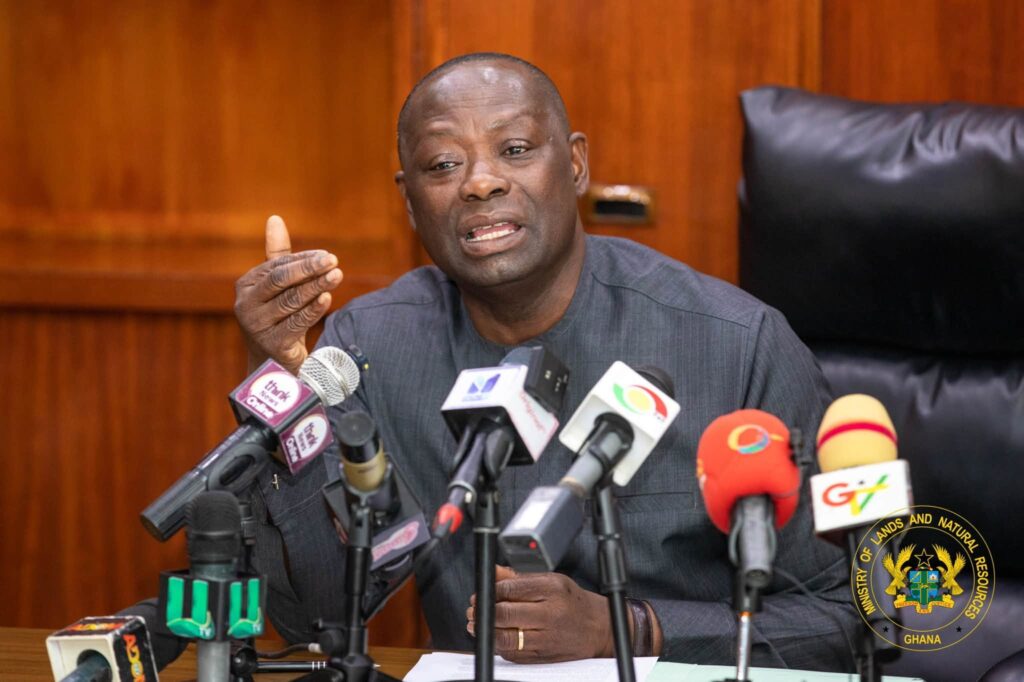
To expedite the implementation, Hon. Emmanuel Armah-Kofi Buah pledged to actively follow up on the official request submitted to the Lands Commission, ensuring that the necessary spatial infrastructure is secured to make the presidential legacy project an operational reality.
Safeguarding National Heritage Beyond Resource Extraction
While the Ministry of Lands and Natural Resources remains primarily focused on extractive sector governance, energy transition policies, and sustainable mining frameworks, its portfolio inherently intersects with sustainable land use and national development assets.
Extending state land allocations for creative industry infrastructure demonstrates an integrated approach where national spatial resources directly serve human capital and socio-cultural preservation.
The creative industry forms an essential pillar of Ghana’s soft power, national identity, and informal economy. However, unlike corporate sectors or structured extractive industries, creative practitioners often operate within informal structures that lack institutional safety nets, pension systems, or structured healthcare options.
By deploying state lands to host social infrastructure for aging creative workers, the government reinforces the idea that land management should uplift non-extractive social assets alongside traditional mining and forestry priorities.
Structural Interventions and Strategic Land Allocation
The strategy to establish dedicated shelters was articulated during the high-level meeting by the Chairman of the Governing Board of the Creative Arts Agency, Mr. Anthony Obeng-Afrane.
Mr. Obeng-Afrane disclosed that “the Agency had already submitted a formal request to the Lands Commission for the allocation of state land in Accra” to serve as the structural anchor for the facility.
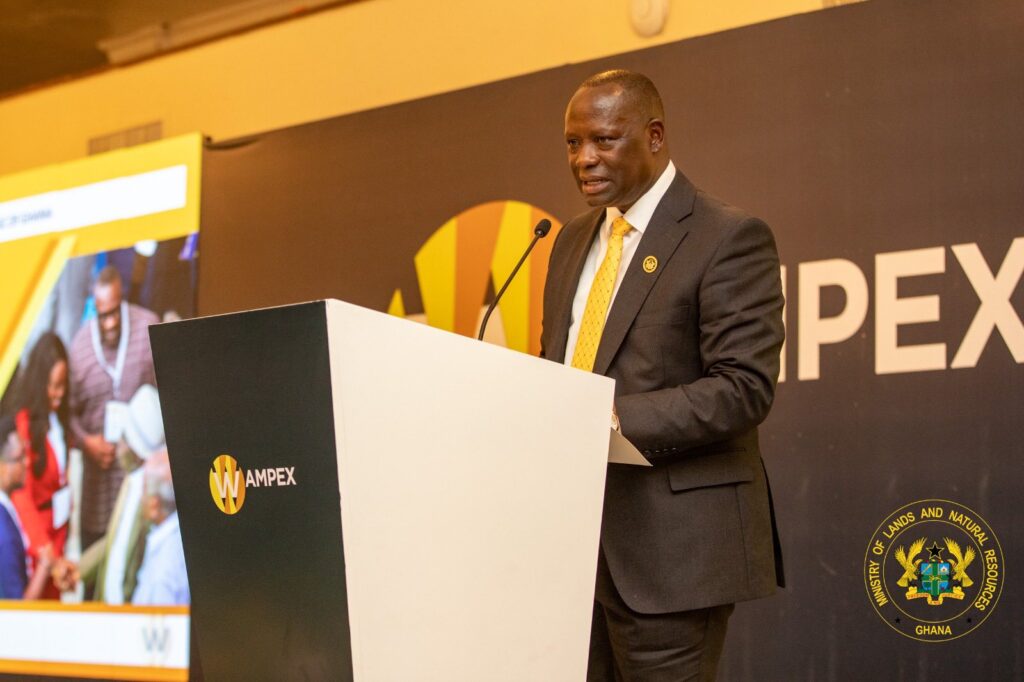
He further emphasized that securing a suitable parcel of land represents “an important step towards translating the President’s vision into a tangible welfare facility,” calling on ministerial leadership to help streamline administrative processes across public sector agencies.
By coordinating directly with land management authorities, the Agency aims to fast-track spatial rights so construction can commence without bureaucratic friction.
Addressing Socio-Economic Realities in the Creative Ecosystem
The push for dedicated welfare shelters highlights systemic socio-economic realities confronting veteran actors, musicians, visual artists, and cultural custodians across Ghana.
Despite making massive contributions to national cohesion, tourism revenue, and global cultural representation, many creative industries pioneers experience severe financial distress, medical neglect, and housing insecurity upon reaching advanced age.
Historically, the lack of institutional welfare mechanisms left aging creatives dependent on informal charity, ad-hoc public appeals, or sporadic private donations.
Establishing a formalized, state-backed sanctuary creates a permanent safety net that treats elder care as a structured right rather than intermittent goodwill. Through the work of the newly established Welfare Committee, the Creative Arts Agency is building a sustainable framework that guarantees dignity, residential shelter, and health support to individuals who laid the groundwork for Ghana’s modern creative economy.
Hon. Emmanuel Armah-Kofi Buah noted that the initiative represents “an important effort to honour and care for creative industry practitioners who have contributed significantly to Ghana’s cultural development.”
The Ministry’s active involvement ensures that state resources directly reinforce social welfare, setting a collaborative benchmark for inter-agency alignment between natural resource management and cultural policy.
READ ALSO: Mobile Money Loans Fuel Surge In Credit Monitoring