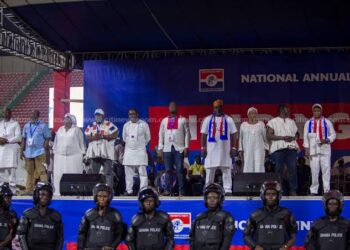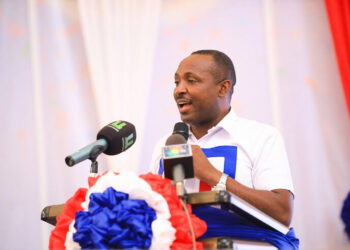
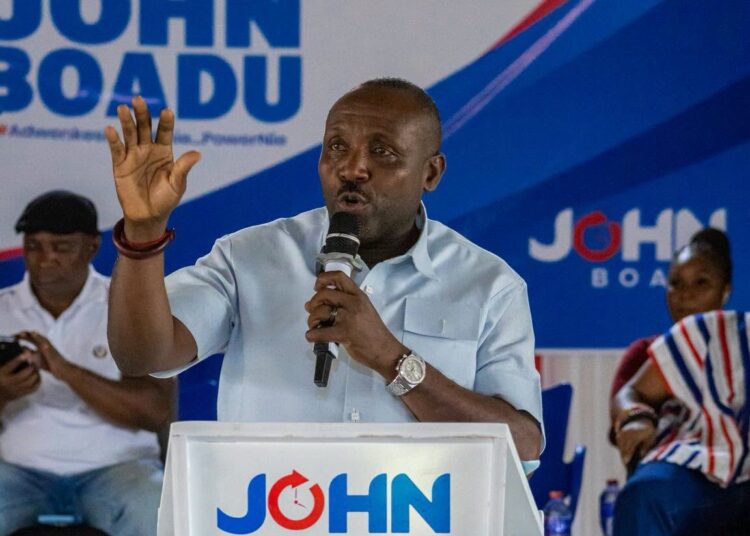
John Boadu, the newly elected National Chairman of the New Patriotic Party (NPP), has pledged to lead a renewed party built on humility, consultation and grassroots organisation. He spoke on behalf of the newly sworn-in national executives after the National Executive Elections that ran from October 3 to 4, 2026.
John Boadu won the chairmanship with 2,888 votes against 2,408 for Boakye Agyarko, according to the results sheet. He used his address to thank delegates, extend a hand to his rivals and set out how the new team will rebuild the NPP ahead of the 2028 general election.
John Boadu opened by thanking God and every delegate who entrusted the team with the party’s national offices. He framed the moment as a duty, telling the gathering, “today is not merely a day of victory; it is a day of responsibility and of great unity.”
He then turned to the candidates who lost, offering them friendship and partnership. “Your ideas, experience, networks and commitments belong to the new patriotic party,” he said. He rejected the idea of a divided outcome in plain terms: “There must be no winners and losers. Only one NPP, united around one purpose.”
A Renewed Party That Listens
Mr Boadu argued that strong parties survive by learning and adapting, not by leaning on past achievements. He set the new executives a clear task: “a renewed NPP, one that listens more, consults more, organises better and prepares more deliberately for the future.”
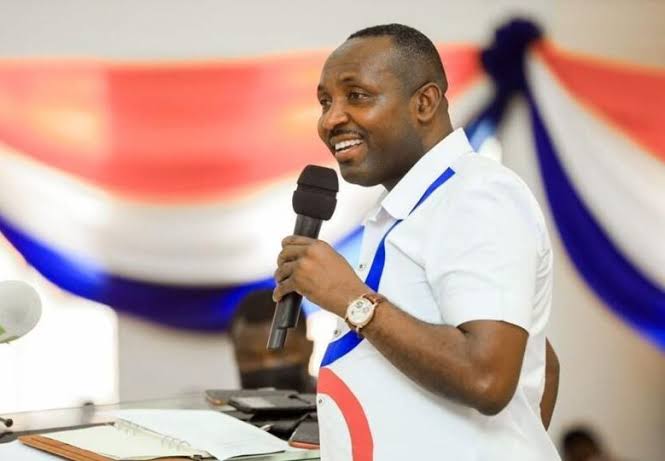
To deliver it, he said the executives will work closely with regional and constituency executives, external branches, the party’s Members of Parliament and the Minority caucus, patrons and every organised group that strengthens the NPP.
The chairman spent considerable time on groups outside the formal structures. He promised to deepen the party’s ties with its voluntary groups, Tertiary Students Confederacy Network (TESCON) members, social media practitioners and the traditional media, because a modern political organisation must engage every means of communication responsibly.
Young people were central to the pitch. “Our young people must feel that the NPP is their home,” he said. He wants tertiary institutions to become centres of constructive political dialogue and leadership development, and he described education as central to the party’s philosophy and development.
He also reached out to business. The executives will engage the business community and Ghanaian entrepreneurs with openness and respect, he said, and will keep advancing policies that let opportunities and enterprises expand.
Money and Machinery at the Base
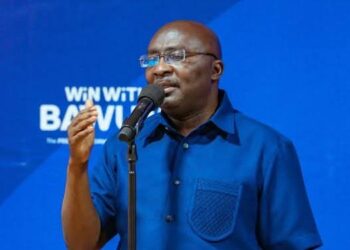
Boadu said the executives will work with the flagbearer and the party leader, Dr Mahamudu Bawumia, and with the wider national leadership. The goal is to strengthen the party’s organisational and financial foundation, especially at constituency level, where the NPP’s day-to-day work is done.

He warned against complacency. “Political victory is never an entitlement. It must be earned through service, organisation, credibility, and the trust of the Ghanaian people,” he said. That is why, in his words, the preparation begins now.
His method is to build from the base. “We must rebuild from the grassroots upwards,” he told delegates. He pledged to support women, value professionals and listen to traditional and religious leaders, and he said the party must embrace technology without abandoning the human relationships that have sustained it.
The Pledge
Boadu closed with a commitment on behalf of his colleagues. The team will serve the party with humility, lead through consultation and work with every part of the NPP. They will also dedicate the mandate to restoring what he called the winning machinery of the party’s great past.
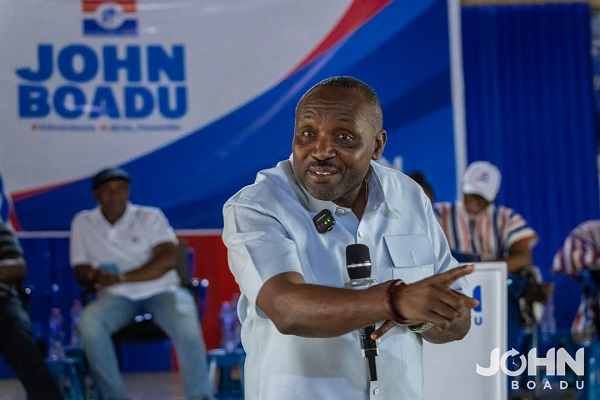
He reduced the programme to one line: “Service over personal ambition, organisation over disorder, and hope over despair.” He ended with a prayer for God to guide the party’s decisions, strengthen its leaders and protect its members, and then blessed the party and Ghana.
The speech sets out an agenda, not a timetable. He gave no dates, budgets or targets, and delegates will judge the new executives by how quickly consultation turns into organisation in the constituencies. The NPP lost the 2024 general election, and Boadu’s team has until December 2028 to show that its promises have rebuilt the party.