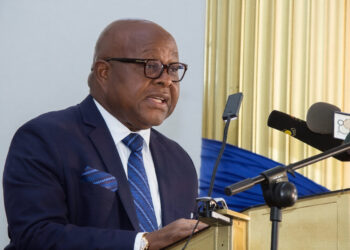
The Executive Director of the Institute for Education Studies (IFEST), Dr Peter Anti-Partey, has accused the government of failing to act early on the concerns of pre-tertiary teacher unions, despite advance warning that the disputes could lead to industrial action.
He said the strike, and the disruption to teaching and learning it has caused, could have been avoided if the government had engaged the unions with greater urgency before their collective agreement expired in June.
His comments come as renewed negotiations between the Fair Wages and Salaries Commission (FWSC), the Ghana Education Service (GES) and the teacher unions ended without agreement on Tuesday, October 6, with the strike still in force.
The three major pre-tertiary teacher unions began a nationwide strike on September 25. Their grievances include outstanding negotiations for a new collective agreement, promotion-related payments and the implementation of the Deprived Area Allowance.
Dr Anti-Partey said the unions had warned that they would take industrial action if their concerns were not addressed. In his view, the authorities had enough time to prevent the dispute from reaching this stage.
“Why didn’t we do all this when we had time, when the teachers were still in the classroom, when the education calendar had not been distorted?”
Dr Peter Anti-Partey

He said the government’s attention to the dispute intensified only after teachers had left the classroom, even though they had signalled their concerns months earlier.
A timeline of warnings
According to Dr Anti-Partey, the warning signs date back to 2025. He said teachers indicated around December, 2025 that their collective agreement would expire in June.
He noted that the agreement did lapse in June and that the country is now in October. He added that the teachers had also announced a strike date of August 31, and that meetings were held before then.
For Dr Anti-Partey, the question is why that period was not used to resolve the outstanding issues while teachers were still at work, rather than negotiating in a rush after the strike had begun.
Questions over promotion claims
The IFEST Executive Director also pointed to how outstanding promotion claims have been handled. He said the government is now conducting validation exercises that, in his view, could have been started much earlier.
He said 13 concessions had been granted on the promotion allowance, and that agreements had been reached on those points. Yet the government is only now validating more than 51,000 claims.
“That is my problem,” he said, referring to the timing of the validation exercise, which he argued should have been launched long before teachers downed tools.
Responsibility and accountability
Dr Anti-Partey said the failure to resolve the issues before the strike should not be blamed on the teachers. He argued that the responsibility to find a solution lies with the government.

“Unfortunately, in this country, people do not take responsibility. People are not accountable.”
Dr Peter Anti-Partey
He urged the government and the relevant institutions to work around the clock to reach an agreement and bring teachers back to class. The longer the impasse continues, he suggested, the greater the damage to the school calendar and to students’ learning.
The latest round of negotiations on Tuesday, October 6, involved the FWSC, the GES and the teacher unions. It ended without a deal. The parties are expected to continue discussions while the strike remains in force.
No timeline has been announced for when an agreement might be reached or when teachers might resume work. The outstanding issues remain the new collective agreement, promotion-related payments and the Deprived Area Allowance.
The strike has disrupted academic work in pre-tertiary schools nationwide and distorted the education calendar. Parents, students and education stakeholders are now watching to see whether the next rounds of talks will yield a breakthrough.

Dr Anti-Partey’s intervention adds to the pressure on the government and the negotiating institutions. His central argument is that the dispute was foreseeable, since the unions gave notice of their intentions and the expiry date of the agreement was known well in advance.
READ MORE: Ghana Unveils New Legal Push for Gender Equity and Inclusion