


The Minority Caucus in parliament through its Leader, Hon. Alexander Afenyo-Markin has directly engaged the leadership of the Christian Council of Ghana to express grave parliamentary concerns regarding massive financial hemorrhaging within the state’s gold buying operations.
The opposition leader formally presented details on approximately US$1.7 billion in reported cumulative losses stemming from the Domestic Gold Purchase Programme, highlighting how these steep fiscal liabilities threaten systemic economic stability.
“I also reiterated our concerns about the approximately US$1.7 billion in reported losses associated with the Domestic Gold Purchase Programme, their implications for the Bank of Ghana’s balance sheet and the potential recapitalisation burden on taxpayers. We called for transparent and independent reconciliation of the figures and the underlying transactions.”
Hon. Alexander Afenyo-Markin

Expanding on the financial fallout, the parliamentary delegation stressed that these heavy losses severely compromise the Bank of Ghana’s balance sheet strength while transferring an unsustainable recapitalisation strain directly onto everyday taxpayers.
Beyond the balance sheet burden, the Minority argued that the program’s flawed implementation creates systemic market distortions by indiscriminately absorbing unverified gold, thereby indirectly financing illegal mining networks.
Consequently, the Caucus called for an immediate, transparent, and independent forensic audit of all underlying transactions, gold volumes, and financial reporting under the initiative.
A Critical Intersection of Fiscal Governance and Resource Policy
The necessity for this high-level intercession stems from an urgent governance crisis in Ghana’s extractive sector, where sovereign fiscal strategy intersects directly with environmental security.
Established primarily to bolster foreign exchange reserves and stabilize the cedi, the Domestic Gold Purchase Programme was designed to leverage domestic mineral wealth for macroeconomic resilience.
However, the program has come under sharp scrutiny due to its staggering US$1.7 billion loss profile and its failure to enforce strict supply-chain traceability.
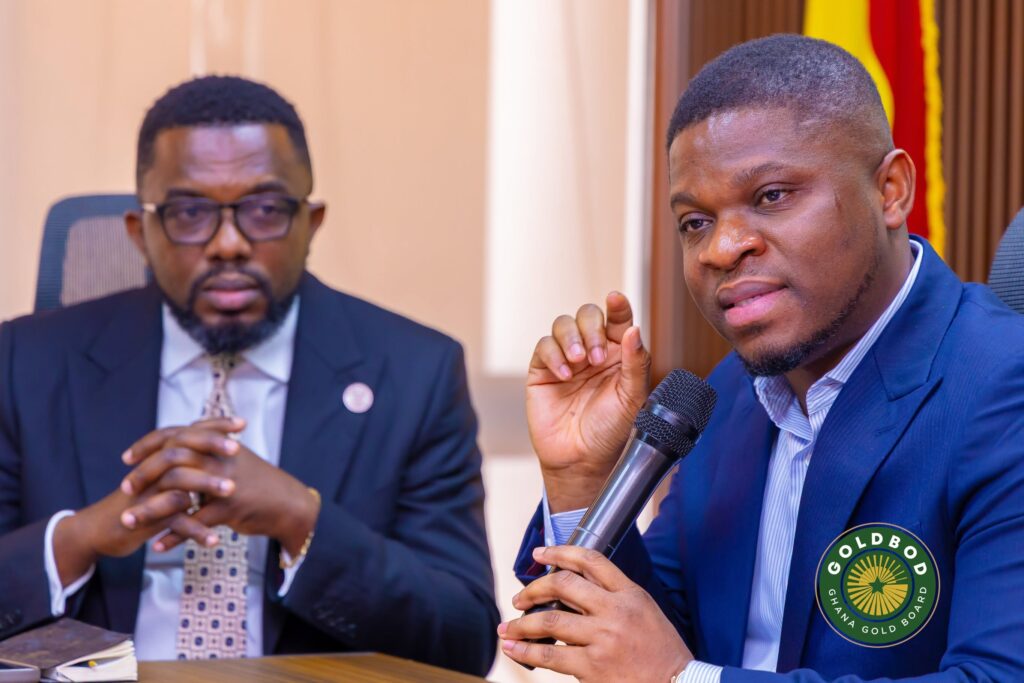
By purchasing gold through opaque intermediaries without rigorous origin verification, the state risks effectively bankrolling the very illegal mining operations it spends millions attempting to extinguish.
Bringing these technical extractive concerns to faith-based leaders highlights a strategic shift toward institutional moral advocacy.
The Minority Caucus recognized that standard parliamentary oversight required reinforcement from non-partisan bodies possessing immense societal trust.
By briefing the Christian Council of Ghana, parliamentarians sought to build a broad national consensus around transparent mineral management, emphasizing that fiscal transparency in gold trading is essential to national economic sovereignty.
Environmental Devastation and the Escalating Crisis of Galamsey
Parallel to the fiscal losses in gold purchasing, Hon. Afenyo-Markin raised equally strong alarms regarding the persistent surge in illegal small-scale mining, locally known as galamsey.
He emphasized that the ongoing destruction of vital water bodies, forest reserves, and agricultural lands can no longer be analyzed merely as an environmental or mining failure.
Instead, the situation represents a multi-dimensional crisis threatening national public health, regional food supply chains, and long-term water security across the country.

The Minority delegation made it clear that combating galamsey requires confronting the entrenched power structures that sustain it.
The Caucus urged the Christian Council to exercise its moral authority to demand “decisive and even-handed action” against political figures, financial backers, and organized syndicates driving the illicit trade.
Describing the crisis as an existential challenge to the state’s enforcement capacity, the Minority noted that protecting natural wealth must transcend partisan political interests to safeguard resources for “generations yet unborn“.
A Call for Institutional Moral Authority and Structural Reforms
In concluding the engagement, the Minority Caucus highlighted that restoring integrity to Ghana’s extractive sector demands both institutional accountability and independent reconciliation of fiscal figures.
The meeting reaffirmed that the long-term health of the Bank of Ghana and the preservation of natural ecosystems depend on decisive governance reforms.
By inviting moral leadership into economic oversight, the opposition caucus emphasized that national resources belong to the collective public, urging all stakeholders to demand total transparency in gold trading policies going forward.
READ ALSO: Energy Commission, VRA Plan Joint Media Capacity Building