
The disputed US$1.7 billion loss linked to the Bank of Ghana’s Domestic Gold Purchase Programme was the most prominent named accountability controversy in Ghana’s digital political conversation, according to IMANI Africa’s latest PULSE report. The study monitored political content across seven digital platforms between 8 August and 7 September 2026
The finding carries weight because anti-corruption recorded the most negative sentiment of any theme in the dataset. The category produced 387 mentions with a substance index of 0.56 and a sentiment score of -0.27, a combination IMANI reads as a conversation that was more substantive than personality-driven yet unusually hostile in tone.
The GoldBod dispute became the template
Minority Leader Alexander Afenyo-Markin raised the disputed figure, citing the International Monetary Fund’s sixth and final review under Ghana’s Extended Credit Facility, and called for a full parliamentary debate on the matter.
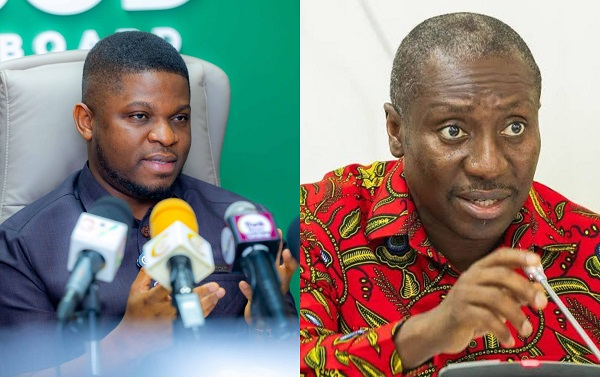
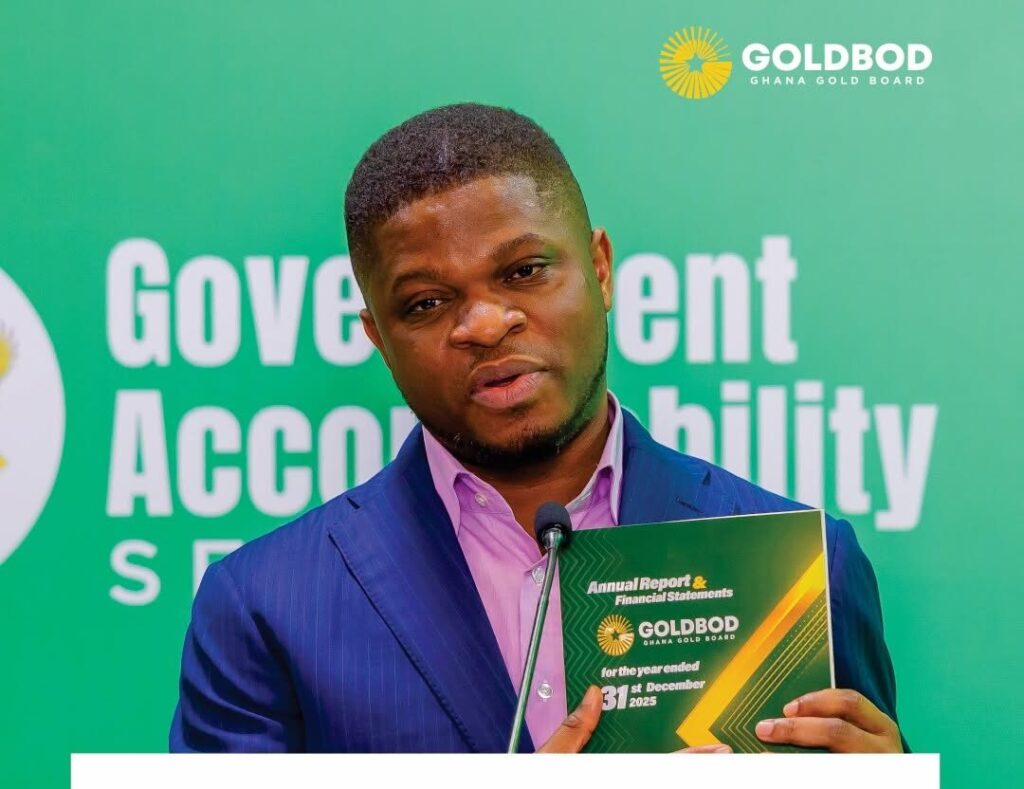
GoldBod chief executive Sammy Gyamfi rejected the claim that the institution had recorded losses, pointing to the Auditor-General’s 2025 report and accusing the Minority Leader of running a smear campaign. The exchange pulled in the Ghana Gold Board, the Bank of Ghana, the IMF, the Auditor-General and Finance Minister Cassiel Ato Forson.
IMANI treats the controversy as the defining case of the monitoring period because it contained every element of the wider accountability debate at once.
A large financial figure, named institutions, competing readings of official records, parliamentary scrutiny, and direct confrontation between political actors converged in a single dispute that moved beyond the gold-purchasing programme’s financial position into a contest over institutional responsibility and political credibility.
The dispute also crossed thematic boundaries. It surfaced again inside the governance and law category, which recorded the largest volume in the dataset at 1,603 mentions, demonstrating how one accountability question can be simultaneously a financial-governance story and a personalised political confrontation involving President John Mahama, Sammy Gyamfi and Afenyo-Markin.
Wontumi case fuses law enforcement and party loyalty
The report identifies the case of Chairman Wontumi as a second illustration of the same pattern. His incarceration following a court judgment did not remain a legal story in the digital conversation. It connected instead to illegal mining enforcement, the rule of law, New Patriotic Party solidarity and Bawumia’s political proximity to him.
IMANI reads that convergence as typical of how Ghanaian audiences process enforcement action. The institutional question gets absorbed into a question about party alignment and the standing of a presidential contender.

Historical controversies keep resurfacing
Lower-volume accountability narratives included allegations around the so-called Holy Rain bribery controversy, along with historical references to the Ford and Airbus cases, Arksa Energy and the National Cathedral.
None generated significant volume, but their continued presence shows how older controversies supply reusable material for contemporary political attack. Energy-sector accountability disputes followed the same logic.
Allegations concerning losses at the Electricity Company of Ghana and Ghana Water Company Limited, linked in the monitored content to Afenyo-Markin, sat alongside the Arksa Energy and Holy Rain claims inside a theme that recorded 349 mentions and a sentiment score of negative 0.16.
Government offers a competing accountability narrative
The Mahama administration’s dissolution of government boards introduced a counter-narrative into the same conversation.
Government-aligned voices framed the dissolutions as an institutional reset designed to reinforce standards of accountability, integrity and performance rather than as a political purge, and the dissolution of boards at BOST, VALCO and the Ghana National Petroleum Corporation carried that argument into the energy theme.

Parliament supplied its own integrity story when Deputy Minority Leader Patricia Appiagyei returned GH¢70,000 that she said had been given to members of the Appointments Committee as a gift.
President Mahama’s fourteen-day ultimatum to Works, Housing and Water Resources Minister Ahmed Ibrahim and Local Government, Chieftaincy and Religious Affairs Minister Mahama Ayariga over the impasse between the Tema Metropolitan Assembly and TDC Ghana Limited reinforced the same executive-discipline framing, as did his warning that ministers, chief executives and board members would not be allowed to exhibit indiscipline or poor performance.
IMANI’s overall verdict on the accountability theme is that its defining characteristic was duality. Institutional questions were genuinely present in the data, but they were consistently personalised before they could settle into institutional debate
READ ALSO: Ernest Nuamah Scores a Brace as Lyon Crush Rennes