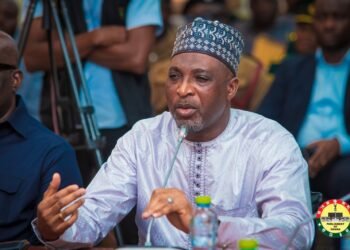

The High Court in Accra has sentenced New Patriotic Party Ashanti Regional Chairman Bernard Antwi Boasiako, widely known as Chairman Wontumi, to 20 years in prison with hard labour for illegal mining activities, bringing to a close one of the most closely watched criminal trials in the country in recent years.
Justice Audrey Kocuvie-Tay, presiding over the Criminal Division of the High Court, delivered the judgment following the conclusion of the Samreboi galamsey trial, a case that has drawn sustained national attention given Wontumi’s prominent political standing.
The court found Wontumi guilty on all six counts related to assigning mineral rights without ministerial approval and deliberately facilitating unlicensed mining operations within the concession of his firm, Akonta Mining Company Limited, located at Samreboi in the Western Region.
According to details shared following the ruling, six counts were originally brought against three entities: Chairman Wontumi, Kwame Antwi, who remains at large, and Akonta Mining Company Limited. Each of the three faced two charges, and the court found both Wontumi and Akonta Mining guilty on both counts brought against them.
A 20-Year Sentence With Concurrent Terms
Chairman Wontumi received a 20-year prison sentence for each count, with the court ordering the sentences to run concurrently.
Justice Kocuvie-Tay noted that the law under which he was convicted exists specifically because of the threat illegal mining poses, and she took into account that this represented Wontumi’s first offence when sentencing him on Counts 1 and 4 to 20 years each, alongside a fine of 10,000 penalty units, with a default term of three years should the fine go unpaid.
Beyond the personal sentence handed to Chairman Wontumi, his corporate entity, Akonta Mining Limited, was also convicted and fined 15,000 penalty units per count.

The dual conviction of both the individual and the company reflects the court’s finding that the illegal mining operations were carried out through the deliberate use of the firm’s concession rights rather than through any isolated personal conduct.
Defence Pushes for Leniency Before Sentencing
Ahead of the final ruling, defence counsel led by Samuel Atta Akyea made a last-minute appeal for leniency, urging the court to consider that Wontumi was a first-time offender and a prominent employer within his community.
The defence maintained that individuals present at the concession site were engaged only in land reclamation and coconut farming, rather than unauthorised mining activities, a position the court ultimately did not accept given the guilty verdicts returned on both charges.
State Pursues Forfeiture of Seized Assets
Beyond the criminal conviction itself, state prosecutors are pursuing a parallel application seeking the total forfeiture of equipment seized from the concession. This includes excavators, vehicles, firearms and cash recovered during the investigation, assets prosecutors argue were directly connected to the illegal mining operations uncovered at the site.
Chairman Wontumi retains the legal right to challenge both his conviction and sentence before the Court of Appeal, meaning the case may not yet be fully settled despite the High Court’s ruling.
Deputy Attorney General Maintains Silence After Verdict
The Deputy Attorney General and Minister for Justice, Dr Justice Srem Sai, who led the state prosecution alongside other state attorneys, left the court without speaking to journalists following the sentencing.
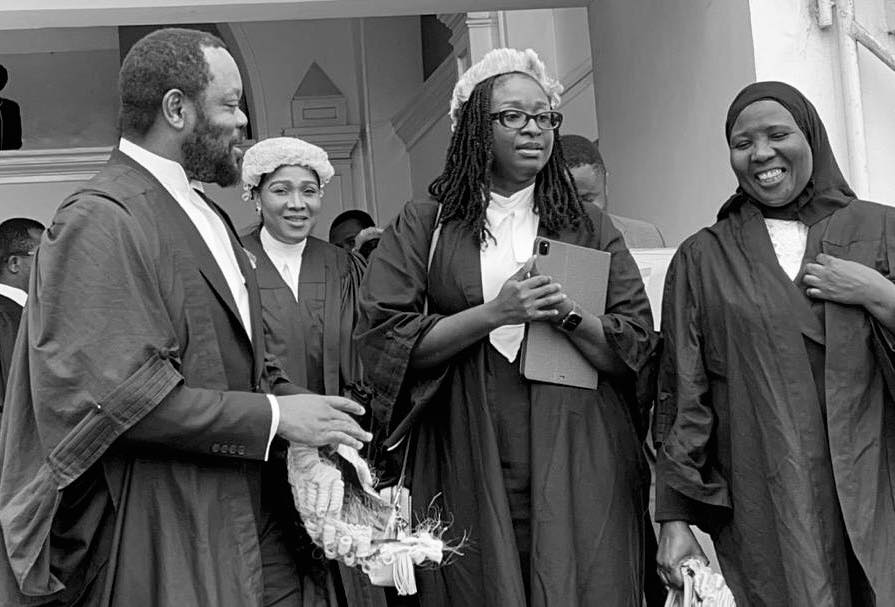
This silence reflects a posture he has maintained consistently since taking charge of prosecutions across multiple high-profile cases under the Mahama administration, choosing to let court outcomes speak for themselves rather than offering public commentary immediately after proceedings.
Two More Cases Still Pending Against Wontumi
With the Samreboi case now concluded, Chairman Wontumi still faces two additional matters before the courts. The first involves allegations of illegal mining within the Tano Nimiri forest reserve, a case that remains ongoing separately from the Samreboi conviction.
The second concerns the Exim Bank fraud case, where plea bargain negotiations between the state and Wontumi’s legal team are set to conclude next week, having so far failed to produce an agreement within the statutory window allowed for such discussions.
A Significant Win for Government’s Anti-Corruption Drive
The conviction represents a notable boost for the Mahama-NDC administration’s Operation Recover All Loot initiative, a broader anti-corruption drive that has targeted several high-profile figures connected to alleged financial crimes and illegal mining activities in recent months.
For a government that has faced sustained political criticism over its prosecution methods, including accusations of targeting opposition figures, a successful conviction of this scale offers concrete evidence that its investigative and prosecutorial efforts can withstand judicial scrutiny.
The outcome also carries broader significance for Ghana’s ongoing fight against illegal mining, commonly known as galamsey, which has caused extensive environmental damage across several regions, including polluted water bodies and degraded forest reserves.
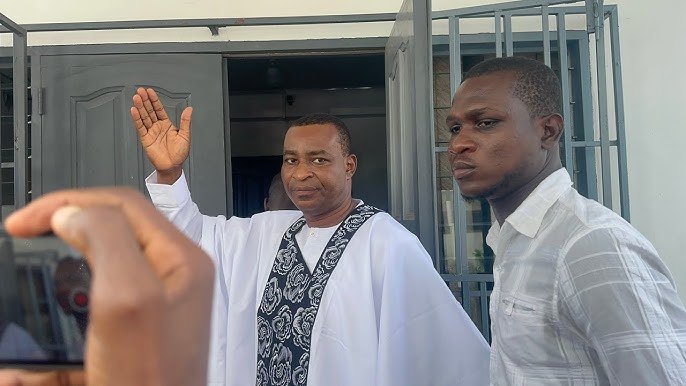
A conviction of this magnitude against a politically prominent figure may signal a shift in how aggressively the state is willing to pursue accountability for illegal mining activities, regardless of the political connections involved.
As Chairman Wontumi’s legal team considers an appeal and the remaining cases against him continue through the courts, the Samreboi verdict stands as one of the most significant rulings to emerge from Ghana’s ongoing crackdown on illegal mining and financial crime, testing both the resilience of the country’s judicial system and the government’s broader commitment to pursuing accountability irrespective of political standing.
READ ALSO: Starmer Bids Farewell to No 10