Conversation about Ghana’s 2028 general election remains a conversation about Mahamudu Bawumia as a political brand rather than a contest between policy platforms, according to IMANI Africa’s latest PULSE report. The elections and party theme recorded 475 mentions across seven digital platforms during the monitoring period running from 8 August to 7 September 2026.
The imbalance is stark against the rest of the dataset. Of 367 classified mentions in the theme, 239 were personality-oriented and 128 policy-oriented, producing a ratio of roughly 1.9 to 1 in favour of personality content, at a time when infrastructure, health and jobs were all scoring above 0.84 on IMANI’s substance index.
Bawumia ecosystems drive the volume
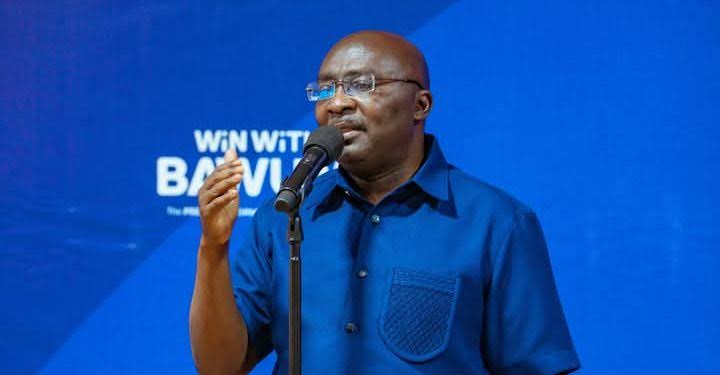
The report places the former Vice President at the centre of the theme.
Content generated through the #Bawumia2028 and #ItIsPossible2028 ecosystems covered his leadership qualities, grassroots mobilisation and electoral positioning, with Ahafo NPP executives reported as pledging support and mobilisation, and other content presenting him outright as the party’s incoming presidential candidate.
The running-mate question also entered the conversation, including calls for Matthew Opoku Prempeh to be retained on the ticket. Remaining content in the theme concentrated on polls, personal attributes and leadership identity rather than governing intentions.
Sentiment in the category registered at a mildly positive 0.20, the friendliest score across all monitored themes. IMANI reads that reading as a function of composition rather than public mood, since loyalty-driven content tends to be affirmative by design.
The internal party contest barely registered
The most striking absence in the data concerns party democracy itself. Despite thematic keywords covering primaries, delegates and internal party contests, the leading mentions contained little substantive discussion of internal New Patriotic Party democracy or of any specific primary contest.
That gap suggests the online conversation has already settled the question of who leads the opposition into 2028, or at least behaves as though it has, and has moved on to positioning rather than selection.
A policy dimension is starting to emerge
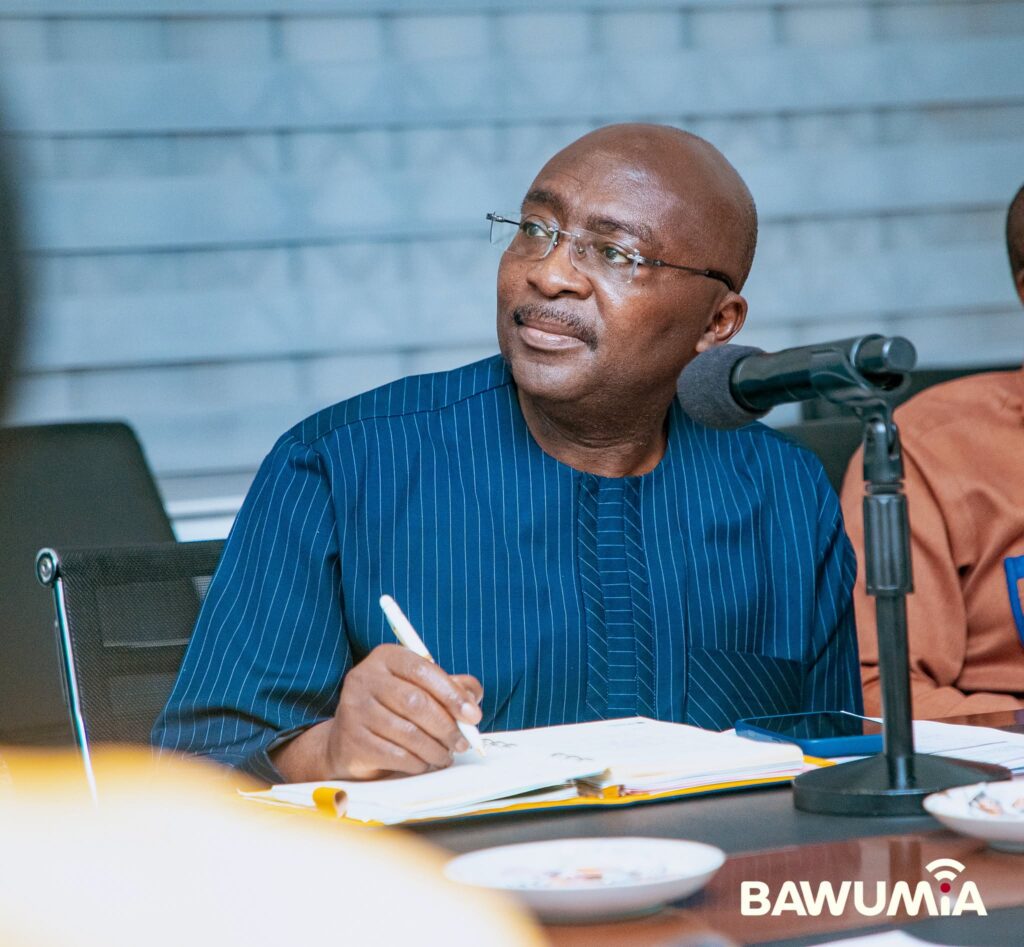
IMANI does identify one line of genuine policy development inside the theme. Dr Bawumia’s consultation with the Ghana Registered Nurses and Midwives Association covered nursing and midwifery education, health infrastructure and the welfare and working conditions of frontline health workers.

The report treats that engagement as significant because it presented him through a forward-looking policy-building frame tied to his 2028 ambitions rather than through his record in the Akufo-Addo administration. The same consultation appeared across three separate themes, surfacing in education, health and jobs, which gave it unusual reach for a single event.
The education theme recorded 440 mentions with a substance index of 0.65, though IMANI cautions that the consultation was education-adjacent rather than a discussion of Ghana’s education system.
In the jobs theme, which recorded 212 mentions and a substance index of 0.84, the same engagement linked employment, professional welfare and healthcare reform through discussions of working conditions, remuneration, deployment and professional development.
Two competing timelines
The report frames the 2028 conversation as part of a wider temporal divide in Ghanaian political discourse.
Government-aligned content is overwhelmingly forward-looking, built on financing, delivery and industrial expansion, while opposition content splits between Bawumia’s future-facing positioning and a backward-looking critique of the current administration.
That critique continues to attribute Ghana’s earlier economic difficulties directly to Bawumia’s stewardship of the economy under the previous government, while pro-Bawumia content answers by emphasising competence and leadership rather than specific economic programmes.
In the elections theme the orientation measured 72 percent forward-looking against 28 percent backward-looking. The same measure reached 92 percent against 8 percent in the jobs conversation.
What engagement figures conceal
Reach data reinforces the personality finding. Content involving Bawumia, Samira Bawumia and the Power Cathedral generated approximately 1,330 engagements, the highest figure recorded in the dataset, while a TikTok post tied to his 2028 positioning drew 961 engagements.

The government’s nurses and midwives payroll story, one of the clearest policy actions of the period, managed 935. IMANI’s caution is that engagement should not be read as political importance.
Identity and symbolism can outperform substantive policy on reach alone, which leaves the question of whether Bawumia’s emerging policy work can eventually carry the same weight online as his brand already does.
READ ALSO: Anloga-Avume Tomato Farmers Appeal for Urgent Buyers as Tonnes Rot in Volta