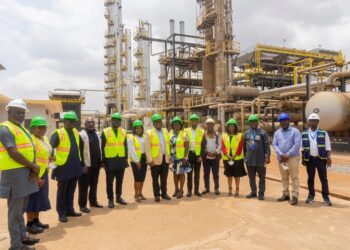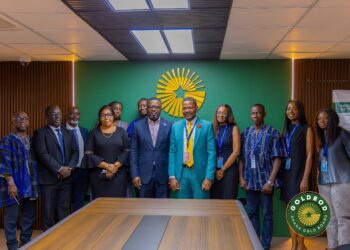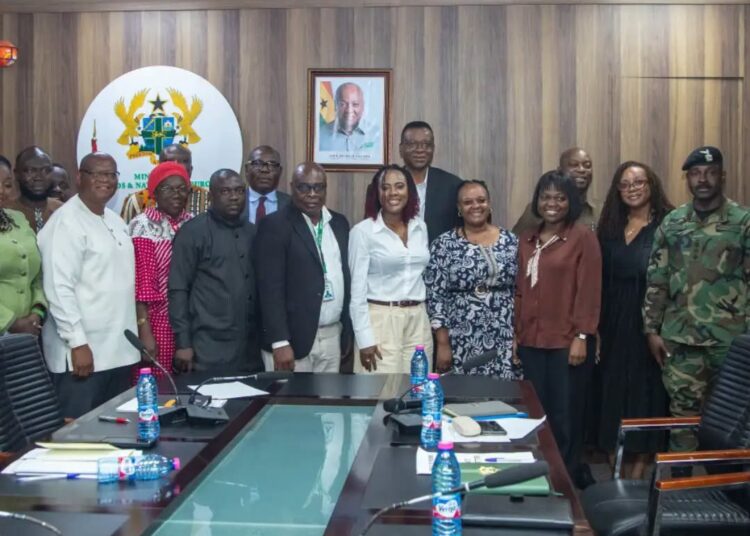
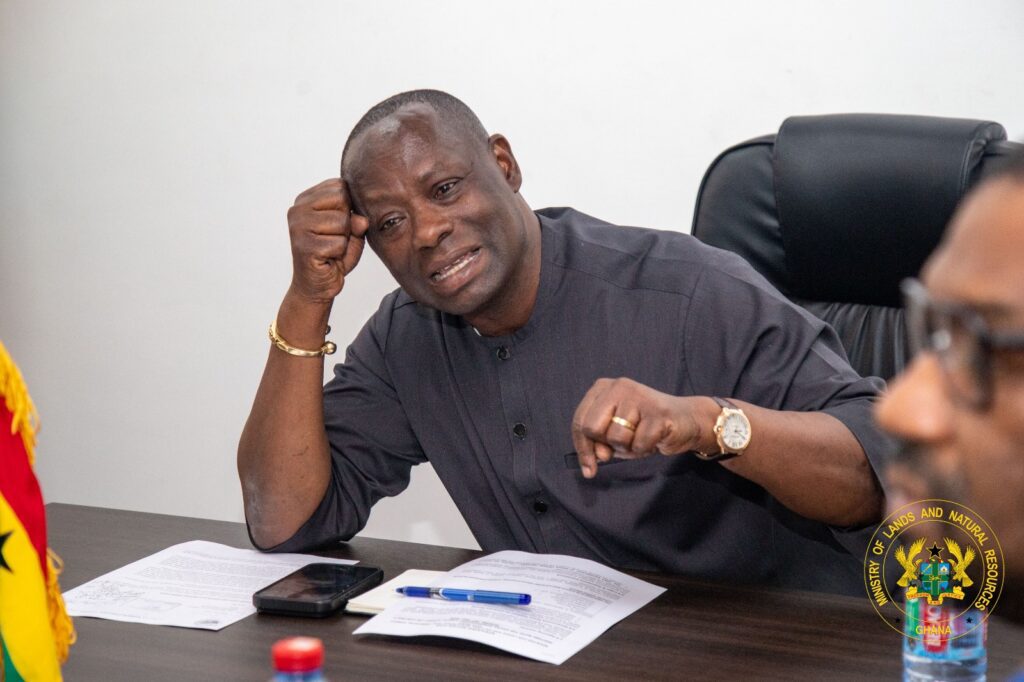
The Presidential Policy Delivery Unit (PDU) has engaged the Ministry of Lands and Natural Resources to assess the implementation, progress, and challenges confronting five major government programmes aimed at transforming Ghana’s land and natural resource sector.
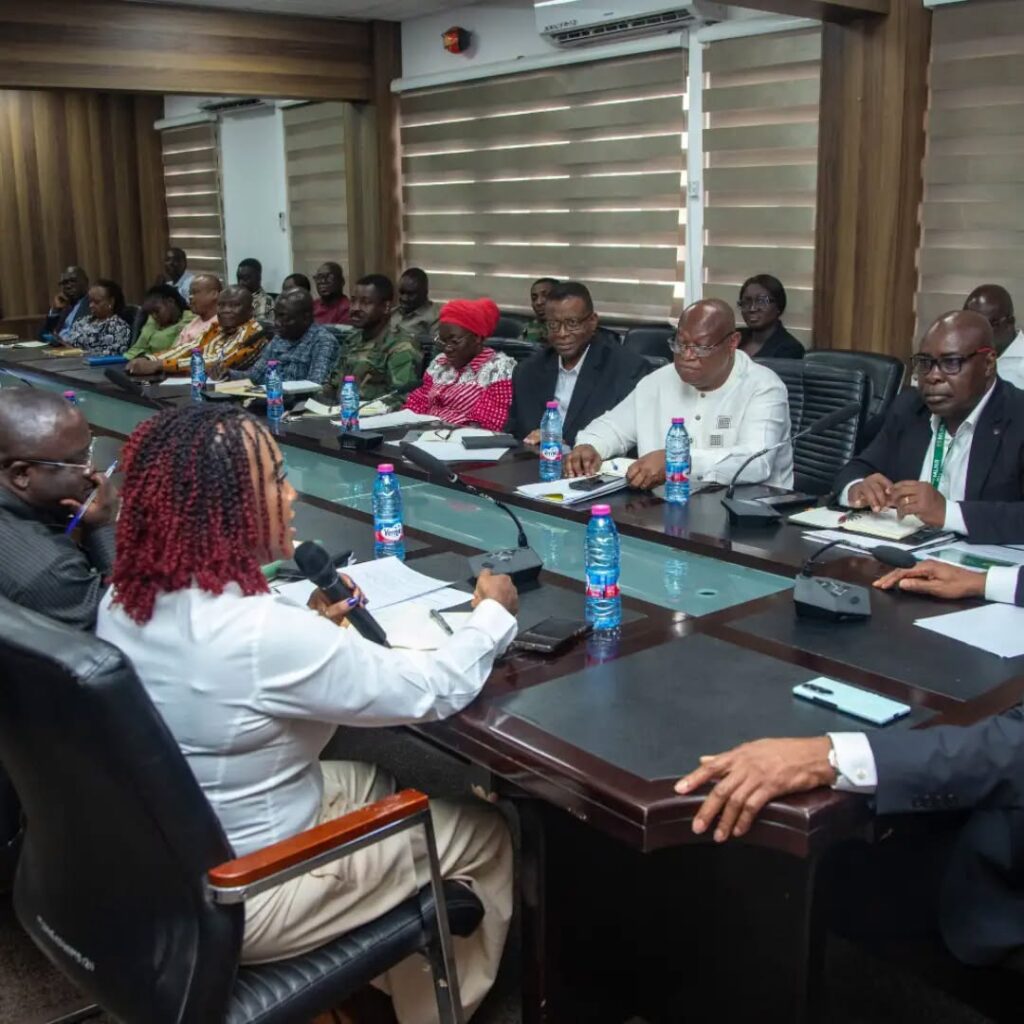
Led by Head of Unit Madam Dinah Adiko, the PDU delegation met with ministry officials to evaluate high-priority interventions, establishing a framework to streamline inter-agency coordination and optimize field-level efficiency.
This critical evaluation paves the way for direct field monitoring visits across project sites nationwide, ensuring strategic policy objectives translate into measurable environmental and operational outcomes.
“The engagement forms part of efforts to provide targeted support to priority programmes of government. Following the meeting, the team is expected to undertake field visits and engage directly with the various agencies responsible for implementing the programmes. These engagements are intended to provide a clearer understanding of challenges on the ground and facilitate practical solutions to ensure that the programmes achieve their intended targets.”
Ministry of Lands and Natural Resources
Building on this strategic alignment, the collaborative framework specifically targets five key national pillars designed to address environmental degradation and sanitize small-scale mining operations.
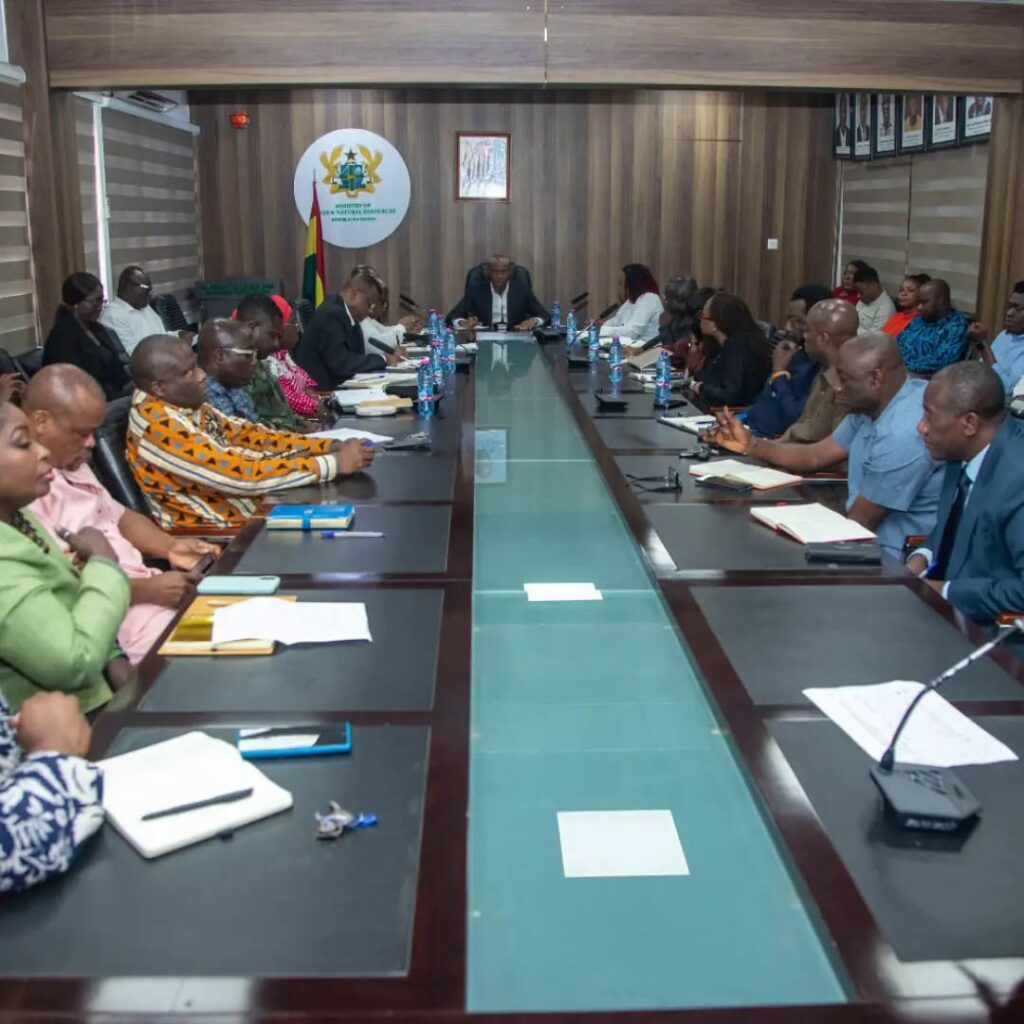
These include the National Anti-Illegal Mining Operations Secretariat (NAIMOS), Responsible Cooperative Mining and Skills Development (rCOMSDEP), the Tree for Life Reforestation Initiative, the Reclamation of degraded land sites, and Green Mining.
By focusing on these core areas, the technical teams aim to isolate operational bottlenecks, accelerate resource deployment, and tighten execution schedules.
The upcoming field inspections will enable the joint task team to engage directly with local implementing agencies, verify reporting metrics, and deliver tailored interventions to ensure each programme achieves its core mandate.
Evaluating the Operational Imperative for Environmental Restoration
Ghana’s natural resources sector faces an unprecedented strain from illegal small-scale mining, locally referred to as galamsey, which has damaged critical river bodies, disrupted biodiversity, and rendered vast tracts of agricultural land unproductive.
The structural need for this joint delivery initiative arises from the persistent disconnect between high-level policy formulation and practical operational execution.
While regulatory frameworks have existed on paper, frontline enforcement agencies and field offices frequently encounter administrative delays, logistics constraints, and resource deficits that hinder sustained monitoring.
Furthermore, illegal artisanal mining operations continue to pollute major water basins with dangerous heavy metals like mercury and cyanide, threatening municipal water supplies and agricultural supply chains.
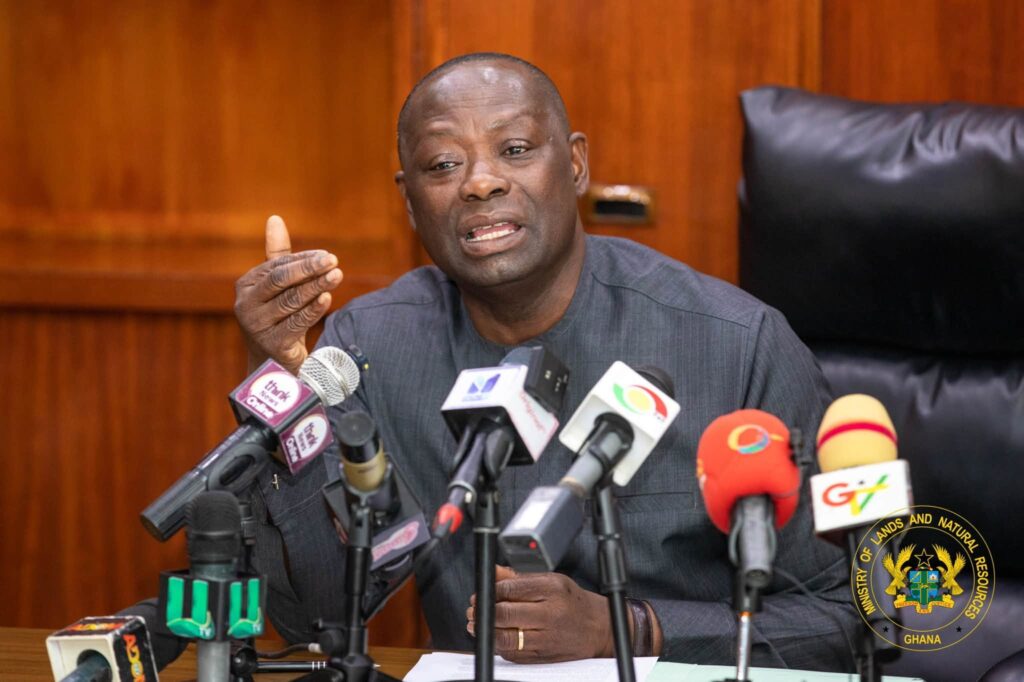
Addressing this crisis requires more than enforcement; it demands an integrated, multi-pronged approach that pairs security operations with socio-economic alternatives and ecological remediation.
By aligning institutional oversight directly with field reality, the government seeks to eliminate systemic redundancies and ensure that public expenditure yields tangible environmental recovery.
Streamlining Five Strategic Pillars for Sector Transformation
To address these deep-seated challenges, the joint intervention targets five complementary pillars that cover the entire lifecycle of resource management and ecological restoration.
The National Anti-Illegal Mining Operations Secretariat (NAIMOS) serves as the primary security and compliance arm, providing firm oversight against illicit mining incursions.
Simultaneously, the Responsible Cooperative Mining and Skills Development (rCOMSDEP) initiative addresses the socio-economic dimension by formalizing informal miners into structured cooperatives, equipping them with sustainable extraction techniques, safety training, and alternative livelihood avenues.
Complementing these regulatory efforts are ecological initiatives focused on long-term environmental rehabilitation.
The Reclamation of degraded land sites program focuses on backfilling abandoned pits, decontaminating soils, and restoring agricultural viability to ruined landscapes.
Working in tandem, the Tree for Life Reforestation Initiative systematically replants native vegetative cover across denuded forest reserves and river buffers to prevent soil erosion and re-establish lost ecosystems.
Underpinning this entire framework is the Green Mining mandate, which promotes cleaner processing technologies and eco-friendly extraction techniques across the formal small-scale mining sector.
Accelerating Field Implementation and Institutional Oversight
The transition from administrative reviews to direct site visits marks a major shift toward high-accountability governance in Ghana’s extractive sector.
Madam Dinah Adiko emphasized that establishing direct contact with field agencies will highlight the true nature of operational delays whether stemming from logistics shortfalls, bureaucratic friction, or inadequate community engagement.
By gathering ground-level intelligence, the PDU can deliver targeted executive interventions that swiftly clear administrative barriers.
Industry stakeholders and environmental policy analysts have welcomed this joint initiative, noting that rigorous monitoring is vital for restoring public confidence in state-led environmental remediation.
As the PDU and the Ministry of Lands and Natural Resources roll out their field oversight tours, the emphasis will remain firmly on verifiable benchmarks, institutional accountability, and long-term sustainability across Ghana’s mining regions.