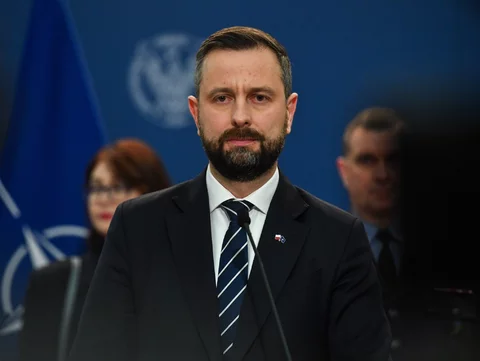
Poland’s Defence Minister and Deputy Prime Minister, Władysław Kosiniak-Kamysz, has called on European countries to accelerate the production of ammunition and weapons, warning that failure to strengthen the continent’s defence industry could have negative consequences for future generations.
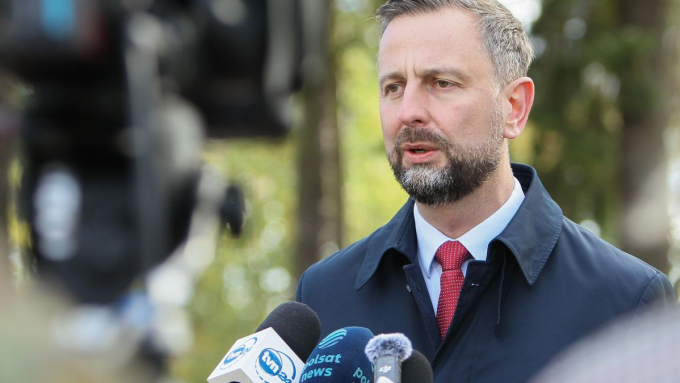
Speaking at a press conference on the sidelines of the Warsaw Security Forum, Kosiniak-Kamysz urged Europe to adopt what he described as a “war-mode” approach to defence production, arguing that the continent must expand its manufacturing capacity to keep pace with Russia.
“I am actually an advocate for the war-mode when it comes to the production in defence sector. This is what the Russian Federation does at the moment. We cannot overlook this fact.”
Władysław Kosiniak-Kamysz
His remarks reflect growing concerns among European defence officials about the pace of Russia’s military production and the ability of European countries to sustain their own defence capabilities amid continued fighting in Ukraine.
Russia began expanding its wartime defence production before launching its full-scale invasion of Ukraine in 2022. Its military spending and ammunition output have since become important points of comparison in discussions about Europe’s readiness to respond to potential security threats.
Kosiniak-Kamysz asserted that the time had come for European governments to prepare more seriously to defend themselves by significantly increasing the production of military equipment and ammunition.
Russia’s Production Pace Raises Concerns
Russia’s defence manufacturing capacity has placed pressure on European countries seeking to strengthen their military readiness.
The country is projected to spend 7.5 per cent of its gross domestic product (GDP) on its armed forces in 2026, reflecting the substantial resources being directed towards military capabilities.
According to a recent Estonian intelligence report, Russia produced approximately seven million artillery, mortar, tank and rocket rounds in 2025.
Russian forces are also estimated to use between 10,000 and 15,000 rounds daily in their continued military operations against Ukraine, illustrating the scale of ammunition required to sustain the conflict.
These figures have intensified discussions about whether European defence industries can produce enough ammunition to meet military requirements and replenish national stockpiles.
In contrast to Russia’s wartime production drive, Europe’s defence sector has been shaped by decades of underinvestment and fragmentation, limiting the continent’s ability to expand manufacturing rapidly.
A leaked report on Europe’s defence readiness indicates that the European Union’s 27 member states, together with Norway, are expected to produce approximately two million 150mm ammunition shells this year.
The projected output exposes the challenge facing European governments as they seek to increase military production and reduce the gap with Russia.
Kosiniak-Kamysz argued that Europe could no longer afford to overlook the scale of Russia’s defence manufacturing efforts. He called for a substantial increase in production, saying European countries must prepare to protect their security in the years ahead.
The Polish Minister warned that failing to act could have lasting consequences. “It’s one of the disadvantages, but also it will impact (and) affect us negatively in future generations,” he said, describing inaction as a potentially costly mistake for Europeans.
Europe Increases Defence Spending
European governments have stepped up defence spending in response to the deteriorating security environment, with rearmament efforts across Europe and NATO contributing to the strongest annual increase in defence expenditure since the Cold War.
Despite the increase, a report on European defence readiness estimated that EU member states spent a combined €418 billion on defence in 2025, equivalent to 2.2 per cent of the bloc’s total GDP.
The figures point to a growing commitment to military preparedness but also highlight the scale of the investment required to expand production capacity and address existing shortcomings.
Higher defence budgets alone may not immediately translate into sufficient supplies of ammunition and weapons. Increasing output also requires manufacturing capacity, reliable supply chains and the ability to sustain production over time.
Kosiniak-Kamysz’s call for a “war-mode” approach therefore places the emphasis not only on spending but also on the speed and scale at which European defence industries can deliver military equipment.
Poland has emerged as one of the leading NATO countries in terms of defence spending relative to the size of its economy.
According to the United States’ envoy to NATO, Matthew Whitaker, Poland spends 4.7 per cent of its GDP on core defence capabilities, showing Warsaw’s commitment to strengthening its military.
The country’s position reflects the heightened security concerns of NATO’s eastern members, particularly amid Russia’s continued war against Ukraine.
Kosiniak-Kamysz’s warning centres on the need to translate increased defence spending into greater production capacity, arguing that Europe must respond to Russia’s manufacturing pace rather than assume existing capabilities will be sufficient.
As European countries continue their rearmament efforts, the ability to produce ammunition and weapons at scale is likely to remain central to discussions about the continent’s long-term security and its capacity to support Ukraine.
READ ALSO: CJP Leaders Detained After Defying Protest Site Restrictions