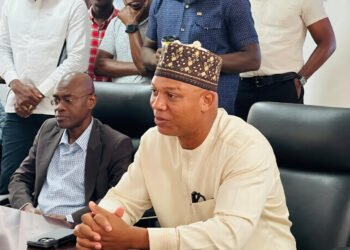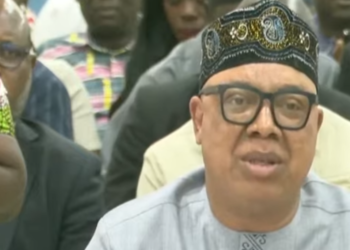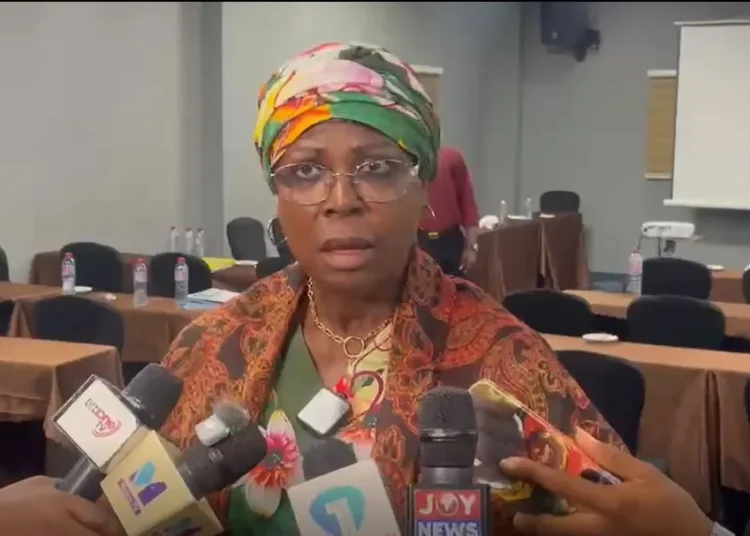
The Majority Caucus in Parliament has accused the Member of Parliament for Bosome Freho and Ranking Member of the Foreign Affairs Committee, Asarfo-Ajei, of pursuing a personal vendetta against Foreign Affairs Minister Samuel Okudzeto Ablakwa, arguing that his persistent criticism of the minister stems from a dispute over a service passport requested for New Patriotic Party (NPP) Second Vice Chairman Henry Nana Boakye.
Salaga South MP and member of the Foreign Affairs Committee, Zuwera Ibrahimah Mohammed, levelled the accusation while defending Ablakwa’s handling of the passport matter.
She alleged that Asarfo-Ajei and Nana Boakye, popularly known as Nana B, pressured the minister to disregard a presidential directive requiring former officeholders to surrender their diplomatic and service passports, insisting that the minister’s refusal to grant an exemption demonstrated compliance with the law rather than misconduct.
According to Hon Ibrahimah, the alleged pressure began when Hon Ablakwa assumed office in 2025, with Asarfo-Ajei and Nana Boakye attempting to persuade the minister to allow the former NPP National Youth Organiser to retain his service passport.
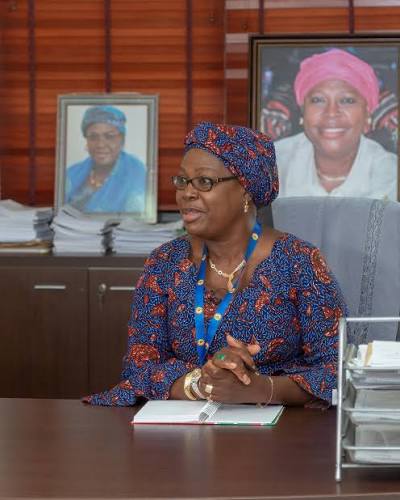
She alleged that Asarfo-Ajei, whom she described as Nana B’s political godfather, and the NPP executive sought a special exemption that would have permitted Nana Boakye to continue using a service passport bearing the number SX003454.
“They did everything possible to compel the minister to create a special exemption for Nana B. The foreign minister consistently refused to grant the inappropriate and illegal requests from Honourable Asafo-Adjei and Henry Nana Boakye, now the second vice chairman of the New Patriotic Party.”
Salaga South MP and member of the Foreign Affairs Committee, Zuwera Ibrahimah Mohammed
She argued that Ablakwa’s refusal to grant the alleged request should be viewed as evidence of his commitment to established rules and accountability rather than a reason to question his conduct.
The MP further suggested that the passport disagreement explained what she characterised as persistent and unwarranted attacks on the foreign affairs minister under the guise of parliamentary oversight.
Ibrahimah Warns Against Personalising Parliamentary Oversight
While acknowledging the Foreign Affairs Committee’s constitutional responsibility to scrutinise the Ministry of Foreign Affairs, Hon Ibrahimah cautioned against using that mandate to pursue personal interests or settle disputes.

She argued that parliamentary oversight must remain focused on accountability and the public interest, rather than being influenced by disagreements between individual lawmakers and government officials.
“Inasmuch as the Foreign Affairs Committee has oversight responsibility over the ministry, we are not allowed to clothe our responsibility in a personal vendetta, personal agenda.”
Salaga South MP and member of the Foreign Affairs Committee, Zuwera Ibrahimah Mohammed
Ibrahimah also questioned the propriety of seeking favours that would require a public official to act contrary to an existing presidential directive. She stressed that requests for assistance from public officials must remain within the limits of the law, adding that the minister could not reasonably be expected to grant an exemption that conflicted with the directive.
The MP maintained that Ablakwa should not be subjected to reputational attacks for refusing to accommodate a request she described as unlawful.
Former Diplomat Cites Personal Experience With Passport Rules
To reinforce her argument, Ibrahimah drew on her own experience as a former foreign service officer, explaining that she voluntarily returned her diplomatic passport after completing her diplomatic posting in London.
She disclosed that she served at Ghana’s mission in the United Kingdom for seven years before returning from her posting and formally surrendering the passport to the Ministry of Foreign Affairs in 2017.
According to her, she wrote a letter to the foreign minister at the time, attached her diplomatic passport and received an acknowledgement confirming its return. “I didn’t deserve it anymore. I only had it because I was a diplomat. Once I ceased to be a diplomat, I didn’t have to keep the passport,” she stated.
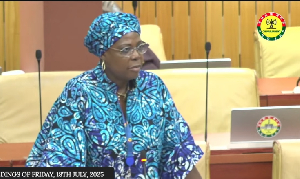
Hon Ibrahimah explained that she subsequently obtained another diplomatic passport in 2021 after becoming a member of Parliament, maintaining that the process demonstrated the importance of adhering to the applicable rules governing such documents.
She presented the experience as an example of how former officeholders should handle diplomatic passports when they no longer qualify to retain them. Her account formed part of her broader argument that the surrender of diplomatic and service passports should be governed by established procedures rather than individual requests for exemptions.
Majority Defends Ablakwa’s Accountability and Integrity
Hon Ibrahimah further accused critics of relying on allegations and selective information instead of engaging with the facts surrounding the passport dispute.
She challenged Asarfo-Ajei to demonstrate consistency in his demand for accountability, arguing that parliamentary scrutiny must be accompanied by conduct that upholds the same standards expected of public officials.
Invoking the legal principle that a person seeking equitable treatment must act fairly, she insisted that the ranking member should reconsider his criticism of Ablakwa in light of the minister’s alleged refusal to grant the requested exemption.
“When we seek equity, we must come with clean hands. You cannot seek equity when your hands are dirty,” she stated. The Salaga South MP also argued that the minister’s refusal to facilitate the retention of a service passport by someone she claimed was ineligible deserved recognition rather than condemnation.
She described the decision as a demonstration of accountability, transparency and integrity in the management of public assets under the Ministry of Foreign Affairs.“This is a mark of accountability. That is a mark of transparency, and that is a mark of integrity,” Ibrahimah stated.
Her intervention places the passport dispute at the centre of a broader disagreement over the conduct of parliamentary oversight and the minister’s administration of diplomatic documentation.
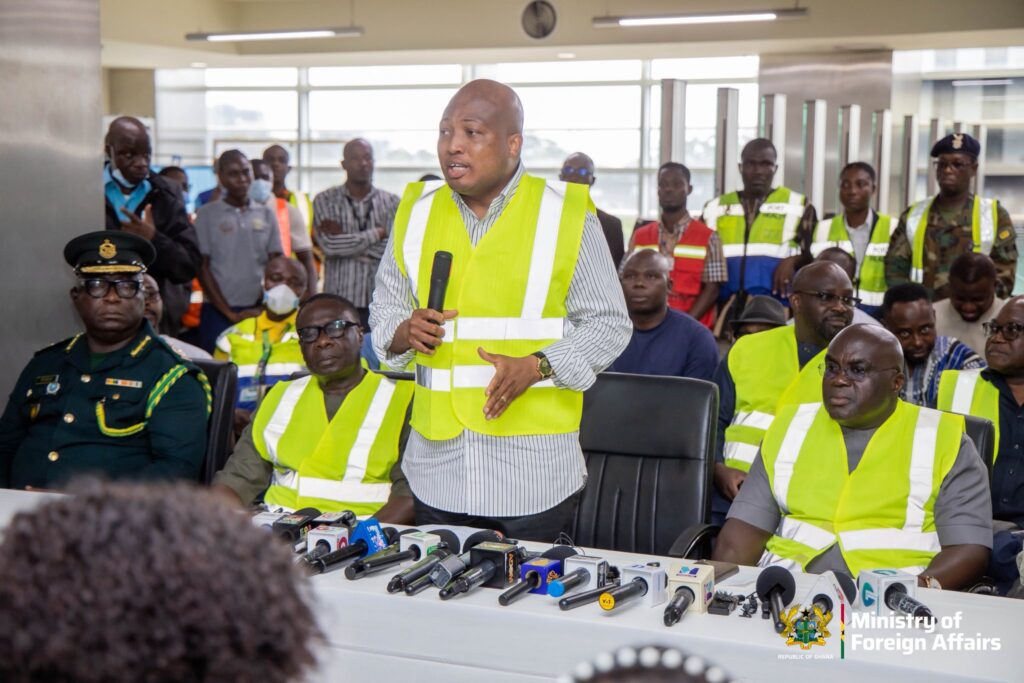
However, the allegations against Asarfo-Ajei and Nana Boakye remain claims made by Ibrahimah. The account provided does not include responses from either individual, leaving their positions on the alleged pressure, the passport request, and the accusation of a personal vendetta unaddressed.
The controversy also raises questions about how presidential directives on diplomatic and service passports are implemented and whether former officeholders can qualify for exemptions under the applicable rules.
For Hon Ibrahimah, the central issue is whether the minister should be criticised for enforcing the directive or commended for refusing a request she maintains he could not lawfully grant. She insisted that the facts would ultimately vindicate Ablakwa’s position.
READ ALSO: Goldbod to Exceed 2025 Gold Purchase, Export Targets – CEO Hints