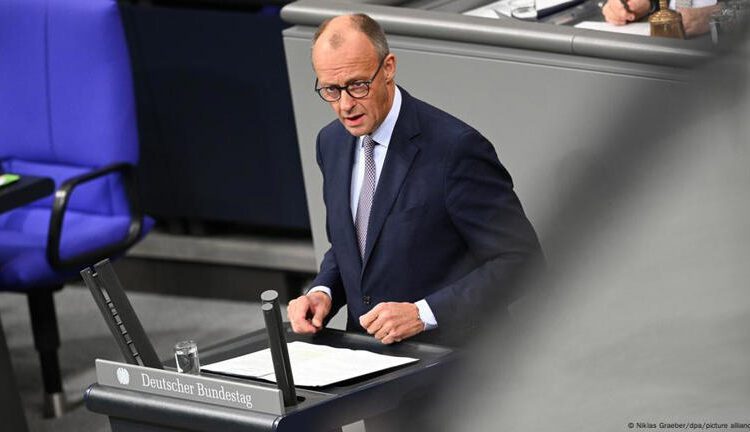
German Chancellor, Friedrich Merz has defended his government’s continued support for Ukraine, insisting that military and financial assistance to Kyiv is not being funded at the expense of social or educational spending in Germany.
Addressing the Bundestag ahead of this week’s European Union summit in Brussels, Merz outlined his government’s priorities on defence investment, domestic reforms and European economic competitiveness amid growing security and geopolitical challenges.
He warned lawmakers that Germany was facing “a time of upheaval, with crises and wars, some of which lie beyond our control.”
Merz reiterated the need for Germany to strengthen its defence capabilities, arguing that the security environment required sustained attention and investment. He also reaffirmed his support for Ukraine as Russia continues its war against the country.
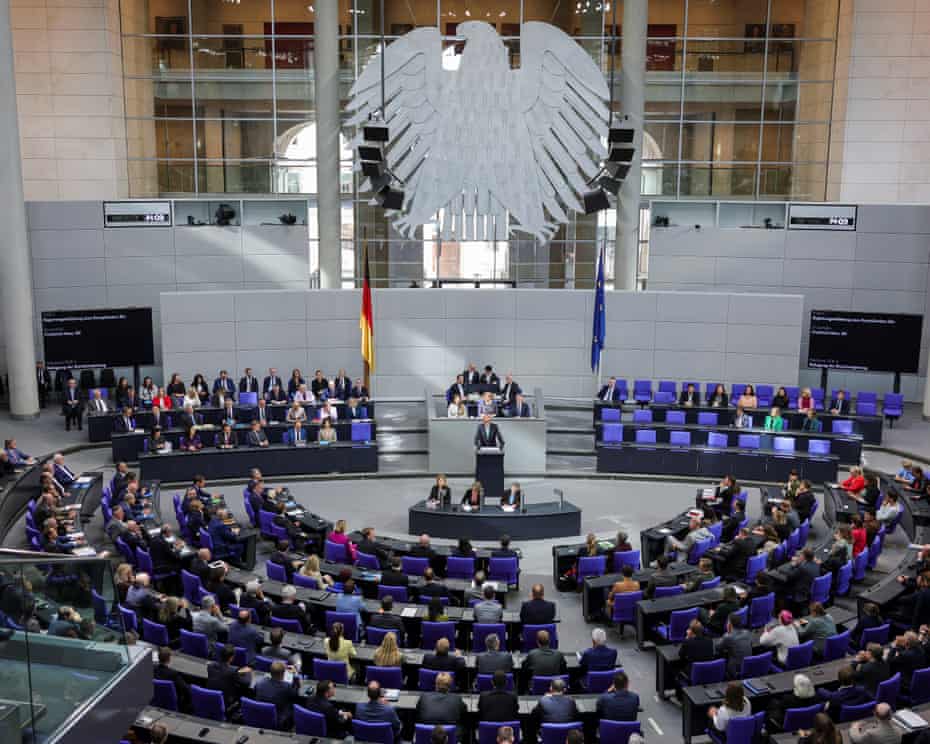
He dismissed any suggestion that Germany’s support for Ukraine comes at an expense of social and welfare spending.
“This is simply not a case. Not a single euro flowing to Ukraine is being diverted from social or educational spending in our own country. Not a single euro.”
Friedrich Merz
The German Chancellor’s remarks addressed a domestic debate over the allocation of public funds, with his government seeking to maintain support for Ukraine while pursuing reforms and responding to demands for investment in Germany.
Merz also warned that Russia posed a direct and growing security threat to Germany and other European countries. “The danger is very real and concrete,” he said, pointing to what he described as Russia’s “willingness to escalate: against Ukraine, against our eastern European neighbours, and indeed against our own country.”
He criticised politicians for downplaying the threat, arguing that their statements risked deepening political divisions. “Against this backdrop … it is incomprehensible to me how those on the far left and far right continue to play down the situation,” he said.
Merz further accused some political figures of contributing to division and disinformation for partisan gain, underscoring the domestic political tensions surrounding security policy and Germany’s international commitments.
Merz Outlines Priorities for EU Summit
Turning to the upcoming European Council meeting in Brussels, Merz disclosed that negotiations on the EU’s next budget were entering a decisive phase.
He identified security and competitiveness as Germany’s main priorities, calling for measures to reduce administrative burdens and speed up approval procedures to encourage investment across Europe.
Merz pointed out areas including decarbonisation, artificial intelligence and defence, arguing that faster decision-making and less bureaucracy could help create conditions for greater investment.
He also called for a new legal framework for pan-European startups and further progress towards the EU’s capital markets union, which is intended to strengthen the bloc’s financial integration.
On trade, the German Chancellor said that Europe needed to develop relationships with new global partners while reducing one-sided dependencies on existing trading partners.
He argued that the EU should respond more firmly when other countries’ economic policies harm European industries through subsidies, currency practices, excess production capacity and aggressive pricing.
“We will no longer stand idly by while other states harm our economy through heavy subsidies, artificially devalued currencies, overcapacity, and aggressive pricing. We will not stand idly by any longer.”
Friedrich Merz
His comments reflected concerns about the competitive pressures facing European businesses and the need for the bloc to protect its industrial base while maintaining international trade relationships.
Proposed Trade Tool To Speed Up EU Response
Additionally, Merz said that EU leaders would discuss establishing a new trade defence instrument that would allow the bloc to respond more quickly to targeted attacks on its industries and supply chains.
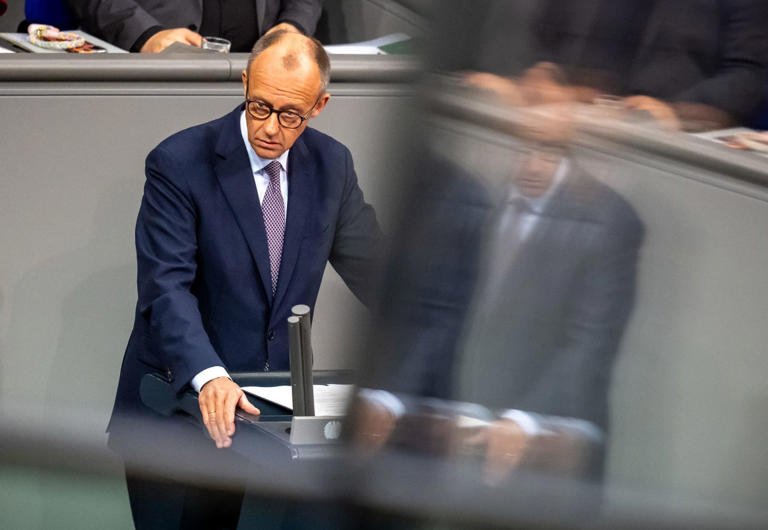
Under the proposal outlined by Merz, the European Commission would be able to respond rapidly to certain trade-related threats without first consulting the European Council.
Merz stated that the arrangement would make the EU’s response more efficient by giving the Commission greater ability to act quickly while preserving a mechanism for member states to overturn its decisions.
“These decisions would, among other things, provide the European Commission with a tool to react rapidly without needing to consult the European Council first. The European Council, for its part, would then have the power to reverse such a move by a qualified majority. This makes us faster and more effective, and gives the Commission a powerful tool.”
Friedrich Merz
The proposed mechanism would form part of broader efforts to strengthen the EU’s economic position as it faces pressure from international competitors and seeks to secure critical supply chains.
Merz’s agenda for the summit therefore combines security concerns with economic priorities, including increased defence investment, reduced regulatory barriers, stronger capital markets and a more assertive trade policy.
His remarks also show the challenge facing Germany and other European governments as they seek to sustain support for Ukraine while addressing domestic spending debates and the need to strengthen Europe’s economic resilience.
The discussions in Brussels will be important in determining how EU leaders approach the bloc’s next budget and whether they can advance proposals aimed at improving competitiveness and responding to trade pressures.
READ ALSO: UCL Wrap: Barca Flex, Brugge Shock Inter, Bayern Held as United’s Woes Continue