The International Monetary Fund (IMF) has issued a fresh warning about the resilience of the global economy, raising concerns about the sustainability of Ghana’s economic recovery as countries face mounting debt pressures, persistent inflation and increasingly unpredictable external shocks.
The warning comes at a critical time for Ghana, which has made progress in restoring macroeconomic stability after years of severe fiscal and external pressures. However, the Fund’s assessment suggests that a weakening global economy could expose emerging and developing countries to renewed financial difficulties, particularly those with limited access to international financing.
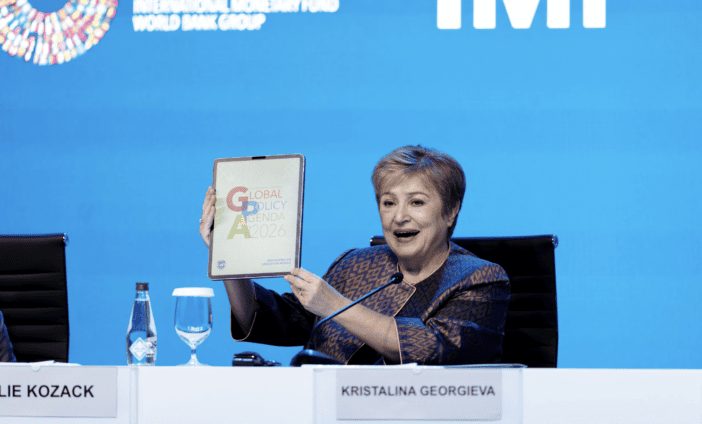
Ms Kristalina Georgieva, Managing Director of the IMF, delivered the warning while presenting the Fund’s latest Global Policy Agenda at the ongoing 2026 IMF/World Bank Group Annual Meetings in Bangkok.
The Fund projects global economic growth of 3.1 per cent in 2026, unchanged from its April forecast but below the 3.4 per cent recorded in 2025.
Although the projected expansion suggests that the global economy continues to grow, the IMF cautions that its ability to withstand repeated disruptions is gradually weakening.
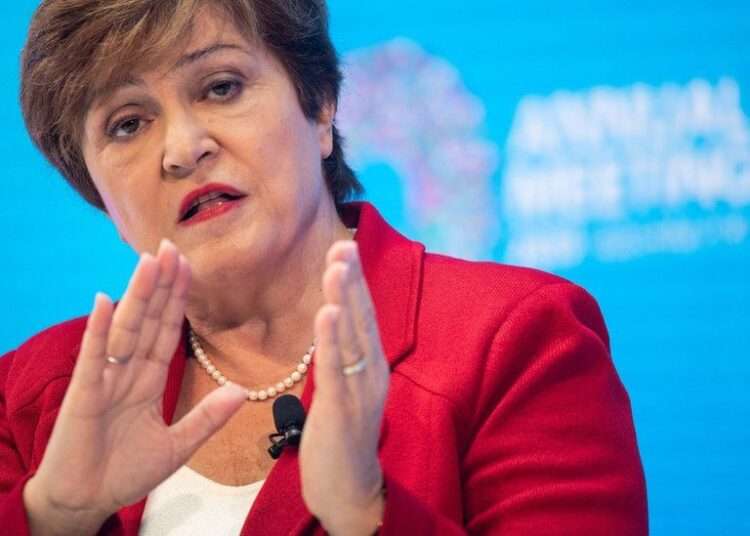
“The global economy remains resilient in the face of frequent repetitive shocks and in the face of uncertainty, but this resilience is reaching its limits,” Ms Georgieva said at a press briefing on the global economic outlook.
For Ghana, the warning raises important questions about whether the country’s improving economic conditions can withstand another period of international financial instability.
Ghana’s Economic Recovery Faces External Risks
Ghana has been working to restore investor confidence, strengthen its external position and improve public finances following years of economic turbulence.
However, the country’s recovery does not depend entirely on domestic policy decisions. Developments in international financial markets, commodity prices, energy costs and global investor sentiment can significantly influence the country’s economic prospects.
The IMF identified competing pressures from a negative energy supply shock and a positive demand shock driven by artificial intelligence as important factors shaping the global outlook.
These developments could create fresh complications for countries such as Ghana, where economic performance remains sensitive to external conditions.
Higher international energy prices could increase import costs, place pressure on domestic production and complicate efforts to sustain lower inflation. Meanwhile, tighter global financial conditions could make borrowing more expensive and reduce the availability of capital for developing economies.
Such pressures could undermine efforts to preserve macroeconomic stability, particularly if several external shocks occur simultaneously.
Rising Global Borrowing Costs Could Complicate Ghana’s Debt Strategy
One of the IMF’s most significant concerns is the growing cost of servicing public debt.
Ms Georgieva warned that governments had exhausted some of the financial buffers needed to respond to repeated economic shocks. Persistent inflation, meanwhile, has contributed to higher interest rates and increased debt-servicing pressures.
She also highlighted the consequences for developing economies that depend on international financing.
“Higher benchmark yields are spilling over to emerging markets and low-income countries, putting upward pressure on the cost of debt servicing, and that is a problem that is multiplied when countries are particularly vulnerable for other reasons.”
Ms Kristalina Georgieva
The warning carries considerable significance for Ghana as authorities continue efforts to restore debt sustainability and rebuild confidence in the country’s public finances.
When international benchmark yields rise, investors may demand higher returns before committing funds to emerging markets. This can increase the cost of issuing new debt and make refinancing existing obligations more difficult.
Even when a country is making progress in improving its fiscal position, unfavourable international financing conditions can complicate its efforts.
Higher debt-servicing costs can also reduce the resources available for infrastructure, healthcare, education and other public priorities.
Ghana therefore faces the challenge of consolidating its economic gains while preparing for an external environment that could become less accommodating.
Inflation Remains a Threat to Economic Stability
The IMF’s warning also highlights the danger of persistent inflation, which continues to influence monetary policy and financial market conditions across several economies.
Higher energy and food prices can quickly affect household budgets and business operating costs. When inflation remains elevated, central banks may find it difficult to ease monetary policy without risking another increase in prices.
This creates a difficult environment for governments seeking to support economic growth while protecting vulnerable households.
Ms Georgieva urged policymakers to provide targeted assistance rather than attempting to suppress prices across the economy.
“As energy and food prices rise, protect people, not prices. That means providing temporary and targeted support to the most vulnerable while preserving price signals.”
Ms Kristalina Georgieva
The recommendation is relevant to Ghana’s efforts to balance fiscal discipline with the need to protect households from rising living costs.
Broad subsidies and poorly targeted interventions can place additional pressure on government finances. Targeted support, supported by effective public financial management, can help protect vulnerable groups without creating excessive fiscal obligations.
The challenge is to ensure that social protection measures remain affordable while preserving the gains made in stabilising the economy.
AI Opportunities Come With New Financial Risks
Beyond debt and inflation, the IMF has identified artificial intelligence as both an opportunity and a potential source of financial instability.
The technology could improve productivity, reduce operating costs and support innovation across industries. However, the Fund cautioned against expecting immediate economic gains on a scale that may not materialise in the short term.
Ms Georgieva also warned that disorderly market corrections and rising AI-enabled cyberattacks could threaten financial systems.
These concerns are increasingly relevant to Ghana as banks, financial technology companies and businesses expand their use of digital platforms.
Greater reliance on technology creates opportunities to improve efficiency, but it also increases the importance of cybersecurity, effective regulation and sound risk management.
Financial institutions must therefore ensure that technological innovation does not expose customers, businesses and the wider financial system to unnecessary risks.
IMF Calls for Stronger Fiscal Buffers
The Fund is urging governments to strengthen their ability to withstand future disruptions through better revenue mobilisation, disciplined spending and improved public financial management.
It has also called for coordinated action to rebuild fiscal buffers, accelerate the energy transition and safeguard debt sustainability.
These priorities reinforce the importance of maintaining prudent fiscal policies in Ghana, particularly as the government seeks to sustain economic growth while addressing outstanding financial vulnerabilities.
A stronger revenue base could provide additional resources for essential public services, while more efficient expenditure management could reduce waste and improve the impact of government spending.
The IMF said it had completed policy reforms aimed at improving risk identification, supporting high-impact reforms, tailoring interventions to individual countries and strengthening tools for assessing debt sustainability.
Ultimately, Ghana’s ability to withstand another wave of global economic shocks will depend on the strength of its domestic fundamentals and the effectiveness of its policy response.
The country has an opportunity to build on its recovery, but rising international borrowing costs, renewed inflationary pressures and financial market uncertainty could complicate that process.
As the global economy approaches the limits of its resilience, Ghana must strengthen its financial safeguards and protect the progress already achieved before external pressures threaten to reverse its gains.
READ ALSO: GoldBod Commits ¢35m to Land Reclamation