The Ghana Gold Board (GoldBod) has committed GH¢35 million to finance a multi-agency land reclamation project aimed at rehabilitating forest ecosystems severely damaged by illegal mining operations across Ghana.
Under this multi-million cedi environmental initiative, GoldBod is directing major engineering interventions at Compartment 161 of the Tano Nimiri Forest Reserve to restore 50 hectares of degraded land and prepare the site for extensive reforestation.
The comprehensive restoration program combines state resources, military engineering expertise, and forestry management to systematically reverse the ecological destruction wrought by illegal gold extraction within primary forest reserves.
“The plan was to first tackle the pits that were identified by covering them and level the entire area. In our recognizance, we identified 10 major pits even though there were many smaller ones all with large volumes of water.”
Ghana Gold Board (GoldBod)
Escalating Degradation in Forest Reserves
The urgent need for this GH¢35 million intervention stems from years of unchecked illegal mining activities that severely compromised Ghana’s timber concessions and ecological integrity.
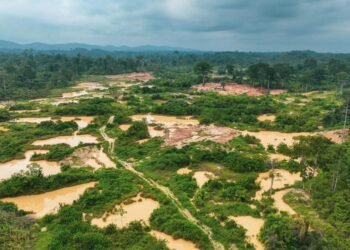
Between 2021 and 2024 alone, illegal mining operations caused the direct destruction of approximately 192.4 hectares of woodland within the Tano Nimiri Forest Reserve.

A particularly aggressive illegal mining invasion in 2022 severely disrupted delicate ecosystems, stripping away vital vegetative cover, disturbing topsoil integrity, and destroying productive timber stock previously conserved under sustainable forestry management.
Beyond the loss of vegetative canopy, illegal mining left behind hazardous open pits filled with stagnant, contaminated water, highly unstable terrain, and severe soil erosion.
Left unaddressed, these open excavations pose direct safety hazards to local communities while facilitating heavy siltation into the adjacent Tano River during rainfalls.
Restoring these landscapes requires intensive earthmoving operations and specialized land-stabilization techniques to prevent long-term aquatic pollution and environmental degradation.
Engineering Interventions and Site Restoration
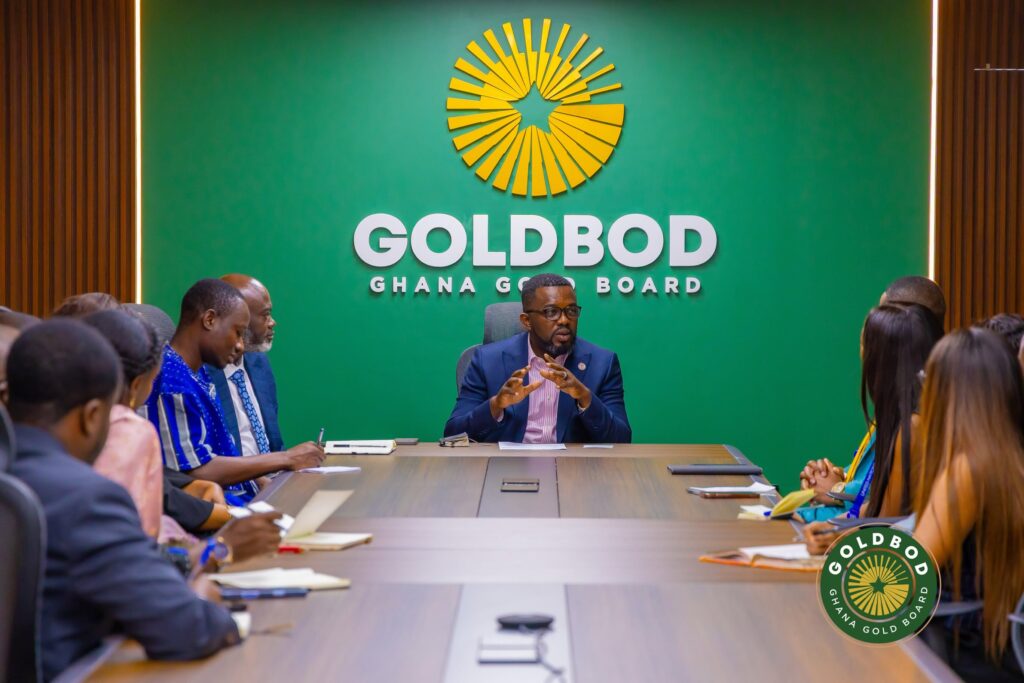
To tackle these formidable environmental hazards, GoldBod partnered with the Ghana Armed Forces Engineer Regiment to deploy heavy machinery and personnel to the reserve.
Major Shem Adolinama, who leads the Ghana Armed Forces Engineer Regiment team on the ground, detailed that military engineers executed heavy earthmoving tasks to backfill deep mining pits, blend mud with dry soil to stabilize the treacherous terrain, and grade the land to its natural contours.
Furthermore, the team constructed strategic drainage channels across the 50-hectare site to properly manage surface runoff, curb soil erosion, and drastically mitigate the risk of silt entering the vital Tano River basin.
Renowned environmental journalist Erastus Asare Donkor recently conducted an on-the-ground visit to Compartment 161 of the forest reserve to document the engineering work underway.
His field assessment verified that the military engineering team successfully backfilled the hazardous excavation pits and stabilized the surrounding terrain.
Highlighting the impact on industrial timber management, Samuel Danso, Sustainability Manager at Samatex Company Limited, observed that the historical invasion had “seriously compromised biodiversity and timber concessions previously managed by Samatex Timber Company,” underscoring the vital importance of the current restorative works.
Reforestation and Long-Term Ecological Recovery
With major land-leveling and civil engineering works nearing completion, military officials confirmed that the heavy machinery phase of the project is successfully drawing to a close.
Major Adolinama revealed that the rehabilitated site will soon be formally handed over to the Forestry Commission to commence comprehensive reforestation and nurture the natural regeneration of indigenous plant species.
By spearheading this GH¢35 million intervention, GoldBod demonstrates a proactive commitment to counteracting the negative environmental impacts associated with illegal gold mining.
Through structured engineering interventions, rigorous site stabilization, and close coordination with public institutions and forestry managers, the initiative establishes a sustainable framework for restoring degraded forest reserves, safeguarding critical river bodies, and preserving Ghana’s valuable natural heritage for future generations.
READ ALSO: IMANI Proposes Five Health Sector Reforms for Ghana