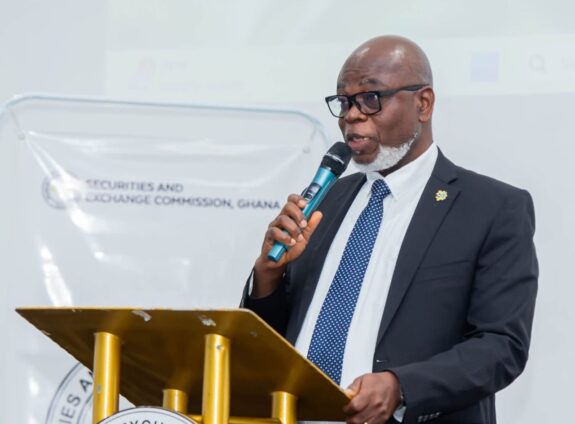
The Securities and Exchange Commission (SEC), Ghana, has issued a strong warning to investors to become more vigilant as fraudulent investment schemes increasingly exploit social media, artificial intelligence and promises of extraordinary returns to deceive unsuspecting members of the public.
The Director-General of the SEC, Dr James Klutse Avedzi, has identified three essential habits that investors must adopt to protect their money: verifying the licensing status of investment firms, questioning promises of unusually high or guaranteed returns, and resisting pressure to make hurried investment decisions.
His warning comes amid growing concerns about fraudulent schemes using platforms such as WhatsApp, Telegram and TikTok to attract potential victims with persuasive advertisements, fake endorsements and AI-generated videos designed to make illegitimate investment opportunities appear genuine.
Speaking at the SEC’s “Time with the SEC” programme in Sunyani in the Bono Region, held on the theme, “Building Financial Confidence for a Brighter Tomorrow,” Dr Avedzi urged Ghanaians to exercise greater caution before handing over their hard-earned money to investment operators.
SEC Identifies Three Habits That Could Save Investors’ Money
Dr Avedzi stressed that investors must not allow attractive offers or pressure from promoters to cloud their judgement. According to him, checking whether an investment company is licensed, questioning unrealistic promises and refusing to rush into financial commitments are essential safeguards against fraud.
“Resist pressure. If you are told to act now or bring a friend, slow down. Urgency is a scammer’s favourite tool,” Dr Avedzi said.
The warning highlights a common tactic used by fraudulent operators, who create a false sense of urgency to prevent potential investors from conducting independent checks. Some encourage people to recruit friends and relatives, allowing questionable schemes to spread through personal relationships and trusted social networks.
Dr Avedzi advised the public to confirm the regulatory status of investment firms before making any financial commitment, regardless of how convincing their advertisements or representatives might appear. “Before you invest in a single cedi, confirm that the firm is licensed by SEC,” he advised.
He further cautioned prospective investors against dealing with unlicensed operators, emphasising that the possibility of losing money should outweigh the temptation of attractive returns. “If it does not carry a license from the SEC, walk away,” he added.

AI-Generated Videos and Social Media Raise Fraud Concerns
The growing use of digital platforms has created new opportunities for investment scammers to reach large audiences at relatively low cost. Fraudulent promoters can circulate investment offers through messaging applications and social media, targeting people who may have limited knowledge of the capital market.
Dr Avedzi noted that some schemes rely on fake endorsements and AI-generated videos to create an appearance of legitimacy. Such tactics can make it increasingly difficult for unsuspecting individuals to distinguish genuine financial opportunities from fraudulent promotions.
Some operators promise monthly returns of 30 per cent or more, appealing to people hoping to grow their savings quickly or escape financial difficulties.
However, unusually high promised returns should trigger closer scrutiny rather than excitement. Investors who commit money without verifying the operator or understanding the investment could face substantial losses.
The SEC’s warning underscores the need for people to investigate investment claims independently instead of relying solely on social media advertisements, testimonials or recommendations from friends.
Financial Literacy Becomes Essential to Building Wealth
Beyond the immediate threat of fraud, Dr Avedzi emphasised that financial literacy remains fundamental to improving the financial wellbeing of individuals and households.
He explained that decisions about spending, saving and investing could influence people’s financial futures, regardless of their income levels or occupations. “Financial literacy is not a luxury. It is a life skill. And anyone can learn it starting from today,” he said.
He encouraged Ghanaians to cultivate disciplined saving habits, even when they can only set aside small amounts. Consistent saving, purposeful financial planning and informed investment decisions, he explained, offer a more sustainable path towards wealth creation than relying on schemes promising overnight financial success.
The SEC Director-General also urged investors to understand the products they purchase before committing their money. Bonds, shares and collective investment schemes have different risk profiles, potential returns and liquidity characteristics.
Choosing among them requires an understanding of personal financial objectives, the level of risk an investor can tolerate and the period for which the money can remain invested. “There is no single best product, only the one that fits your goals and how long you can wait,” he said.

Proposed Investor Protection Fund Offers Potential Relief
Dr Avedzi also disclosed that ongoing efforts to overhaul the Securities Industry Act, 2016 (Act 929), would introduce an investor protection fund designed to provide a framework for partial compensation to investors who suffer losses through infractions by licensed operators.
The proposed mechanism could strengthen investor protection by providing a structured avenue for partial compensation in qualifying circumstances. However, its effectiveness will depend on the final legal framework and the conditions governing eligibility and compensation.
He cautioned that the proposed fund should not encourage investors to take unnecessary risks or place their money with unlicensed operators.
The distinction is important because a protection mechanism for losses arising from misconduct by licensed operators should not be mistaken for a guarantee against every investment loss or a safety net for fraudulent schemes operating outside the regulatory system.
SEC Takes Financial Education Beyond Accra
Through its “Time with the SEC” programme, the Commission aims to bring practical financial education closer to communities, demystify the capital market and empower students, investors and the wider public to make informed financial decisions.
Dr Avedzi urged participants to share the lessons from the Sunyani engagement with their families, colleagues and communities, helping to strengthen awareness of investment risks across the country.
He maintained that a financially confident society must be built on disciplined saving, informed investment choices and a willingness to question suspicious offers.
“A brighter tomorrow is not delivered by any scheme. It is earned through disciplined saving, informed investing and the habit of verifying before we trust.”
Dr James Klutse Avedzi
As investment promotions continue to circulate across digital platforms, the SEC’s advice offers a practical starting point for protecting personal savings. Investors who verify licences, challenge extraordinary return promises and refuse to be rushed can reduce their exposure to fraudulent schemes while making more deliberate decisions about their financial futures.
READ ALSO: World Food Day: A Focus on Ghana’s Agricultural Sector