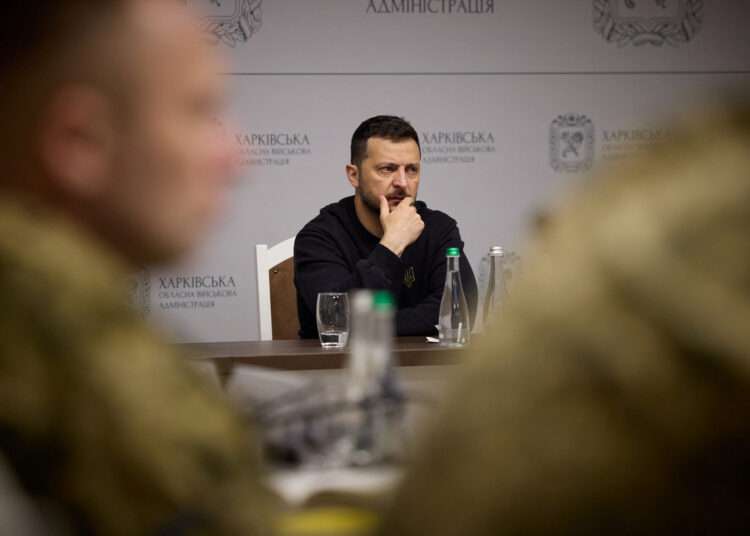
Ukrainian President, Volodymyr Zelenskyy has criticised US President Donald Trump’s decision to waive key sanctions against Russia in the bill named after the late Lindsey O. Graham, warning that the move undermines efforts to pressure Moscow into ending its war against Ukraine.
Zelenskyy’s remarks came hours after Trump signed an executive order suspending restrictions outlined in the Lindsey O. Graham Sanctioning Russia Act, a law intended to intensify economic pressure on Russia and encourage negotiations to end the conflict.
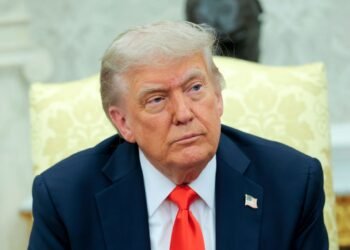
In the order, Trump said that he was waiving the sanctions, restrictions and duties provided for under the legislation, citing the national interests of the United States.
“I am hereby waiving the application of such sanctions, restrictions, and duties provided for in the Graham Act.
“I have submitted to the Congress a certification that the issuance of such a waiver at this time is in the national interests of the United States.”
Donald Trump
The decision came just two days before the deadline for implementing the measures under the law, which Trump signed the previous month. The White House had 30 days after the legislation was signed to implement the sanctions or waive them, with the waiver requiring certification to Congress that the decision served US national interests.
However, the administration has not publicly provided further details explaining why suspending the restrictions was necessary.
Zelenskyy described the decision as unfortunate but stopped short of directly criticising Trump, despite mounting tensions between Washington and Kyiv in recent days.
“A decision was unfortunately made in America to completely disregard the Lindsey Graham Act, which was supposed to impose truly effective pressure on Russia to bring this war to an end.”
Donald Trump
He expressed hope that the legislation could still be used to exert pressure on Moscow.
“This Act could have helped enormously — and still can! But it needs to actually work, and every voice in support of it matters.”
Donald Trump
Sanctions Waiver Draws Criticism From US Lawmakers
The legislation, named after the late South Carolina Senator Lindsey Graham, was designed to accelerate restrictions on the financial resources supporting Russia’s war against Ukraine.
Graham, a Republican and prominent critic of Moscow, spearheaded the effort to introduce the legislation before his death in July.
The measures sought to target Russian officials, banks and a shadow fleet of oil tankers used to transport Russian energy products, with the aim of limiting the revenue available to finance the war.
Trump’s decision to waive nearly all the sanctions outlined in the legislation has raised concerns among critics who argue that the move gives Moscow relief from economic pressure at a critical stage of the conflict.
The decision has also intensified scrutiny of the US administration’s approach to Russia, particularly as Trump has adopted a more conciliatory tone towards Moscow while expressing growing frustration with Zelenskyy.
Senator Richard Blumenthal, who co-drafted the legislation, accused Trump of disregarding the views of American lawmakers and European allies.
In a statement, Blumenthal said that the President was turning his back on “the majority of Americans, their representatives in both houses of Congress, and our European allies.” He added, “These waivers have nothing to do with our national security, and everything to do with sucking up to Vladimir Putin.”
Democratic Representative Don Beyer of Virginia also criticised the decision, accusing Trump of undermining congressional efforts to penalise Russia for its invasion of Ukraine. “Trump’s latest surrender to Putin again betrays our Ukrainian partners and defies clear congressional intent of legislation designed to punish Russia for its illegal war of aggression,” Beyer wrote on social media.
He called on Congress to “fix this flawed law” to prevent what he described as Trump “capitulating to Putin.”
Former State Department sanctions Coordinator Daniel Fried also criticised the administration’s approach, arguing that the latest decision followed a pattern of easing pressure on Moscow. “One week after the diesel deal and the Trump administration keeps the pressure off Russia,” Fried said.
Russia Diesel Deal Adds To Concerns Over US Policy
The sanctions waiver comes amid further controversy over an agreement for the United States to purchase diesel from Russia in an effort to reduce global energy prices.
Trump said that Russia would initially supply more than 300,000 tonnes of diesel, followed by another 500,000 tonnes in November and one million tonnes “immediately thereafter.”
The arrangement has drawn criticism from both Republicans and Democrats, who argue that the purchases could provide Russia with additional revenue to sustain its military campaign without significantly lowering global fuel prices.
Critics have linked elevated energy prices largely to the US war against Iran, questioning whether purchasing Russian diesel would deliver the intended economic benefits.
The combination of the diesel agreement and the suspension of sanctions has fuelled concerns among Ukraine’s supporters that Washington is reducing economic pressure on Moscow while Kyiv continues to seek assistance in defending itself.
Although Zelenskyy has expressed hope that the legislation could still be activated, the administration’s decision leaves questions about the future of US sanctions policy and its implications for Ukraine’s war effort.