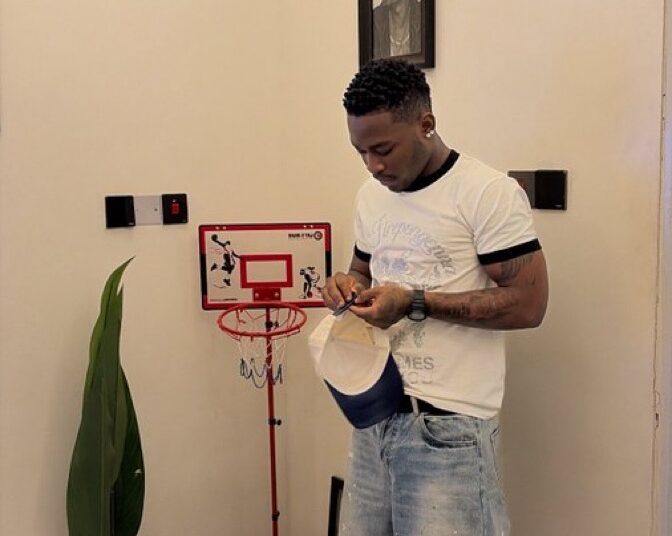
Ghanaian hip-hop and Afro-pop artist Lalid is facing intense social media backlash after allegations emerged that he and associates attacked an upcoming artiste whose cover artwork he had allegedly stolen.
The claims, which gained significant traction on Monday morning, include photographs of facial injuries and screenshots of private messages detailing the incident.
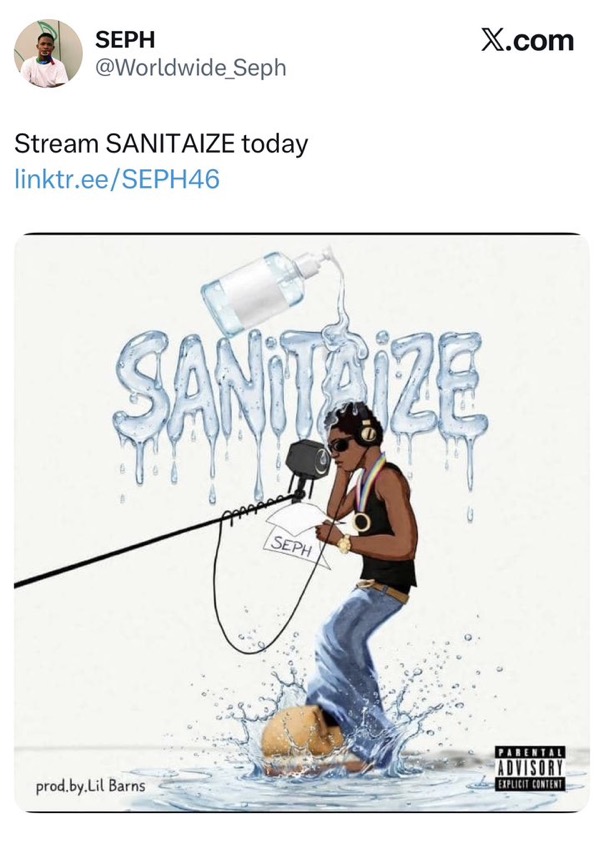
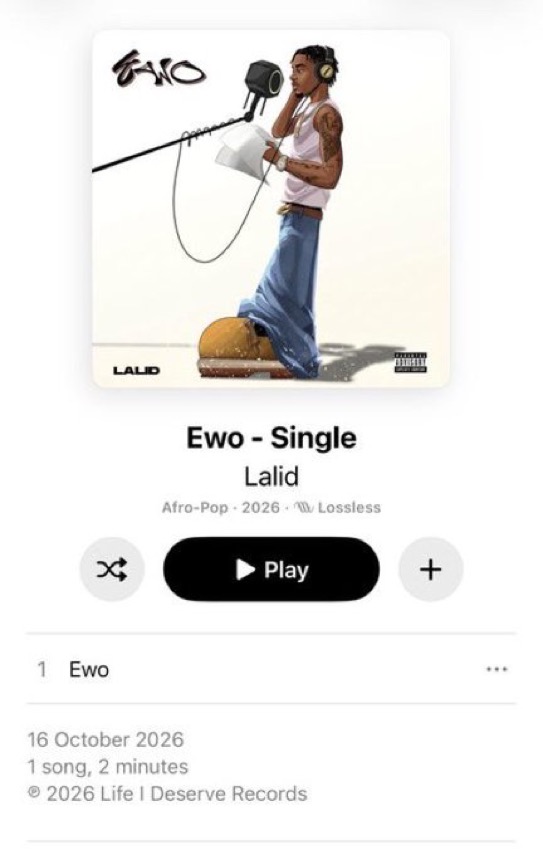
The controversy first surfaced around October 14 when social media users, shared side-by-side comparisons of two nearly identical cover arts. One was presented as the original work belonging to a lesser-known upcoming artiste, while the other was identified as the version used by Lalid.
About the Accusation
Critics accused the rising star of plagiarism, questioning why an artist with growing visibility would copy another’s visual design rather than commission original artwork.
In the days that followed, further posts claimed that Lalid and two associates had begun issuing threats against the original creator after the theft allegation circulated. By October 19, the situation escalated with new claims that a physical confrontation had occurred. According to screenshots of a chat shared widely, the upcoming artiste stated that on Friday he was contacted by people linked to Lalid who proposed meeting to “settle things peacefully.”
Sensing something was off, the artiste said he informed some of his own friends and went to the location. Upon arrival, the group allegedly pounced on them. The complainant claimed Lalid himself delivered a punch, and that one of his companions was seriously hurt.
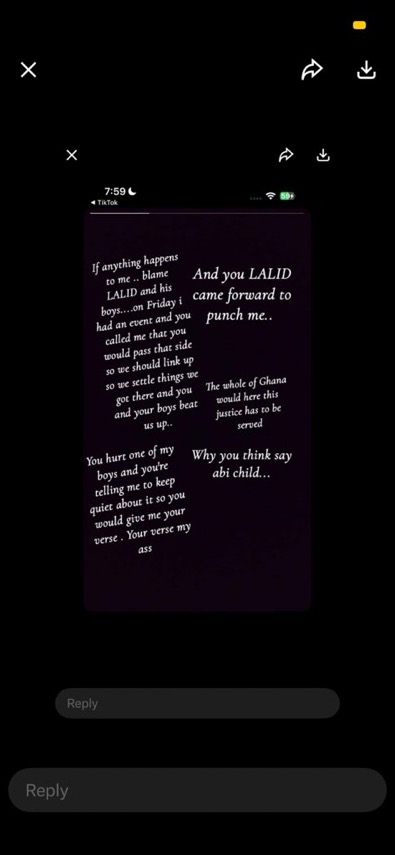
Accompanying the chat were close-up photographs showing visible bruises and marks on a man’s face and cheek area, with faces partially blurred in some versions circulating online. Additional images appeared to show a group of young men gathered outdoors under a shaded structure with palm trees in the background, presented by some users as the scene or the individuals involved.
One post described the assault as including a “Superman punch” to the left cheek.
About the Musician
Lalid, whose real name is Samuel Aboagye and who also uses the name Insane Led, rose to wider attention with his breakthrough single “The Matter.” The track charted strongly, appeared on Apple Music’s Top 100 in Ghana, and inspired TikTok trends. A remix featuring Medikal further expanded his reach. Subsequent releases including “Top Speed,” “Catching Glory,” “Wicked,” and others helped solidify his position as an emerging independent voice in Ghanaian hip-hop and Afro-pop.
A University of Ghana graduate from Ashaiman, Lalid previously signed with the Ground Up label before parting ways, later describing the experience as unfulfilling. He has received nominations at the Ghana Music Awards and Ghana Music Awards UK, and has performed at major events including Rapperholic.
At the time of the allegations, Lalid had been preparing for a live show titled LALID LIVE scheduled for December 4 at Bloom Bar, Untamed Empire, positioning it as an intimate experience for fans. The timing of the controversy has therefore drawn additional scrutiny from industry observers and online commentators.
Reactions across X (formerly Twitter) have been largely critical of the alleged behavior. Many users expressed disbelief that an artist would first use another’s creative work and then respond to confrontation with violence. Posts tagged the Ghana Police Service and other authorities, with some calling for swift investigation.
Others described the episode as emblematic of deeper problems within parts of the underground and emerging music scene, where disputes over creative ownership sometimes spill into personal conflict. A number of commenters noted the power imbalance: an artiste with growing streaming numbers and industry connections allegedly targeting a less prominent creator.
Some voices urged caution, questioning whether the entire episode could be exaggerated or staged for attention. Others pointed out that no formal police statement or independent verification had yet been publicly released at the time the posts gained momentum.
As of the latest available information, neither Lalid nor representatives associated with him had issued a detailed public response addressing the specific assault claims or the earlier cover art accusations.
Intellectual property disputes over cover art are not uncommon in the music industry, particularly among independent and emerging artists who often operate with limited budgets for design. However, the alleged progression from visual plagiarism to threats and physical violence has intensified public condemnation.
Public Reaction
Commentators have argued that such incidents undermine the collaborative and competitive spirit that should define a healthy creative ecosystem.
The upcoming artiste at the center of the claims has not been widely named in the circulating posts, with many shares focusing instead on the images of injuries and the narrative of the alleged ambush under the guise of peaceful resolution.
In the chat screenshots, the complainant also noted that after the attack, those involved suggested he remain quiet in exchange for Lalid providing a verse on a song, an offer that further fueled online outrage.
As the story continues to spread, pressure is mounting for official clarification. Calls for the Ghana Police Service to investigate the alleged assault have grown, with some users stating they would escalate the matter themselves if authorities did not act promptly. In Ghana’s music community, where reputation and street credibility often intersect with artistic output, incidents of this nature can have lasting effects on an artist’s public image.
Lalid’s career trajectory until now had been marked by consistent output and increasing recognition. For now, the images of injuries, the chat logs, and the side-by-side cover art comparisons have dominated discussions, leaving many in the industry and among fans demanding accountability and a clearer accounting of what transpired.
The episode serves as a reminder of the tensions that can arise when creative ownership is contested, particularly in fast-moving digital spaces where visual content is easily copied and shared. As more details potentially emerge, both the accused and the complainant will face continued public scrutiny.
READ ALSO: Culture of Victim Blaming Why Girls Face Sexual Abuse – Mensah