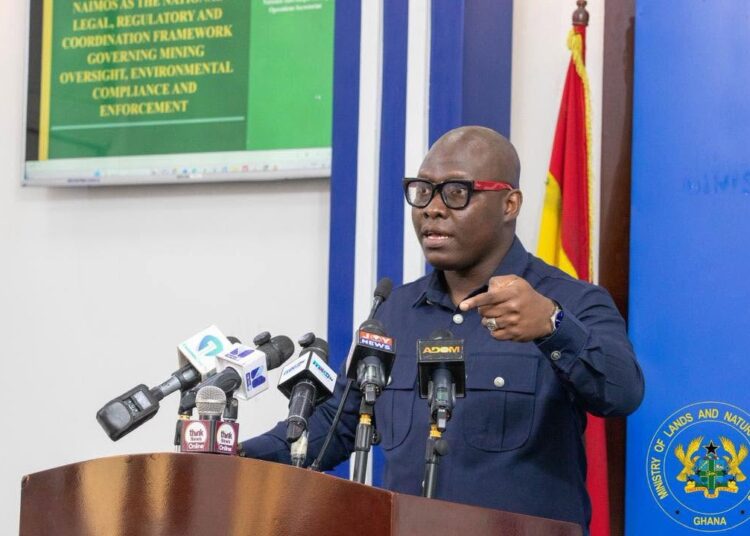
The Ministry of Lands and Natural Resources has identified growing “community complicity” as a major obstacle to the fight against illegal mining, with its spokesperson, Paa Kwesi Schandorf, outlining plans for the National Anti-Illegal Mining Operations Secretariat (NAIMOS) to intensify engagement with affected communities.
Mr Schandorf explained that some residents are actively helping illegal miners evade enforcement teams, complicating efforts to curb galamsey.
The Ministry’s Spokesperson indicated that NAIMOS would begin a series of community engagements the following week to address local support for illegal mining. The initiative is intended to encourage residents to reconsider their involvement and help build community-level opposition to activities that damage the environment.

“If we are going to win the fight against illegal mining, then as a matter of necessity, we have to speak to the hearts and consciences of Ghanaians.”
Paa Kwesi Sxhandorf
Mr Schandorf identified Osino as an example of the challenge, explaining that some residents appeared to collaborate with illegal miners by alerting them before enforcement teams arrived. He recounted that after an operation, some locals even hooted at the task force as officers escorted arrested miners from the area.
According to the spokesperson, the problem extends beyond Osino, with similar patterns emerging in other mining communities. Such co-operation undermines enforcement because residents who might ordinarily be expected to oppose environmentally destructive activities can instead help operators evade arrest.
On a positive note, he cited Jema, a town in the Aowin Municipality, as a notable example of how strong community leadership and collective action can prevent illegal mining from destroying natural resources.
The situation has prompted the Ministry to pursue a strategy that combines enforcement with stakeholder engagement. Mr Schandorf explained that the approach seeks to address the local conditions that enable illegal mining, recognising that arrests alone may not resolve the problem if communities continue to facilitate the activity.

He also pointed to communities where residents have organised themselves into watch groups to oppose mining activities, including operations that comply with legal requirements.
These examples demonstrate the potential for collective community action to support efforts to protect local environments.“If we have this replicated across all the relevant communities where mining happens, perhaps we’ll be doing greater good to ourselves,” he observed.
The planned engagements will therefore complement NAIMOS operations by seeking cooperation from residents in areas affected by galamsey.
NAIMOS Reports Progress Clearing Illegal Mining Structures From Waterways
The National Anti-Illegal Mining Operations Secretariat (NAIMOS) reported progress in clearing illegal mining structures from parts of Ghana’s water bodies, with the Ministry of Lands and Natural Resources spokesperson, Paa Kwesi Schandorf, highlighting the removal of shanties along the Ankobra River.
Mr Schandorf also explained how Operation Water Shield prioritises polluted water bodies and how the Blue Water Guards support enforcement through intelligence gathering.
The spokesperson cautioned that the task force’s performance should be assessed by considering the likely extent of illegal mining. He acknowledged that the results are not yet comprehensive, but pointed to the removal of structures and early signs of improvement along sections of the country’s waterways.
Mr Schandorf explained that the Ankobra River has seen the removal of shanties previously situated along its banks. He also reported marginal signs of improvement in some sections of the water body, while acknowledging that these changes are still limited.
The Ministry’s Spokesperson conceded that NAIMOS’ work is not perfect and that more comprehensive results would take time. Nevertheless, he postulated that the task force’s interventions should be assessed against the environmental damage that could have worsened without its presence.
Turning to Operation Water Shield, which commenced in September, Mr Schandorf explained that the initiative focuses specifically on major water bodies affected by illegal mining. These include the Birim, Tano, Pra and Ankobra rivers, alongside other important water sources.
He clarified that the Blue Water Guards are not an enforcement unit, contrary to a misconception he said existed among the public.
Recruited from communities affected by illegal mining, their responsibility is to gather intelligence and relay information to NAIMOS, which carries out the enforcement operations. “Their role is only to supply and provide intelligence,” Mr Schandorf explained, distinguishing the guards’ community-based monitoring duties from the task force’s operational mandate.
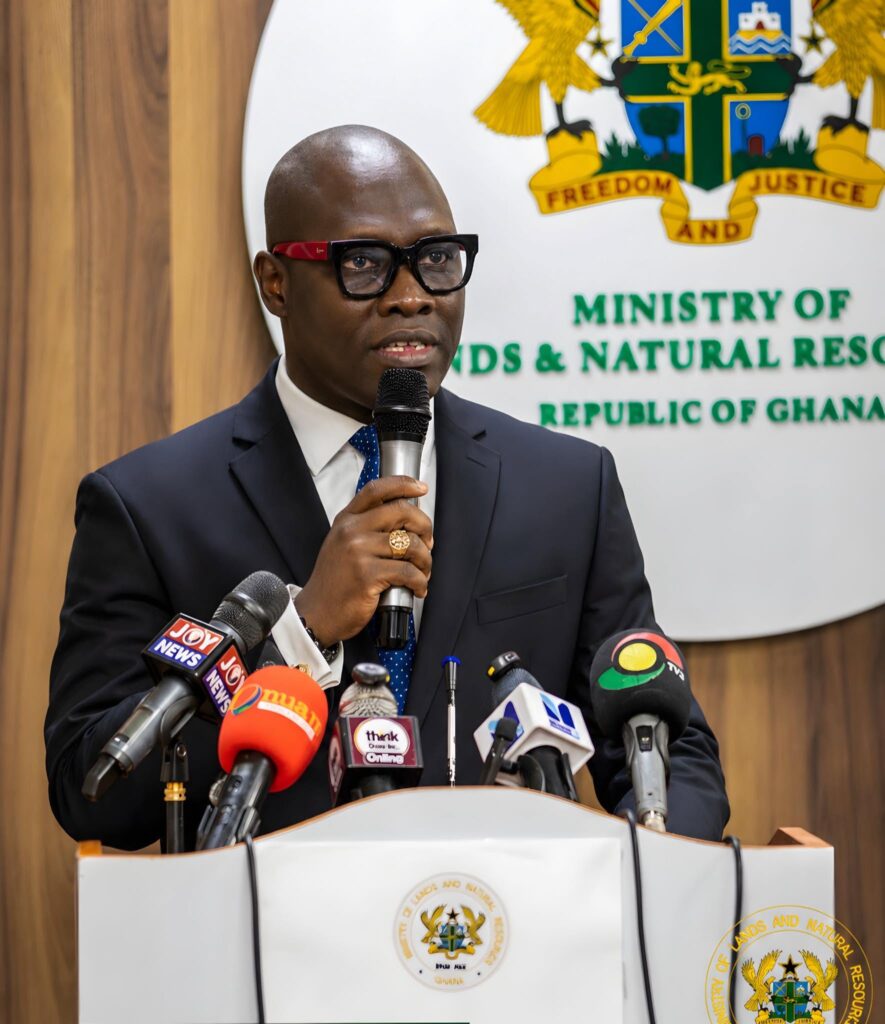
In addition, he explained that government support has helped resource NAIMOS, although the task force could not address every illegal mining location simultaneously. The need to prioritise available resources, he clarified, does not mean the agency is underfunded; instead, its operations are being directed towards critical water bodies.
The strategy seeks to protect water sources that communities depend on for domestic use. Mr Schandorf proposed that clearing the targeted waterways would represent a significant achievement.
He also noted that the Blue Water Guards and NAIMOS perform complementary functions: the former provide intelligence while the latter executes enforcement. Consequently, the spokesperson emphasised the need to sustain the effort across the major rivers with focus on communities throughout the country.
READ ALSO: War-Torn Sudan Faces Growing Famine Threat From Drought