
The Association of Ghana Industries (AGI) has intensified its call for stronger support for small and medium-sized enterprises (SMEs), identifying business capacity-building, institutional collaboration and improved access to industrial development opportunities as essential to Ghana’s economic transformation.
The call was reinforced at the regional Annual General Meeting (AGM) of the AGI covering the Volta, Eastern and Oti regions, held at Sky Plus Hotel in Ho. Convened under the theme “From Stability to Growth: SME Growth as a Catalyst for Economic Transformation,” the meeting brought together industry players, public institutions, business representatives and other stakeholders to discuss practical measures for strengthening enterprise performance.
The Regional Chairman of AGI, Mr Dela Gbeve, reaffirmed the association’s commitment to creating an enabling environment for industrial development, stressing the importance of coordinated action to help businesses overcome operational barriers and pursue sustainable growth.
The gathering focused on translating economic stability into measurable business expansion, with particular attention to the challenges facing SMEs in developing competitive products, complying with regulatory requirements and building the capacity needed to participate in wider markets.
“From Stability to Growth: SME Growth as a Catalyst for Economic Transformation.”
Regional Chairman of AGI, Mr Dela Gbeve
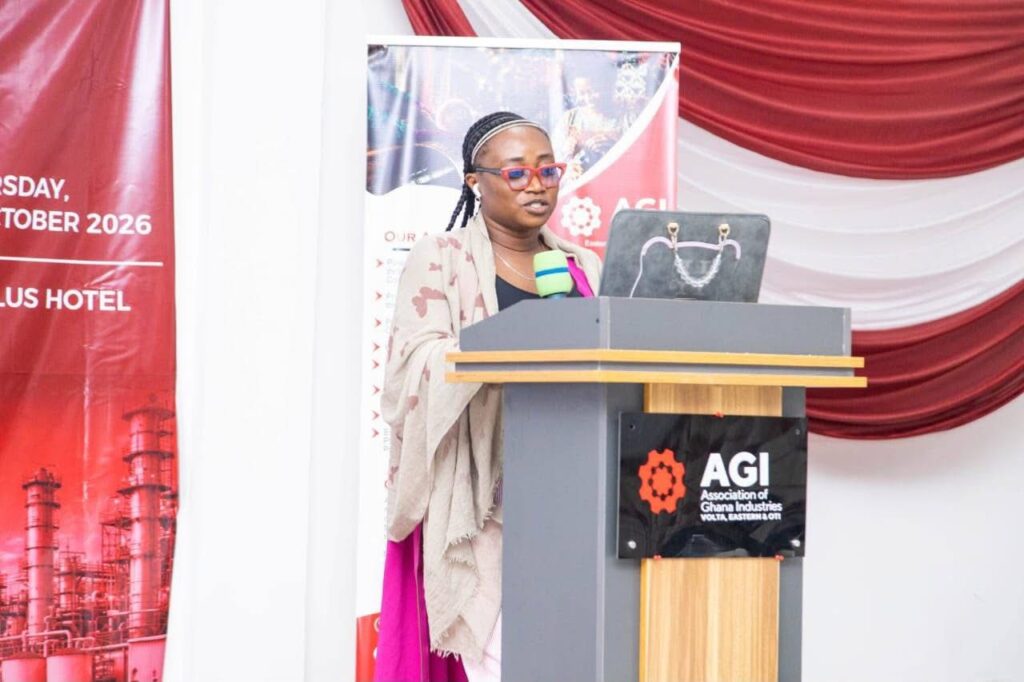
The theme reflected the need to move beyond economic stability towards an environment in which enterprises can increase production, improve productivity, expand their markets and generate employment.
AGI Strengthens Regional Business Support
In his welcome address, Mr Gbeve outlined several initiatives undertaken by the regional leadership to strengthen the industrial sector and create opportunities for members.
The regional leadership also highlighted the Eastern Expo 2026 and the 7th Volta Trade and Investment Fair as platforms for promoting businesses, encouraging commercial partnerships and increasing the visibility of locally produced goods and services.
Trade fairs and exhibitions can help smaller businesses connect with buyers, suppliers and potential investors. For enterprises operating outside Ghana’s major commercial centres, such platforms can also provide opportunities to identify new customers and understand market requirements.
However, sustained benefits depend on businesses being able to meet product standards, maintain consistent supply, price competitively and fulfil orders beyond the exhibition period.
Mr Gbeve also highlighted the vision of establishing a permanent AGI office complex equipped with SME incubation facilities.
“The vision of establishing a permanent AGI office complex with SME incubation facilities is intended to support business growth.”
Regional Chairman of AGI, Mr Dela Gbeve
He further went on to say that, a facility could provide a dedicated space for business advisory services, enterprise development programmes and collaboration among industrial operators, subject to the resources and services made available.
Business incubation can help emerging enterprises strengthen their management systems, improve financial planning and develop products for commercial markets. For established SMEs, similar support can assist with operational efficiency, regulatory compliance and expansion planning.
A permanent regional facility could also improve access to business support for companies that might otherwise need to travel to larger commercial centres to engage with industry organisations and service providers.

Training Targets Tax and Pension Compliance
A major component of the AGM was a series of training sessions delivered by Ho Technical University (HTU), the National Pensions Regulatory Authority (NPRA) and the Ghana Revenue Authority (GRA).
HTU provided practical perspectives on SME-led transformation and business growth, highlighting the role of knowledge, innovation and enterprise development in strengthening the productive economy.
The university’s participation created an opportunity to connect academic expertise with the operational needs of businesses. Collaboration between technical institutions and industry can support the development of relevant skills, improve production processes and help enterprises identify solutions to practical business challenges.
For SMEs seeking to expand, access to technical knowledge and appropriate skills is particularly important as production requirements, customer expectations and competition evolve.
The NPRA session focused on pension planning, the country’s three-tier pension scheme, the Authority’s functions and safeguards for pension funds.
“NPRA educated participants on the importance of pension planning, Ghana’s three-tier pension scheme, the Authority’s functions, and the protection of pension funds.”
Regional Chairman of AGI, Mr Dela Gbeve
The GRA, meanwhile, provided guidance on tax policies and compliance requirements relevant to SMEs.
Tax compliance is an important consideration for businesses seeking to formalise operations, maintain reliable financial records and build relationships with lenders, investors and commercial partners.
Accurate record-keeping and an understanding of applicable tax obligations can help businesses manage cash flow, prepare financial statements and make better-informed investment decisions.
The training sessions brought together three areas of business development: technical capacity, employee protection and regulatory compliance. Addressing these areas can help enterprises establish stronger operational foundations as they pursue expansion.
Exhibition Highlights Enterprise Potential
A mini exhibition formed part of the meeting, allowing participating businesses to display their products, promote their brands and demonstrate the entrepreneurial potential within the Volta, Eastern and Oti regions.
The exhibition provided a practical complement to the discussions, giving enterprises an opportunity to present their offerings to fellow members, institutional representatives and other attendees.
For smaller businesses, product visibility can support customer acquisition and create opportunities for partnerships. Direct engagement with prospective buyers can also provide feedback that helps enterprises improve packaging, presentation and product development.
READ ALSO:CDD-Ghana Fellow Questions Leniency in NDA’s Procurement Scandal Convictions