
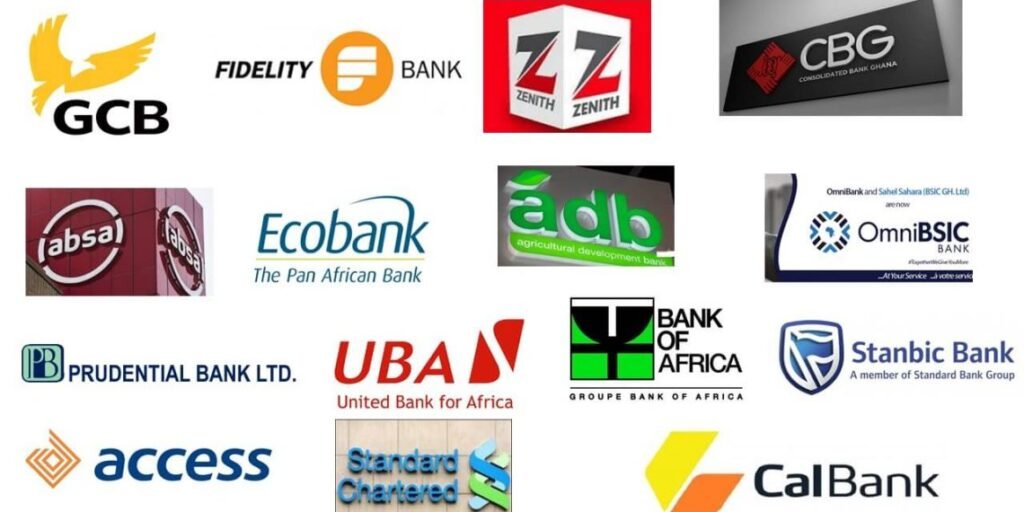
Ghana’s banking sector has recorded a major recovery milestone, with all 23 licensed banks meeting the Bank of Ghana’s capital requirements after years of financial pressure triggered by the economic crisis and the Domestic Debt Exchange Programme (DDEP).
The development marks a significant turnaround for an industry that came under severe strain following the impairment of financial assets and the deterioration of banks’ balance sheets. According to Bank of Ghana Governor Dr Johnson Pandit Asiama, the breaches identified through the 2022 audited financial statements had left 13 banks below the required regulatory capital thresholds.
The latest confirmation signals renewed stability in the banking industry, with improvements in economic conditions and regulatory reforms helping institutions rebuild their financial positions.
Beyond restoring compliance, the sector has also expanded considerably, with total banking assets reaching GH¢500.20 billion at the end of August 2026, representing a 20.47 per cent increase from GH¢415.20 billion recorded a year earlier.
However, the recovery comes with a fresh warning from the central bank. Banks must strengthen their financial buffers, improve risk management and prepare for emerging threats that could undermine the progress achieved so far.
All 23 Banks Clear Capital Requirements
The return of all 23 banks to compliance represents an important milestone for Ghana’s financial system, particularly after the disruptions that followed the country’s economic crisis.
The Domestic Debt Exchange Programme placed considerable pressure on financial institutions through the impairment of assets, exposing weaknesses in their capital positions and forcing the industry to confront difficult balance-sheet adjustments.
The situation highlighted the vulnerability of banks to broader economic shocks, especially when government debt holdings and other financial assets suffer significant losses.
Dr Asiama described the latest development as a collective achievement involving several stakeholders in the financial system. “This is a significant achievement,” Dr Asiama said.
He credited banks, shareholders, investors, the Association, the government and the central bank for contributing to the recovery.
The return to compliance suggests that the sector has made substantial progress in rebuilding its capacity to absorb losses and support financial intermediation.
It also provides a stronger foundation for banks to finance businesses, extend credit to households and support economic activity.
Nevertheless, meeting the minimum capital requirement does not automatically eliminate the underlying risks within the industry. Banks must continue to maintain adequate capital relative to the risks they assume.
Banking Assets Cross GH¢500 Billion
The recovery in capital positions has coincided with a significant expansion in the size of Ghana’s banking industry.
Total banking assets increased by 20.47 per cent year-on-year to GH¢500.20 billion at the end of August 2026, compared with GH¢415.20 billion in the corresponding period of the previous year.
The increase points to a larger banking sector, supported by improving macroeconomic conditions and continued regulatory reforms.
A growing asset base can strengthen the industry’s capacity to support economic activity, provided that the expansion is backed by sound lending practices, sufficient capital and effective risk controls.
However, the quality of those assets remains critical. Rapid growth in loans and other financial exposures can create vulnerabilities when credit decisions are weak or borrowers struggle to meet their repayment obligations.
The central bank is therefore placing greater emphasis on ensuring that banks’ capital positions reflect the risks they face rather than merely satisfying the minimum regulatory threshold.
Dr Asiama stressed that banks must build additional buffers to withstand future shocks, particularly as financial risks become more complex.
The priority is to ensure that the current recovery translates into lasting resilience instead of leaving institutions exposed to another period of economic stress.
BoG Prepares Tougher Credit Risk Rules
The Bank of Ghana is preparing new regulatory directives aimed at strengthening the management of credit and liquidity risks across the banking industry.
One of the proposed measures will focus on credit risk management, complementing the central bank’s existing notice on non-performing loans (NPLs).
The directive is expected to push banks to improve underwriting standards, monitor loans more closely, restructure troubled facilities where appropriate and strengthen recovery efforts.
These measures are particularly important because poor lending decisions can gradually weaken bank balance sheets, even when institutions initially appear financially sound.
Weak credit assessment, inadequate monitoring and delayed intervention can allow problem loans to accumulate, reducing profitability and putting pressure on capital.
Stronger lending standards could help banks identify emerging repayment difficulties earlier and take corrective action before losses become more damaging.
The proposed directive also comes as the central bank continues to focus on the sustainability of banks’ business models.
In 2025, the Bank reviewed the sustainability of institutions’ business models and shared identified vulnerabilities with the affected banks. A second review is planned for next year.
The exercise is intended to ensure that banks can maintain viable operations while adapting to changing economic conditions and financial risks.
Liquidity Rules to Face Greater Scrutiny
Another major regulatory measure under preparation will introduce a Liquidity Coverage Ratio (LCR) requirement, strengthening the framework governing banks’ ability to meet short-term liquidity needs.
Liquidity management remains essential because a bank can have sufficient capital and still encounter difficulties meeting its immediate financial obligations if it cannot access cash or readily available liquid assets when needed.
The proposed requirement is expected to reinforce the need for banks to maintain adequate liquidity buffers and prepare for unexpected funding pressures.
Dr Asiama also emphasised the importance of developing a broader risk management culture supported by contingency funding arrangements and diversified funding sources.
Such measures can help institutions reduce their dependence on a narrow range of funding channels and respond more effectively when market conditions deteriorate.
The central bank has also tightened its stress-testing framework, using severe but plausible scenarios to assess how banks might perform under pressure.
The results are being discussed with the institutions, which are expected to incorporate the findings into their capital and liquidity planning.
Cybersecurity and Digital Fraud Raise New Concerns
While the return to capital compliance represents progress, the banking industry faces emerging threats linked to technology and the rapid expansion of digital financial services.
Dr Asiama identified cybersecurity, digital fraud, data protection and operational resilience as areas receiving increased supervisory attention.
The Bank of Ghana intends to review how institutions are implementing its revised Cyber and Information Security Directive, placing greater responsibility on banks to protect their systems, customer information and digital operations.
Cyber incidents and digital fraud can cause financial losses, disrupt services and weaken public confidence in financial institutions.
The growing reliance on digital channels also means that weaknesses in information security can quickly become wider operational and reputational problems.
Dr Asiama urged bank boards to treat cyber risk as a core business risk, reinforcing the need for directors and senior executives to take responsibility for technology-related vulnerabilities.
The challenge is to ensure that the expansion of digital banking is matched by investments in security, effective oversight and reliable systems.
Recovery Brings New Responsibilities
Ghana’s banking sector has moved beyond a difficult period in which 13 institutions fell below regulatory capital thresholds. With all 23 banks now compliant and industry assets exceeding GH¢500 billion, the sector has recorded a substantial recovery.
Yet the next phase will depend on whether banks can preserve their capital strength while managing credit exposures, liquidity pressures, cybersecurity threats and other emerging risks.
The central bank’s planned directives and continued supervisory reviews indicate that regulatory expectations will extend beyond minimum compliance.
Sustaining the recovery will require banks to maintain disciplined lending practices, build adequate financial buffers and prepare for shocks before they threaten stability.
The latest milestone offers renewed confidence in the banking industry’s resilience, but maintaining that progress will depend on how effectively institutions respond to the risks ahead.
READ ALSO: Agri-Impact, PwC Deepen SAWA Institutional Support