Former Archbishop of Canterbury Justin Welby has opposed calls for Britain to pay slavery reparations to Caribbean nations, arguing that requiring ordinary taxpayers to finance compensation for historical crimes they did not personally commit would amount to collective punishment.
He described the proposed payments as a “moral evil”, insisting that the passage of time and the complexities of determining responsibility make a nationwide compensation scheme unjust.
“Reparations would amount to a vast fine on the entire British people for a crime they did not commit.”
Justin Welby
His intervention comes as King Charles III and Prime Minister Andy Burnham attend the Commonwealth Heads of Government Meeting (CHOGM) in Antigua and Barbuda, where demands for Britain to acknowledge and address its historical role in the transatlantic slave trade have renewed attention on reparatory justice.
Welby Questions Fairness of Compensation Demands

Dr Welby’s central objection to slavery reparations rests on a fair system for identifying both those responsible for making payments and the communities entitled to receive them.
“There would be no justice in who paid. The vast majority of Britons have no connection to slavers’ profits – nor did their ancestors.”
Justin Welby
He also questioned the basis for determining which individuals, families or communities should receive compensation, arguing that the passage of generations makes it difficult to establish a direct relationship between historical victims and their present-day descendants.
The former Archbishop also recalled a visit to Jamaica during his time in office, when he was informed that Britain should pay $21 trillion in reparations. He stated the proposed figure was greater than the total wealth of the United Kingdom, illustrating what he considers the impracticality of some compensation demands.
Dr Welby further stressed that ordinary people across different backgrounds and ethnicities continue to face economic and social difficulties in Britain, making it unjust to impose a financial burden on the entire population for historical wrongdoing.
He added, “Group punishment is a moral evil. It mixes up the guilty and the innocent even when it is about contemporary times, let alone two centuries past.”
Commonwealth Summit Revives Britain’s Historical Responsibility
The disagreement has gained renewed prominence at CHOGM in Antigua and Barbuda, where Caribbean leaders are pressing Britain to address its role in the transatlantic slave trade.
Prime Minister Andy Burnham has signalled that his government is prepared to engage in structured discussions with countries and communities affected by British slavery, including listening to calls for a formal apology. However, he has ruled out financial reparations, maintaining that people living in Britain today should not be held liable for historical acts in which they played no personal part.
Burnham has instead highlighted practical cooperation, including measures to address debt pressures, strengthen trade and support development across Commonwealth countries. His government has also indicated that discussions about a possible apology can proceed without creating an obligation to make compensation payments.
However, the British position has not satisfied all Caribbean leaders. Antigua and Barbuda’s Prime Minister Gaston Browne has continued to advocate compensation, arguing that acknowledging historical wrongdoing must be accompanied by meaningful restitution.
Other Caribbean representatives have maintained that reparatory justice should remain part of the Commonwealth’s discussions, even where Britain opposes direct financial payments.
Church of England’s £100m Response Offers Different Approach
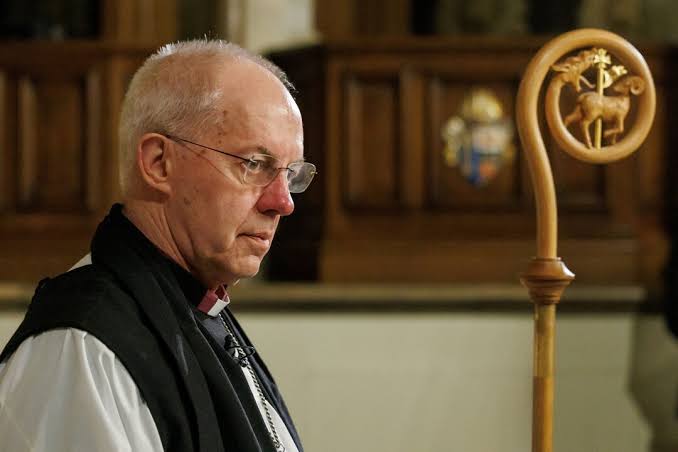
Dr Welby’s opposition to government-funded reparations comes against the backdrop of his own involvement in efforts to address the Church of England’s historical links to slavery.
In 2023, while serving as Archbishop of Canterbury, he presided over the Church’s decision to establish a £100 million initiative after an investigation revealed that its historic investments were connected to the transatlantic slave trade.
The Church had invested in a company involved in transporting enslaved Africans through funds associated with Queen Anne’s Bounty, an institution established in the 18th century to support clergy. The discovery prompted the Church to acknowledge its historical links to slavery and consider how its resources could contribute to a fairer future for communities affected by the trade.
At the time, the Church described its historical connections to slavery as a source of shame and maintained that it was right to respond. Its proposed £100 million scheme was intended to support a better and fairer future, particularly for communities affected by slavery.
However, Dr Welby distinguishes the Church’s initiative from the broader demands for national reparations.
READ ALSO: MinCom CEO Calls for Stronger Regulation to Enhance Responsible Mining