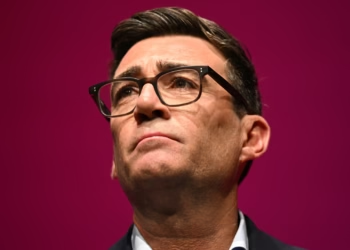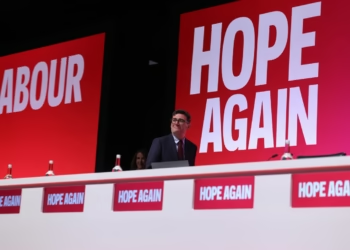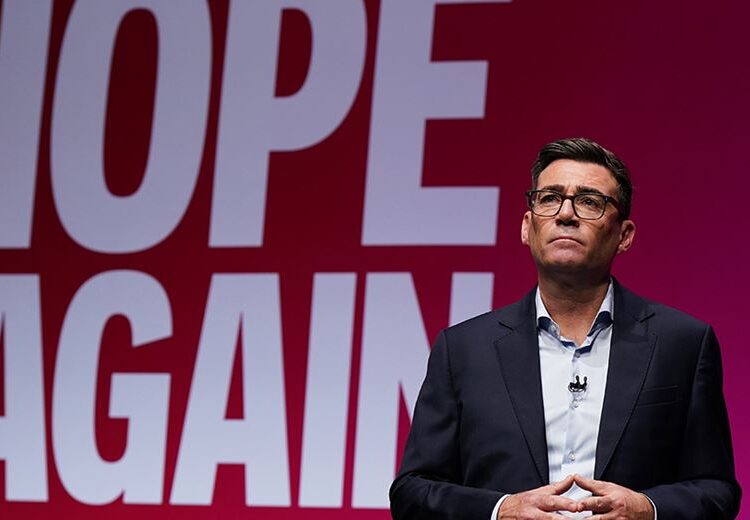
In his first 100 days as British Prime Minister, Andy Burnham has given Labour a clearer political identity, strengthened its position in public opinion and prioritised household security, public service improvements and devolution of power.
Dr Thom Oliver, Senior Lecturer in Politics at the University of the West of England, in an interview with The Vaultz News, stated that the first 100 days “is a useful point for examining priorities and governing style, although it offers limited evidence about lasting economic or institutional change.”
Polling Advantage Offers Political Breathing Space
Burnham’s first three months in Downing Street have coincided with a notable improvement in Labour’s position in national voting-intention polls, giving the party a stronger political platform than it had at the end of Keir Starmer’s premiership.
YouGov’s October political favourability tracker found that 46 percent of Britons viewed him favourably, compared with 42 percent who held an unfavourable opinion. His net favourability rating stood at plus four, down from a peak of plus 13.
Although the figures indicate that Burnham retains a positive personal standing, the narrowing gap between favourable and unfavourable views suggests that his early political advantage is not assured.
Dr Oliver similarly cautioned against treating the polling as evidence that public confidence has become firmly established.
“These figures suggest that he has an opportunity to build support, but they also show why it would be premature to assume that public confidence is secure.”
Dr Thom Oliver
A separate YouGov survey conducted on 22 October among 5,394 adults in Great Britain also found divided assessments of Burnham’s performance. While 23 percent reported that he had performed well in line with their positive expectations, 12 percent noted they had expected him to do well but had been disappointed.
Another 23 percent said he had performed poorly, as they had anticipated, while 14 percent who expected a poor performance believed he had done better than expected.
The findings suggest that improved party polling and personal favourability have not translated into a uniformly positive public assessment of his premiership.
Devolution and Public Services Define Governing Ambitions

Moreover, Burnham has sought to establish a governing direction centred on household security, stronger public services and a redistribution of decision-making powers.
His experience as Mayor of Greater Manchester provides a distinctive political foundation for this approach, particularly his emphasis on local leadership and the relationship between national policy and delivery within communities.
The government has pursued several immediate interventions, including removing VAT from domestic electricity bills, introducing a £2 cap on bus fares and announcing £874 million to tackle rough sleeping. It has also outlined proposals for a national care service, signalling an ambition to strengthen the provision of essential public services.
“The important question is how effectively he can translate that experience into governing across a country with very different local economies, institutional capacities and political interests.”
Dr Thom Oliver
Also, the government’s fiscal devolution roadmap includes proposals to give mayors a greater share of locally generated revenue and more predictable resources to support long-term investment and public-service coordination.
Dr Oliver argues that successful devolution requires more than transferring authority from Westminster to regional leaders.
“Giving local leaders more predictable resources and greater discretion could support longer-term planning and better coordination between services. It will also require effective scrutiny and democratic accountability.”
Dr Thom Oliver
He added that Mayors must have the capacity to act, while citizens need clear mechanisms through which they can understand and challenge decisions made in their name.
The design of these institutions, he stressed, will matter as much as the political prominence of the individuals leading them.
Budget Exposes Tension Between Ambition and Delivery
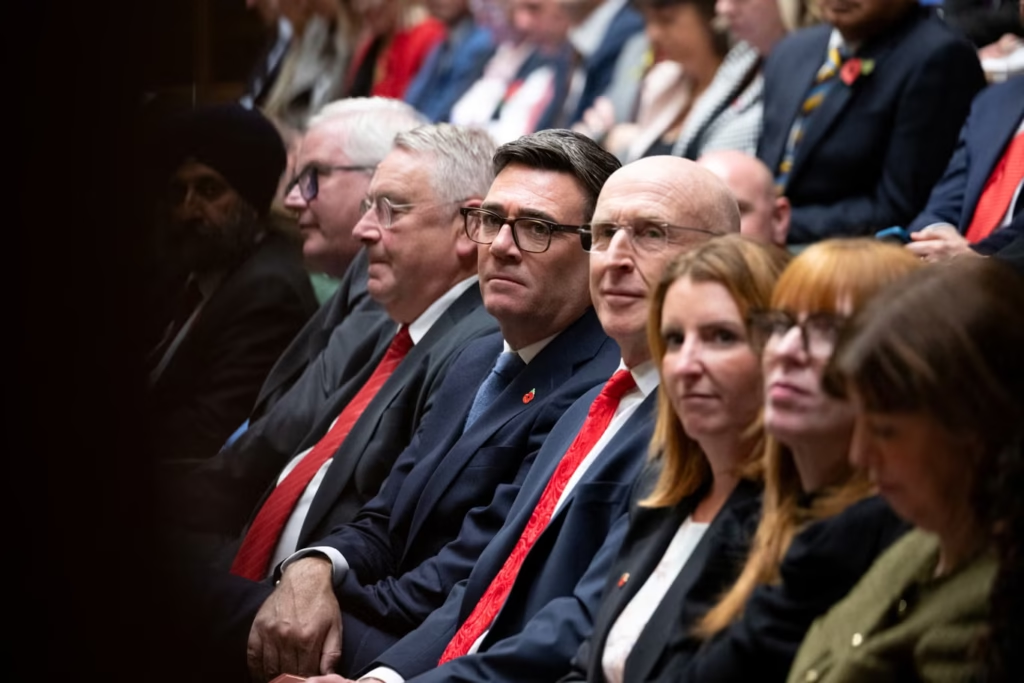
Despite the more optimistic political tone surrounding Burnham’s premiership, the government’s first Budget has exposed the constraints facing its wider economic and social ambitions.
Burnham acknowledged that the Budget was less radical than he had wanted, while pointing towards a forthcoming ten-year plan to set out the government’s longer-term ambitions.
Dr Oliver considers the explanation understandable given the immediate economic circumstances, but warns that repeatedly postponing major changes risks creating expectations that the government may struggle to meet.
“Each new promise raises expectations about what follows,” he indicated.
He also identified the question of political mandate as an important consideration. Although Burnham governs through Labour’s existing parliamentary majority and the commitments made at the 2024 general election, he must explain how his developing programme relates to those promises and establish public consent for significant departures.
The challenge is particularly important where ambitious reforms require difficult decisions about taxation, public spending and the distribution of resources.
Yet Dr Oliver believes one of Burnham’s most significant early changes has been the tone of his leadership and the way he communicates the government’s ambitions.
He stressed that Burnham’s greater warmth and more explicit sense of purpose have given voters a clearer understanding of how individual policies fit into a wider programme.
“There is some critique that this is simply ‘vibes-based government’ rather than delivery, but even a consideration of this idea captures something about the importance of that shift.”
Dr Thom Oliver
Dr Oliver contrasted this approach with Starmer’s premiership, arguing that the former Prime Minister struggled to establish a sufficiently clear connection between individual policy interventions and a broader vision for national change.
He noted that “a more hopeful tone can encourage people to listen; maintaining their confidence requires evidence that the government is making progress.”
According to the Political Analyst, Burnham’s first 100 days are cautiously positive about the direction he is attempting to establish but recognises that the more difficult test lies ahead.
READ ALSO: Investors Pull Back as GSE Trading Turnover Drops 66% in One Day