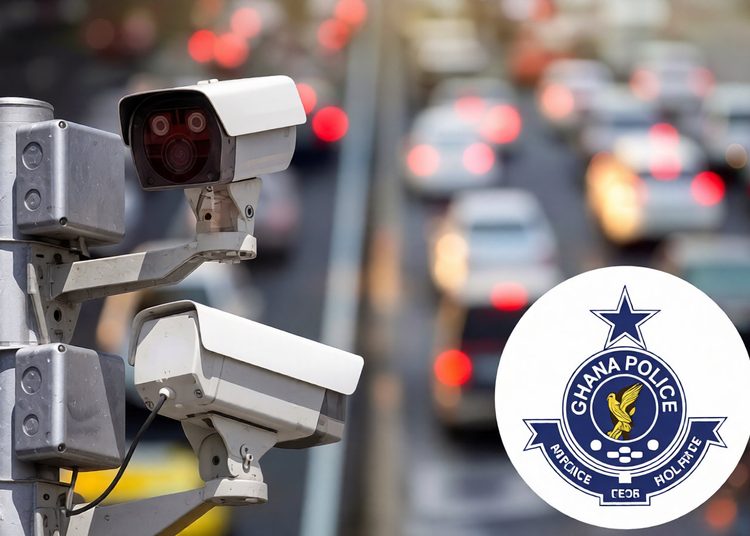
Security Analyst, Adib Saani has called for transparency over data protection and private-sector involvement in the implementation of TraffiTech-GH, warning that the road enforcement system must not become a channel for commercial exploitation or the misuse of citizens’ personal information.
He also stressed on the need for accountability in the operation of the system, particularly regarding how private-sector partners are engaged and how revenue from traffic violations is managed.
“We shouldn’t hide under the cover of enforcement to make money… The question is simple: Does the third party or vendor have access to our private information? Because, if it involves the Ghana Card, it means they could have access to our addresses, phone numbers and photographs. What measures are they putting in place to protect the private data of citizens?”
Adib Saani
Mr Saani stressed that transparency is essential to building public trust, arguing that citizens deserve clear answers about the system and its safeguards before it is fully implemented. Though he raised concerns about data protection and private-sector involvement, he clarified that he was not suggesting that the existing arrangements have already compromised anyone’s personal information.

Drawing on comparative research into traffic enforcement in France, he cited the response by the country’s Interior Minister to the French National Assembly, which outlined restrictions on private operators. According to his account, “private companies are not compensated according to the number of speeding violations, cannot determine where enforcement takes place and cannot access the number of offending drivers.”
He identified these restrictions as important safeguards against commercial incentives that could undermine the purpose of traffic regulation. In his assessment, government must retain control over enforcement decisions, while private partners should operate within clearly defined limits that protect motorists.
Furthermore, Mr Saani acknowledged that no technological intervention would be “entirely flawless at inception.” However, he believes weaknesses must be identified and addressed through continuous assessment, with data protection remaining central to the process.
Subsequently, he supports TraffiTech-GH’s road safety objectives but cautions that the initiative’s credibility could suffer if citizens remain uncertain about who controls their information. For him, protecting personal data should be a fundamental requirement for legitimate and effective enforcement.
Analyst Calls For Clearer Roadside Warnings
Additionally, Security Analyst Adib Saani highlighted inadequate road signage, disputed traffic notices and gaps in the implementation safeguards as potential challenges to the success of TraffiTech-GH. While welcoming the technology-driven initiative, he stressed that motorists must be given adequate warning of traffic regulations and a fair opportunity to verify alleged violations before penalties are imposed.

He contends that the absence of clearly visible road signs could leave drivers vulnerable to penalties, particularly at night or along routes where speed restrictions and other traffic regulations are not adequately communicated.
Drawing comparisons with enforcement practices in the United Kingdom, France and the United States, he observed that motorists in those jurisdictions often receive advance warnings before entering restricted speed zones.
“However, there are a number of structures that has to be put in place in order to get people to respect and to comply with the directives.”
Adib Saani
Mr Saani recounted an experience involving another motorist who drove over a speed bump after failing to notice a warning sign, illustrating the practical consequences of inadequate roadside information. He cautioned that relying on motorists to identify poorly marked hazards could expose vehicles to damage and undermine the fairness of automated enforcement.
In addition, he raised questions about the handling of disputed speeding notices, recounting his own experience after receiving a caution notice for a vehicle he has already sold. The notification identified a speed violation in a 50-kilometre-per-hour zone, with the vehicle reportedly travelling at 60 kilometres per hour, although he questioned whether the accompanying footage supported that assessment.
The incident, he explained, exposed the importance of updating vehicle ownership records promptly and ensuring that motorists can access reliable evidence when contesting violations. Mr Saani also noted that GPS tracking systems could help vehicle owners review historical movement data, although he could no longer access such information for the car he sold.

Nevertheless, he believes the intervention “could improve driving behaviour” pointing to videos circulating on social media that show more disciplined traffic movement on the N1. He expressed optimism that the system could contribute to improved road safety statistics before the end of the year.
His support is rooted in the severity of Ghana’s road safety situation. Citing National Road Safety Authority figures for 2025, he outlined 14,743 crashes, representing a 9.3 percent increase from 2024, with deaths approaching 3,000 and injuries reaching approximately 16,000.
Mr Saani also recalled a collision involving a taxi that crashed into the rear of a vehicle in which he was travelling while they were stuck in traffic. The experience reinforced his conviction that road users require protection from reckless driving and preventable accidents.
READ ALSO: Counsel Kpebu: Detained MP Risks Losing Seat Over Unauthorised Absence