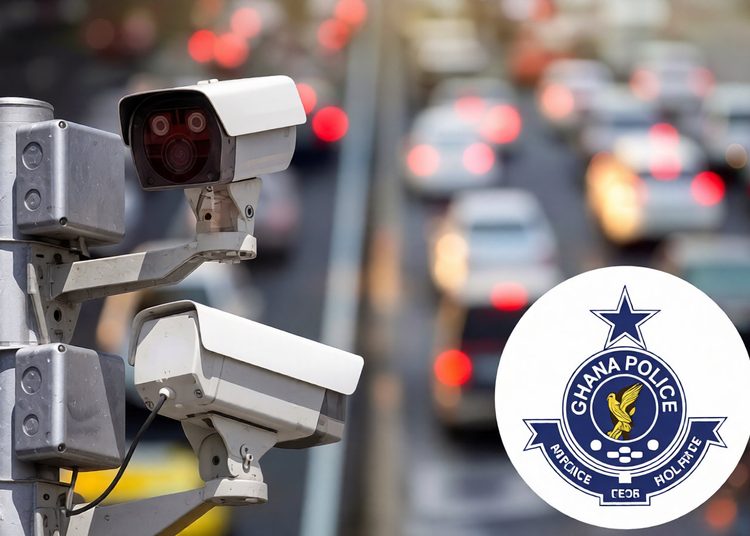
In discussing the roll-out of TraffiTech-GH, the Motor Traffic and Transport Department (MTTD) has outlined plans to connect repeated traffic violations to individual driving licences through additional technology being developed for police officers.
The initiative is expected to strengthen enforcement by moving beyond the current system, which records electronic speeding violations against vehicle registration details.
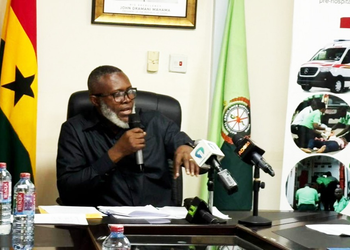
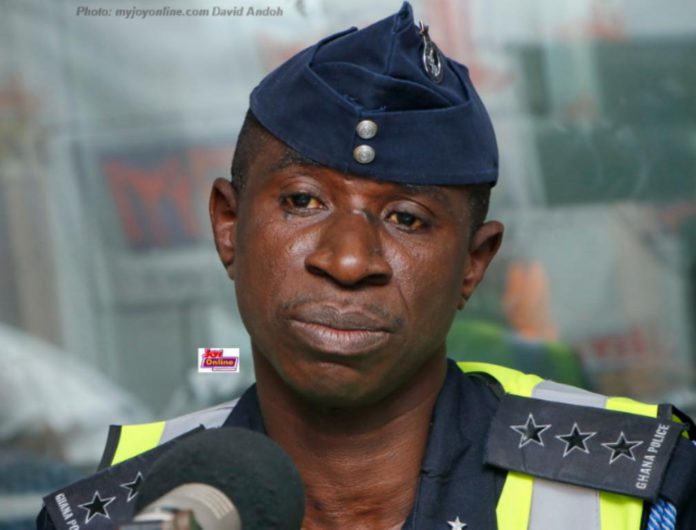
ACP Alexander Kweku Obeng, Director of Education, Research and Training at the MTTD, explained that vehicle owners presently receive electronic notices of violation through “their registered telephone numbers, accompanied by video evidence of the offence.” They are expected to respond within two weeks, while the proposed system will eventually enable officers to identify drivers and record violations directly against their licences.
“And within two minutes, you should expect another electronic notice of violation. This notice will be recorded against the driver’s licence, not the vehicle. Therefore, if you commit six traffic violations within a two-year period, you risk having your driver’s licence revoked.”
ACP Alexander Kweku Obeng
ACP Obeng clarified that the existing speeding enforcement arrangement does not “impose a stated limit” on the number of notices a vehicle owner may receive before licence renewal becomes an issue.

Instead, each recorded violation attracts a separate obligation to respond, meaning that an owner whose vehicle commits the offence repeatedly must account for every notice issued.“If you commit 100 times, you will be forthcoming 100 times,” he remarked, illustrating that the notices are tied to the registration number of the vehicle involved, irrespective of how many times it is used to exceed the prescribed speed limit.
Nevertheless, the MTTD intends to introduce additional software and hardware to establish a more direct connection between offences and individual drivers. ACP Obeng identified handheld personal digital assistants (PDAs) as part of the planned technology, which trained police officers will use to retrieve driving-licence information during roadside enforcement.
He also cited the Road Traffic Regulations, 2026, LI 2519, particularly Regulation 73, which requires drivers to know their licence numbers instead of relying on the previous practice of physically carrying their licences for inspection. Under the proposed arrangement, officers will enter the number into the device, which will interface with the vehicle and driver-licensing registers.
The system is also expected to cover offences such as riding without a helmet, failing to wear a seat belt and placing a child under 12 in the front seat. ACP Obeng explained that the proposed software could generate an electronic notice against the driver’s licence within approximately two minutes.
The distinction is significant: while current speeding notices attach to vehicles, the planned system will enable individual drivers to accumulate violations on their own records. The MTTD therefore intends to use the technology to strengthen accountability and support the enforcement of road safety regulations.
MTTD Extends Traffitech GH Beyond Major Urban Roads
Beyond the proposed changes to driver-licensing enforcement, the Motor Traffic and Transport Department (MTTD) outlined how TraffiTech-GH will be deployed across different road environments and vehicle categories, including motorcycles and tricycles.
The department intends to direct its cameras and mobile enforcement teams towards locations where recorded crash patterns and traffic violations indicate a heightened need for intervention.
ACP Alexander Kweku Obeng, Director of Education, Research and Training at the MTTD, explained that the initiative is guided by road safety data collected over several decades, including periodic crash reports dating back to 1991.
He emphasised that enforcement will not be confined to major highways or paved roads, since speeding and other dangerous driving practices can occur in communities and on untarred routes.
“You don’t just deploy cameras anywhere, but we are spreading to where the problems are based on our data and the periodic road crashes.”
ACP Alexander Kweku Obeng
ACP Obeng explained that the department uses its crash records to identify locations where speeding, poor vehicle maintenance and servicing deficiencies contribute to road safety risks. It then directs its “evidence-gathering equipment towards those areas to document violations and confront vehicle owners with the available footage.”
He further indicated that the MTTD combines fixed cameras mounted on tripods with mobile equipment installed in enforcement vehicles. The mobile units allow officers to cover extended stretches of road, while the department has also deployed cameras in several regions, including Ashanti, Bono, Northern, Eastern, Volta and Western, as well as Tema.
According to ACP Obeng, the department also monitors major arterial roads and international routes approaching Accra, extending its operations towards adjoining regions. He cited national travel data indicating that Ghana records approximately 6.6 million trips daily, making the movement of vehicles across regional boundaries an important consideration in enforcement planning.
Importantly, the initiative does not exempt two- and three-wheeled vehicles. ACP Obeng clarified that motorcycles, bicycles and motor tricycles fall within the country’s vehicle regulations, noting that some motorcycle riders had already received caution notices for excessive speeding or failure to wear helmets.
He also outlined plans for commercial motorcycle transport, explaining that persons aged 21 and above are expected to join the relevant transport unions, obtain the new Ghana Motorcycle Commercial Riders Licence and undergo training before carrying fare-paying passengers. Commercial motorcycles will also be required to use the designated yellow-and-black registration plates.
Meanwhile, the MTTD observed growing compliance with the prescribed speed limits, with ACP Obeng pointing to the 50-kilometre-per-hour limit in built-up areas and 90 kilometres per hour on motorways. He noted that drivers had become increasingly conscious of the roadside signs, while traffic movement had begun to improve.
READ ALSO: Zelenskyy Hopes Democratic Gains To Boost Ukraine Aid