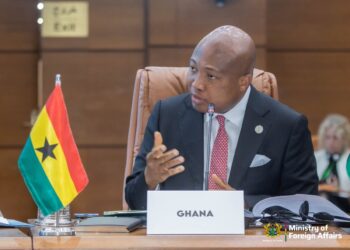
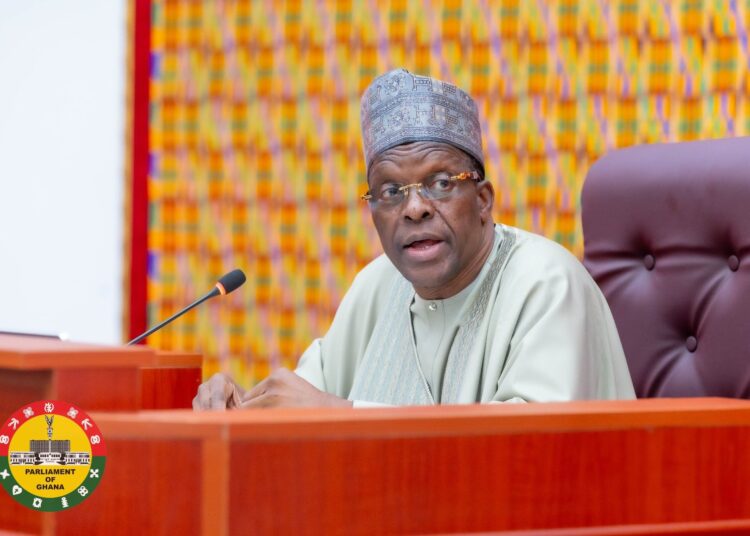
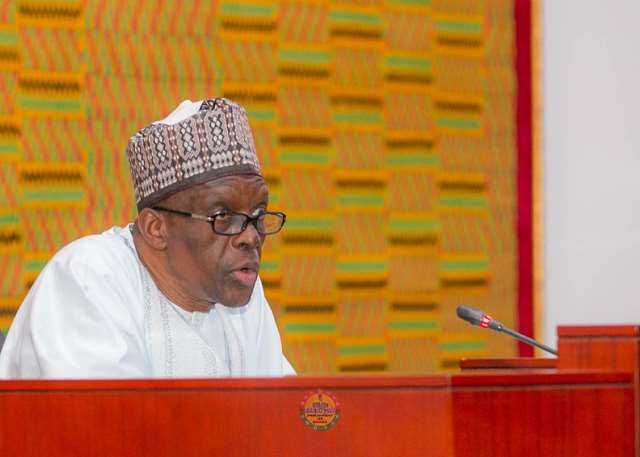
Speaker of Parliament Alban Sumana Kingsford Bagbin has directed that ordinary sittings of Parliament begin at 2 p.m. on Tuesdays, Wednesdays, Thursdays and Fridays, establishing a fixed commencement time to improve the organisation and predictability of parliamentary business.
The directive, announced in an address to the House on Tuesday, November 10, 2026, follows concerns over varying commencement times since the revised Standing Orders came into force in January 2024.
Speaker Bagbin explained that the new arrangement is intended to strengthen committee work, improve coordination with ministers and public officials, and make parliamentary proceedings more accessible to Ghanaians.
“Having thus reflected on our experience, the demands of Parliamentary business, and the need to make our proceedings more accessible to the public, I am persuaded that 2 p.m. is a reasonable and practical commencement time.”
Speaker of Parliament Alban Sumana Kingsford Bagbin
Bagbin Addresses Uncertainty in Parliamentary Sitting Times
Speaker Bagbin explained that before the revised Standing Orders took effect in January 2024, Parliament ordinarily commenced its sittings at 10 a.m. However, the start time has varied considerably since the revision, with proceedings beginning at noon on some days, 2 p.m. on others and, on some occasions, as late as 3 p.m.
He attributed the variations largely to the demands of parliamentary business but argued that the time had come for the House to adopt a more consistent arrangement.
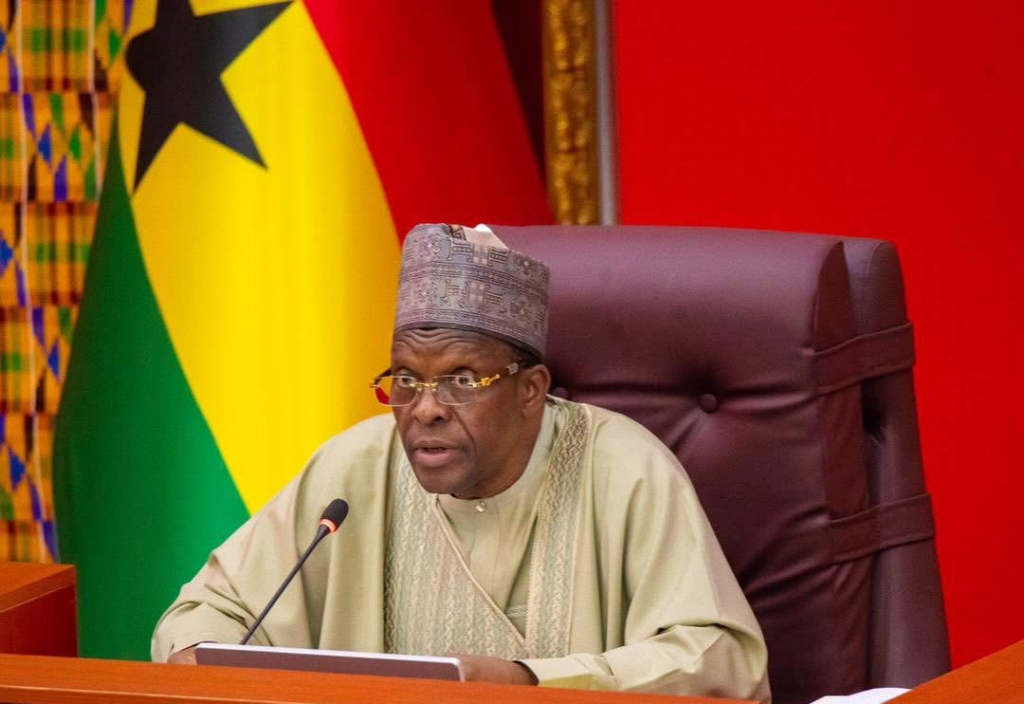
According to the Speaker, uncertainty over the commencement of proceedings affects the ability of Members of Parliament, committee chairpersons, ministers and the Parliamentary Service to plan their work effectively.
He maintained that Parliament must organise its activities in a way that promotes efficiency, supports committee operations and enables stakeholders to participate effectively in its constitutional responsibilities.
Standing Orders Provide Basis for the 2 pm Directive
The Speaker grounded his decision in Orders 5 and 55 of Parliament’s Standing Orders. Order 55 provides for sittings on Tuesdays, Wednesdays, Thursdays and Fridays, with each sitting ordinarily lasting five hours. It also empowers the Speaker to direct that a sitting be held outside the prescribed period, depending on the state of business before the House.
“Reading Orders No. 5 and No. 55 together, I consider it appropriate in the interest of the orderly and efficient conduct of Parliamentary business to establish a regular commencement time for the sittings of the House”.
Speaker of Parliament Alban Sumana Kingsford Bagbin
Under the new directive, ordinary sittings will begin at 2 p.m. on the four designated days, while the existing five-hour duration remains unchanged. Proceedings are consequently expected to conclude at approximately 7 p.m.
Morning Hours Reserved for Committee Work
A major consideration behind the new timetable is the need to strengthen the work of parliamentary committees.
Speaker Bagbin observed that committees undertake much of Parliament’s substantive work, including the detailed scrutiny of bills, examination of referrals, engagement with public officials and stakeholders, and preparation of reports for consideration by the House.
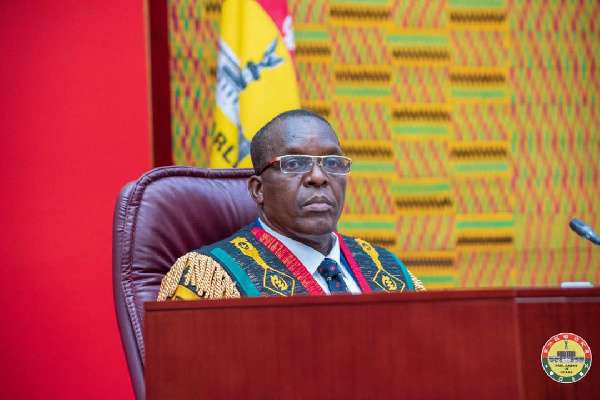
He explained that a regular 2 p.m. commencement would provide committees with a predictable period each morning to undertake these responsibilities without pressure from an approaching plenary sitting.
The Speaker expects committees to use the available time to expedite referrals and submit reports promptly, warning against delays arising from unfinished deliberations.
He also clarified that the afternoon commencement does not mean Parliament’s working day begins at 2 p.m. Rather, morning hours will remain dedicated principally to committee meetings and other parliamentary responsibilities.
New Schedule Expected to Improve Ministerial Participation
The timetable is also intended to facilitate the participation of ministers and other public officials in parliamentary proceedings. Speaker Bagbin noted that ministers are regularly required to attend Parliament to answer questions, present bills and respond to matters arising from the House’s oversight responsibilities.
However, they also have executive and administrative duties requiring attention during the working day. He argued that a 2 p.m. start would allow ministers to attend to pressing government responsibilities in the morning before engaging Parliament in the afternoon and, where necessary, early evening.
The Speaker expects the arrangement to improve ministerial attendance, responsiveness and coordination between the Executive and Legislature. He stressed, however, that the revised timetable does not reduce the constitutional obligation of ministers and public officials to attend Parliament whenever required.
Bagbin Seeks Greater Public Access to Parliamentary Proceedings
Improving public access to parliamentary proceedings also informed the decision. Speaker Bagbin observed that Parliament exists to represent Ghanaians, hold the Executive accountable and legislate in the national interest. He therefore argued that the organisation of its proceedings should enable citizens to follow and engage with the democratic process.
He referenced growing public interest in parliamentary activities through livestreaming platforms and Parliament TV, noting that the afternoon start would make proceedings more accessible as many citizens approach the end of their working day.
The Speaker further indicated that the arrangement would support investments in digital platforms and broadcasting intended to bring Parliament closer to the public.
Business Committee to Implement New Timetable
Speaker Bagbin directed the leadership of the House and the Business Committee to programme parliamentary business in line with the new commencement time.
Parliamentary committees are expected to make effective use of morning hours, while the Clerk to Parliament has been tasked with making the necessary administrative arrangements and communicating the directive to ministers, public institutions and other stakeholders.
The Speaker retained the authority to direct sittings outside the ordinary period when the volume, urgency or nature of parliamentary business requires it. He maintained that the change is intended to make Parliament more efficient, improve coordination and strengthen its responsiveness to the people of Ghana.